This learning resource is available in interactive and printable formats. The interactive worksheet can be played online and assigned to students. The Printable PDF version can be downloaded and printed for completion by hand.
This reading passage explores the fascinating world of Greek mythology, including the stories of gods, heroes, and legendary monsters. Students will learn about the Olympian gods, the influence of myths on ancient Greek society, and how these stories reflected the values and beliefs of the time. The passage uses primary sources and archaeological evidence, referencing famous myths such as the Labors of Heracles and the Minotaur of Crete. Key academic vocabulary is woven throughout to support historical thinking skills. This resource includes a glossary, multiple-choice quiz, writing activities, graphic organizers, a timeline, and both English and Spanish versions. Designed to meet CA HSS 6.4 and CCSS RH.6-8.1 standards, it also includes a read aloud audio function. The content encourages students to analyze cause and effect, use evidence, and understand the significance of mythology in shaping Greek culture and social hierarchy.
CONTENT PREVIEW
Expand content preview
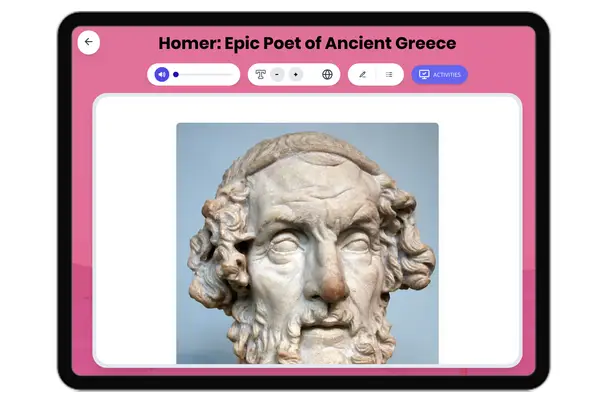
Greek God, Wikimedia Commons
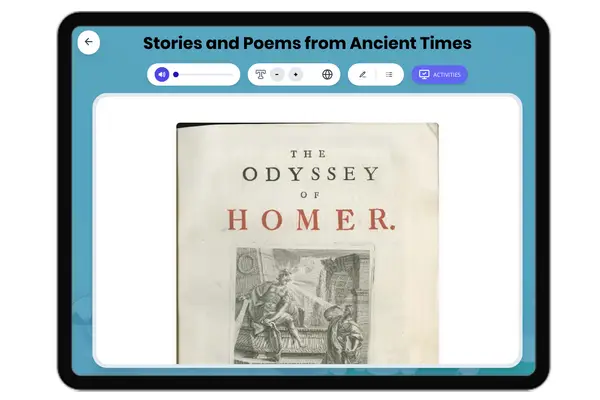
Greek mythology is a collection of traditional stories that explain the origins, values, and beliefs of ancient Greek civilization. These myths were passed down orally for centuries before being written down by poets like Homer in the 8th century BCE. Ancient Greeks used these stories to understand their world, explain natural events, and teach moral lessons. The geography of Greece, with its mountains and islands, helped create many distinct city-states, each with its own local myths and deities.
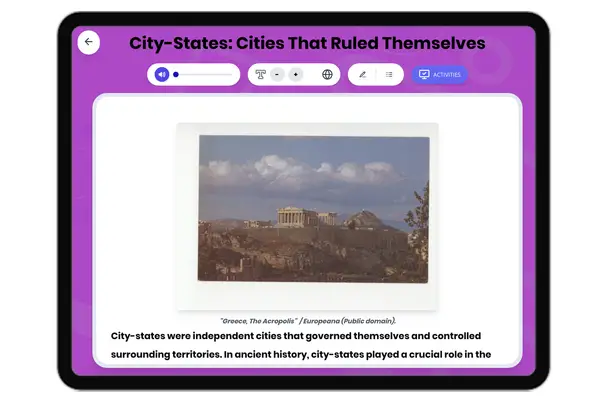
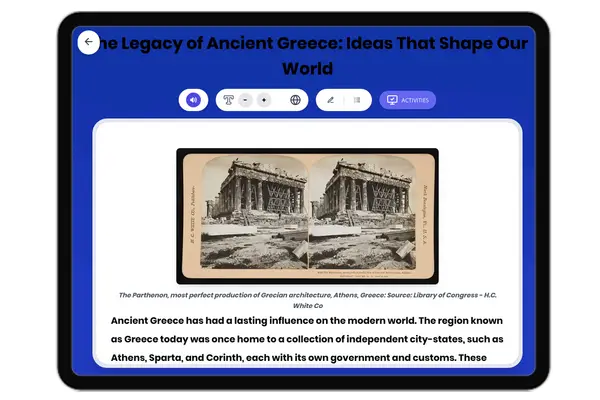
The most powerful gods in Greek mythology were known as the Olympians, believed to live atop Mount Olympus. The chief god, Zeus, ruled the sky and thunder. His siblings included Poseidon, god of the sea, and Hades, lord of the underworld. Goddesses such as Athena, goddess of wisdom, and Aphrodite, goddess of love, played important roles in many myths. Temples and festivals were dedicated to honoring these powerful figures, as seen in the ruins of the Parthenon in Athens, built between 447 and 432 BCE to honor Athena.
Greek myths also featured legendary heroes and monsters. Heroes like Heracles (Hercules) were celebrated for their strength and courage. The Twelve Labors of Heracles, depicted on ancient pottery, show his battles with fearsome creatures such as the Nemean Lion and the Hydra. Another famous tale is that of Theseus, who defeated the Minotaur in the labyrinth on the island of Crete. Archaeological sites like Knossos provide evidence of these myths' influence on art and daily life.
Greek mythology shaped social hierarchy, religion, and daily life in the city-states. Myths taught people about the consequences of pride and disobedience, as seen in the story of Icarus, who flew too close to the sun. The connection between myth and geography is clear: local landscapes inspired stories of gods and monsters. Over time, Greek myths spread across the Mediterranean, influencing Roman culture and later Western art and literature.
The lasting impact of Greek mythology can be seen in language, art, and even modern storytelling. These myths reveal how ancient Greeks made sense of their world, expressed their fears, and celebrated their achievements. Understanding Greek mythology helps historians connect global themes of belief, power, and creativity throughout human history.
Interesting Fact: The Olympic Games, first held in 776 BCE, were dedicated to Zeus and included athletic competitions in his honor.
Who was the chief god of the Greeks?
ZeusPoseidonHadesApollo
Where did the Olympian gods live?
Mount OlympusCreteSpartaRome
Who defeated the Minotaur?
TheseusHeraclesIcarusZeus
Why were myths important in Greece?
To explain nature and teach lessonsOnly to entertain childrenTo replace historyFor farming advice
How did geography shape Greek myths?
Created local city-states and storiesMade one big empireHad no effectCreated only sea myths
What lesson does Icarus’s story teach?
Dangers of pride and disobedienceHow to build wingsHow to rule as kingHow to fight monsters
Greek myths are still important today. True or false?
TrueFalse
What is a labyrinth?
A complex mazeA type of treeA small cityA temple
Perfect For:
👩🏫 Teachers
• Reading comprehension practice
• Auto-graded assessments
• Literacy skill development
👨👩👧👦 Parents
• Reading practice at home
• Comprehension improvement
• Educational reading time
🏠 Homeschoolers
• Reading curriculum support
• Independent reading practice
• Progress monitoring
Reading Features:
📖
Reading Passage
Engaging fiction or nonfiction text
❓
Comprehension Quiz
Auto-graded questions
📊
Instant Feedback
Immediate results and scoring
📄
Printable Version
Download for offline reading
🔊
Read Aloud
Voice-over with word highlighting
Reviews & Ratings
No reviews yet. Be the first to share your experience!
Related Content
Geography of Ancient Greece
This rigorous history reading passage explores 'The Geography of Ancient Greece,' examining how the region’s mountains, ...
Homer: Epic Poet of Ancient Greece
This history reading passage explores the life and historical significance of Homer, the legendary epic poet of Ancient ...
Ancient Sparta
This reading passage explores the unique military society of Sparta, an influential city-state in Ancient Greece. Studen...
Greek Polis
This in-depth history reading passage explores the rise and development of the Greek polis, or city-state, a foundationa...
Ancient Greek City-States
This history reading passage explores the development and significance of city-states in ancient civilizations, focusing...
Greece's Lasting Legacy
This engaging history reading passage explores the enduring legacy of Ancient Greece and its profound influence on the m...
Evidence in Ancient History
This engaging history reading passage investigates how archaeologists and historians discover clues about how ancient pe...
Ancient Philosophy
This reading passage takes students on a journey through the philosophical traditions of ancient Greece, India, and Chin...
Euripides and Greek Drama
This engaging passage introduces students to Euripides, one of the greatest ancient Greek playwrights, known for his exp...
Women in Ancient Societies
This reading passage explores the complex roles of women in the ancient world, focusing on civilizations such as Mesopot...
Sophocles and Greek Tragedy
This passage explores the life and legacy of Sophocles, one of the most influential playwrights of ancient Greece, whose...
Ancient Literature
This passage explores the importance of ancient stories and poems from civilizations such as Greece, India, and Israel. ...
Ancient Science and Medicine
This comprehensive reading passage explores the development of science and medicine in ancient civilizations, including ...
Slavery in Ancient World
This passage explores the complex history of slavery in the ancient world, examining its presence in societies such as M...
Ancient Theocracy
This engaging history reading passage explores the concept of theocracy in ancient civilizations, where priests and reli...
Ancient Mathematics
This passage explores the essential role of mathematics in ancient civilizations, including Mesopotamia, Egypt, Greece, ...
Ancient Canaan
This educational passage explores the land of Canaan, the historical homeland of the ancient Israelites. Students will l...
Geography of Ancient Israel
This passage explores the rich geography of Ancient Israel, focusing on how landforms, climate, and natural resources sh...
Ancient Writing Systems
This engaging history reading passage explores the origins and evolution of ancient writing systems, including cuneiform...
Ancient Agriculture Farming
This passage explores the transformative impact of farming on ancient societies, examining how the Neolithic Revolution ...