This learning resource is available in interactive and printable formats. The interactive worksheet can be played online and assigned to students. The Printable PDF version can be downloaded and printed for completion by hand.
This comprehensive history reading passage explores the origins and impact of Greek philosophy, focusing on Socrates, Plato, and Aristotle. Students will learn how these thinkers shaped Western thought, influenced education, and contributed to ancient Greek society. The passage includes primary sources, analysis of cause-and-effect, and a timeline of key events. Activities feature multiple-choice questions, writing prompts, and graphic organizers to encourage critical thinking and historical analysis. A read aloud audio and Spanish translation are provided for accessibility. This resource is aligned with CA HSS 6.4 and CCSS RH.6-8.1 standards, making it perfect for developing literacy and historical understanding in middle school classrooms.
CONTENT PREVIEW
Expand content preview
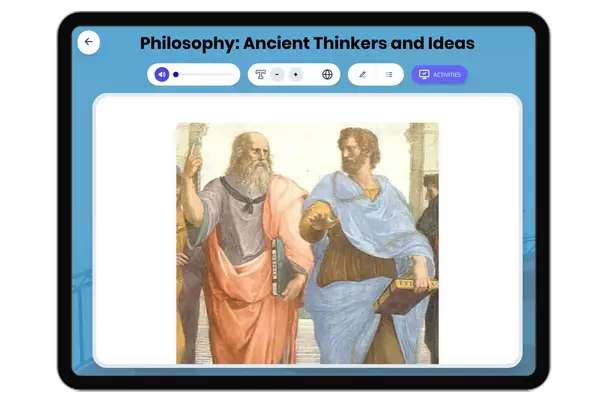
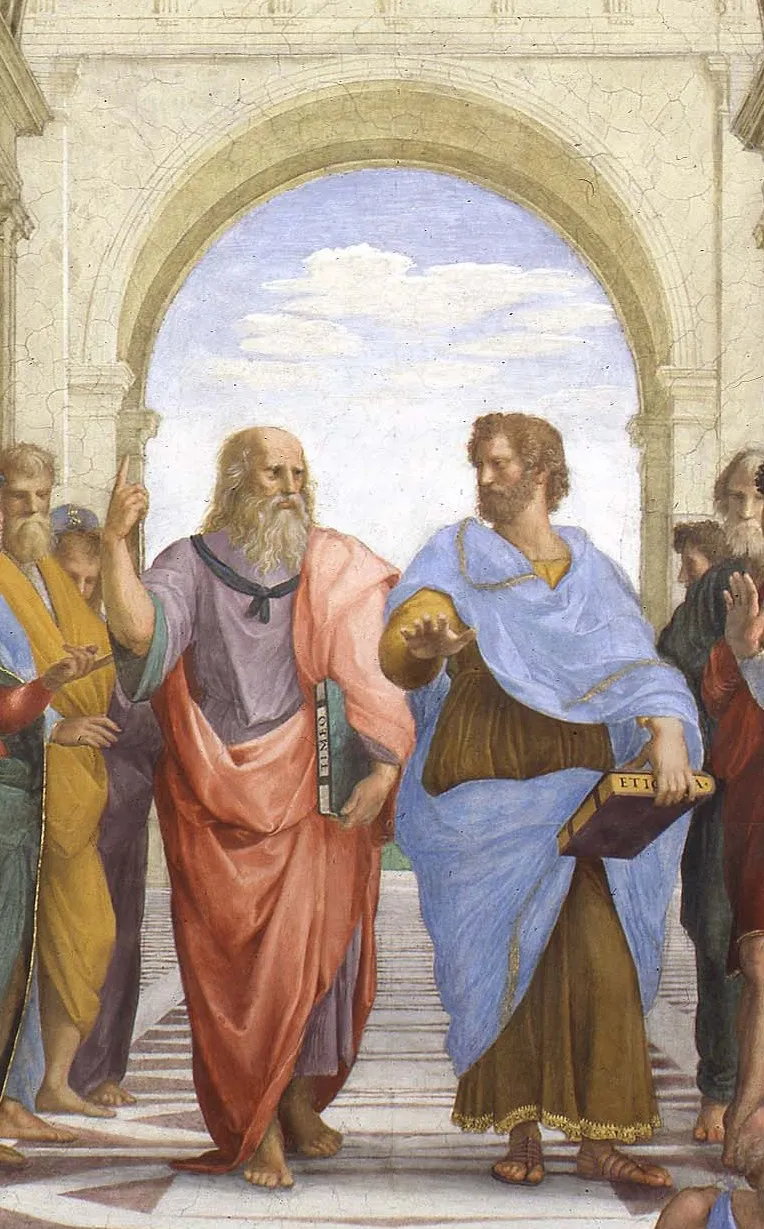
"Socrates and Plato Socrates y Platon, Escuela de Atenas, Raffae" by Raphael / Source: Wikimedia Commons (Public domain).
Greek philosophy began in the city-state of Athens during the fifth and fourth centuries BCE. Three major philosophers—Socrates, Plato, and Aristotle—transformed the way people thought about knowledge, ethics, and the world. Their ideas, developed more than 2,400 years ago, still influence modern education and science today.
Socrates (c. 470–399 BCE) is remembered for his method of questioning, called the Socratic Method. He did not write down his teachings. Instead, his student Plato recorded Socrates’ conversations, which often took place in the public spaces of Athens. Socrates believed that asking questions led people to deeper truths and encouraged citizens to examine their beliefs. According to Plato’s writings, Socrates was sentenced to death by the Athenian government for allegedly corrupting the youth and denying the city’s gods. This event shows the tension between new ideas and traditional beliefs in ancient Greek society.
Plato (c. 427–347 BCE), influenced by Socrates, founded the Academy in Athens, one of the first institutions of higher learning. He wrote dialogues, such as "The Republic," where he discussed justice, government, and the nature of reality. Plato introduced the concept of an abstract world of "Forms," or perfect ideas that exist beyond our senses. Archaeological findings at the site of Plato’s Academy show that it attracted students from across the Greek world. Plato’s emphasis on logic and education changed how people thought about leadership and citizenship.
Aristotle (384–322 BCE), Plato’s student, built on his teacher’s work but disagreed with some of Plato’s ideas. Aristotle believed that knowledge came from careful observation of the natural world. He studied plants, animals, politics, and ethics, and wrote more than 200 works. Aristotle tutored Alexander the Great, who later spread Greek ideas across three continents. Aristotle’s writings on government and science laid the groundwork for many fields we study today, including biology and logic.
Greek philosophers lived during a time of great political and cultural change. Athens was a democracy, but also faced wars and social unrest. The philosophers questioned accepted traditions and searched for universal truths. Their debates about justice, government, and the good life influenced not only their own society but also the Roman world and later Western civilizations. The search for wisdom, begun in ancient Greece, continues to shape our world today.
Philosophy changed over time in the Greek world. Socrates focused on ethics and personal conduct, Plato developed theories about reality and society, and Aristotle emphasized observation and classification. Yet, all three philosophers valued reason and dialogue. Their legacy shows how ideas can spread and endure, even after centuries.
Greek philosophy connects to the broader theme of how human ideas and choices shape history, culture, and societies across time and place.
Interesting Fact: The word "academy," now used for schools worldwide, comes from Plato’s Academy, which was named after a grove dedicated to the hero Akademos in Athens.
Who was Plato's teacher?
SocratesAristotleAlexanderAkademos
What is the Socratic Method?
Asking questions to find truthWriting poemsFighting in warsBuilding temples
Which city-state was important for Greek philosophy?
AthensSpartaCorinthThebes
Why was Socrates sentenced to death?
Corrupting youth and denying godsWriting dialoguesStarting a schoolTraveling to Egypt
How did Aristotle differ from Plato?
He focused on observationHe believed in FormsHe lived in SpartaHe never wrote books
What did Plato's Academy focus on?
Education and logicMaking weaponsFarmingBuilding ships
The word 'academy' comes from Plato's school. True or false?
TrueFalse
What does 'legacy' mean?
Something passed down from the pastA government officialA kind of templeA plant in Greece
Perfect For:
👩🏫 Teachers
• Reading comprehension practice
• Auto-graded assessments
• Literacy skill development
👨👩👧👦 Parents
• Reading practice at home
• Comprehension improvement
• Educational reading time
🏠 Homeschoolers
• Reading curriculum support
• Independent reading practice
• Progress monitoring
Reading Features:
📖
Reading Passage
Engaging fiction or nonfiction text
❓
Comprehension Quiz
Auto-graded questions
📊
Instant Feedback
Immediate results and scoring
📄
Printable Version
Download for offline reading
🔊
Read Aloud
Voice-over with word highlighting
Reviews & Ratings
No reviews yet. Be the first to share your experience!
Related Content
Geography of Ancient Greece
This rigorous history reading passage explores 'The Geography of Ancient Greece,' examining how the region’s mountains, ...
Homer: Epic Poet of Ancient Greece
This history reading passage explores the life and historical significance of Homer, the legendary epic poet of Ancient ...
Ancient Sparta
This reading passage explores the unique military society of Sparta, an influential city-state in Ancient Greece. Studen...
Greek Polis
This in-depth history reading passage explores the rise and development of the Greek polis, or city-state, a foundationa...
Ancient Greek City-States
This history reading passage explores the development and significance of city-states in ancient civilizations, focusing...
Greece's Lasting Legacy
This engaging history reading passage explores the enduring legacy of Ancient Greece and its profound influence on the m...
Evidence in Ancient History
This engaging history reading passage investigates how archaeologists and historians discover clues about how ancient pe...
Ancient Philosophy
This reading passage takes students on a journey through the philosophical traditions of ancient Greece, India, and Chin...
Euripides and Greek Drama
This engaging passage introduces students to Euripides, one of the greatest ancient Greek playwrights, known for his exp...
Women in Ancient Societies
This reading passage explores the complex roles of women in the ancient world, focusing on civilizations such as Mesopot...
Sophocles and Greek Tragedy
This passage explores the life and legacy of Sophocles, one of the most influential playwrights of ancient Greece, whose...
Ancient Literature
This passage explores the importance of ancient stories and poems from civilizations such as Greece, India, and Israel. ...
Ancient Science and Medicine
This comprehensive reading passage explores the development of science and medicine in ancient civilizations, including ...
Slavery in Ancient World
This passage explores the complex history of slavery in the ancient world, examining its presence in societies such as M...
Ancient Theocracy
This engaging history reading passage explores the concept of theocracy in ancient civilizations, where priests and reli...
Ancient Mathematics
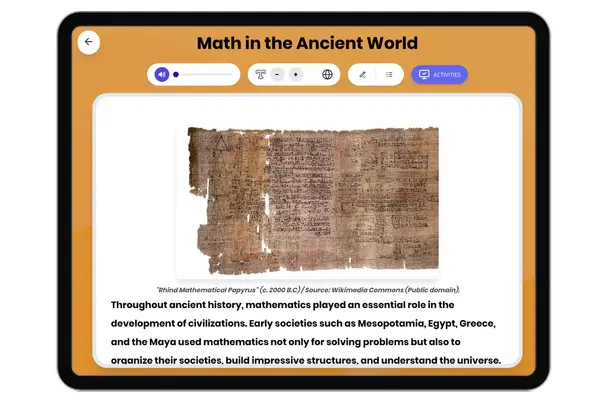
This passage explores the essential role of mathematics in ancient civilizations, including Mesopotamia, Egypt, Greece, ...
Ancient Canaan
This educational passage explores the land of Canaan, the historical homeland of the ancient Israelites. Students will l...
Geography of Ancient Israel
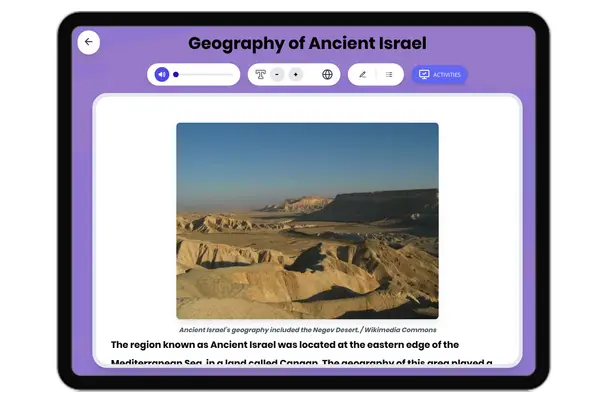
This passage explores the rich geography of Ancient Israel, focusing on how landforms, climate, and natural resources sh...
Ancient Writing Systems
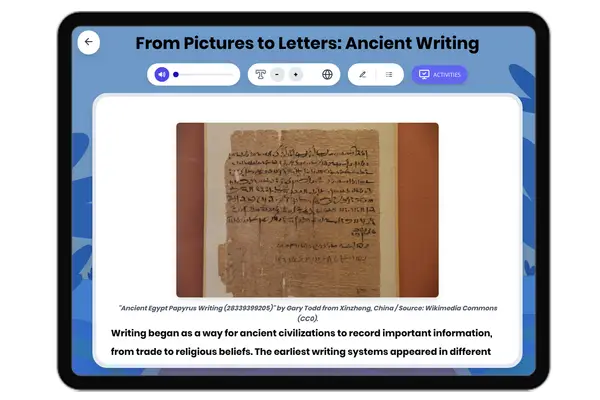
This engaging history reading passage explores the origins and evolution of ancient writing systems, including cuneiform...
Ancient Agriculture Farming
This passage explores the transformative impact of farming on ancient societies, examining how the Neolithic Revolution ...