Habitat Loss and Climate Change
Interactive passage with audio narration, comprehension questions, and printable PDF.
By completing this purchase you agree to our Terms of Use and Privacy Policy. Your subscription renews automatically until you cancel. You can cancel anytime from your account settings. All sales are final and non-refundable. Digital content is available for download in your account immediately upon purchase.
What's included
Habitat Loss and Climate Change preview and details
About this printable Habitat Loss and Climate Change science reading passage, NGSS-aligned (Grades 5-8)
Sample passage and quiz from Habitat Loss and Climate Change
Reading passage and comprehension quiz preview
Habitat Loss and Climate Change
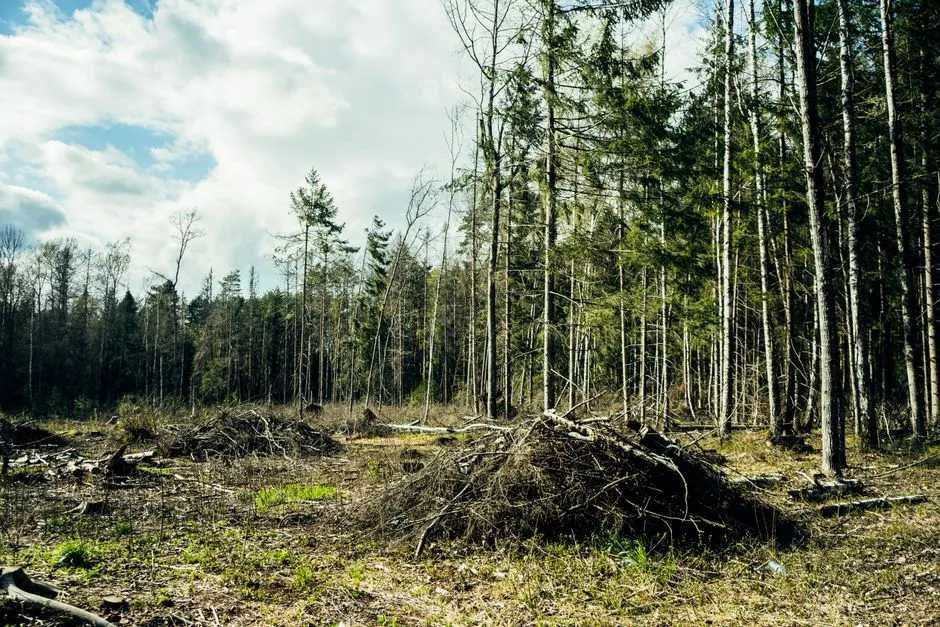
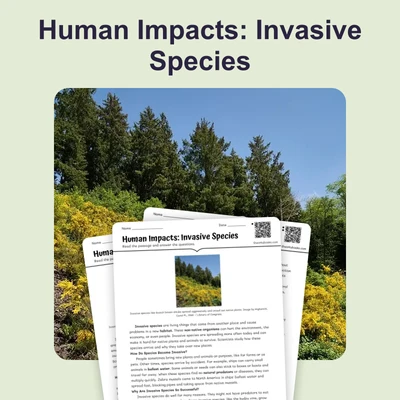
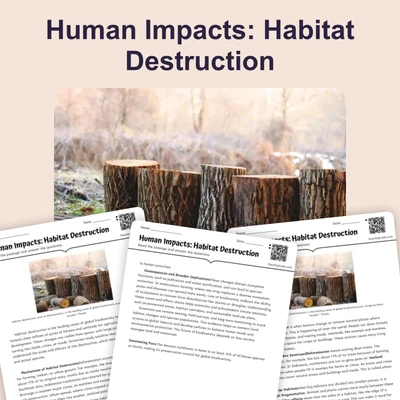
"A clear-cut area in a coniferous forest, showing piles of logs and branches." by Denys Mikhalevych / Pexels.
A habitat is the specific home a species needs to survive. It provides the right temperature, food, water, and shelter. Climate change is now reshaping and erasing habitats around the world. Scientists observe that rising global temperatures are forcing many species to face an urgent problem: their homes are disappearing.
Climate change affects habitats in several direct ways. Melting sea ice removes the hunting platform that polar bears depend on to catch seals. Drying wetlands are vanishing beneath the species that live there. Rising seas are drowning coastal marshes where fish and birds breed. Warming temperatures push forest and mountain habitats to shift toward cooler areas. Evidence shows these changes happen faster than many species can adapt.
The trouble comes when a habitat disappears faster than its residents can relocate. Some species simply have nowhere cooler left to go. A mountaintop species can run out of mountain as warming pushes it higher and higher. Scientists explain that when temperatures rise, cool-climate species must move upward or toward the poles. However, mountains have peaks and Earth has limits.
In the Arctic, polar bear populations face serious challenges. These bears hunt seals from sea ice platforms. The ice now melts earlier each spring and forms later each fall. This gives bears less time to hunt and build the fat reserves they need. Research from Hudson Bay shows that polar bears now weigh less and have fewer cubs than they did 30 years ago. The population decline links directly to sea ice loss.
Habitat loss represents one of the most direct ways warming threatens biodiversity. When physical components of an ecosystem change, the biological components must respond. Species may migrate, adapt, or face population decline. The speed of current climate change makes adaptation especially difficult. Many species cannot evolve fast enough to keep pace with their changing environments.
Understanding habitat loss matters because ecosystems are interconnected. When one species loses its habitat, it affects other species in the food web. Protecting habitats and slowing climate change can help species survive. Scientists continue to study how species respond to these changes. This research helps us predict future impacts and develop conservation strategies.
Interesting Fact: The American pika, a small mountain mammal, has already disappeared from some mountain ranges in the western United States because warming temperatures eliminated its cool habitat faster than it could move to higher elevations.
Comprehension quiz (10 questions)
1. What is a habitat?
2. How does melting sea ice affect polar bears?
3. What does the term 'biodiversity' mean in the passage?
4. Why do mountaintop species face special challenges from climate change?
5. According to research from Hudson Bay, what has happened to polar bears over 30 years?
6. What happens when physical components of an ecosystem change?
7. Which example shows how climate change creates habitat loss?
8. Why is the speed of current climate change a problem for species?
9. True or False: When one species loses its habitat, it only affects that single species and no others.
10. True or False: The American pika has disappeared from some mountain ranges because warming eliminated its cool habitat faster than it could relocate.
Perfect for the way you teach
- Build comprehension skills
- Auto-graded quiz
- Differentiated reading
- Read together at home
- Improve fluency
- Quiet reading time
- Reading curriculum support
- Independent practice
- Track Lexile growth