How Sea Level Rise Affects Wildlife
Interactive passage with audio narration, comprehension questions, and printable PDF.
By completing this purchase you agree to our Terms of Use and Privacy Policy. Your subscription renews automatically until you cancel. You can cancel anytime from your account settings. All sales are final and non-refundable. Digital content is available for download in your account immediately upon purchase.
What's included
How Sea Level Rise Affects Wildlife preview and details
About this printable How Sea Level Rise Affects Wildlife science reading passage, NGSS-aligned (Grades 5-8)
Sample passage and quiz from How Sea Level Rise Affects Wildlife
Reading passage and comprehension quiz preview
How Sea Level Rise Affects Wildlife
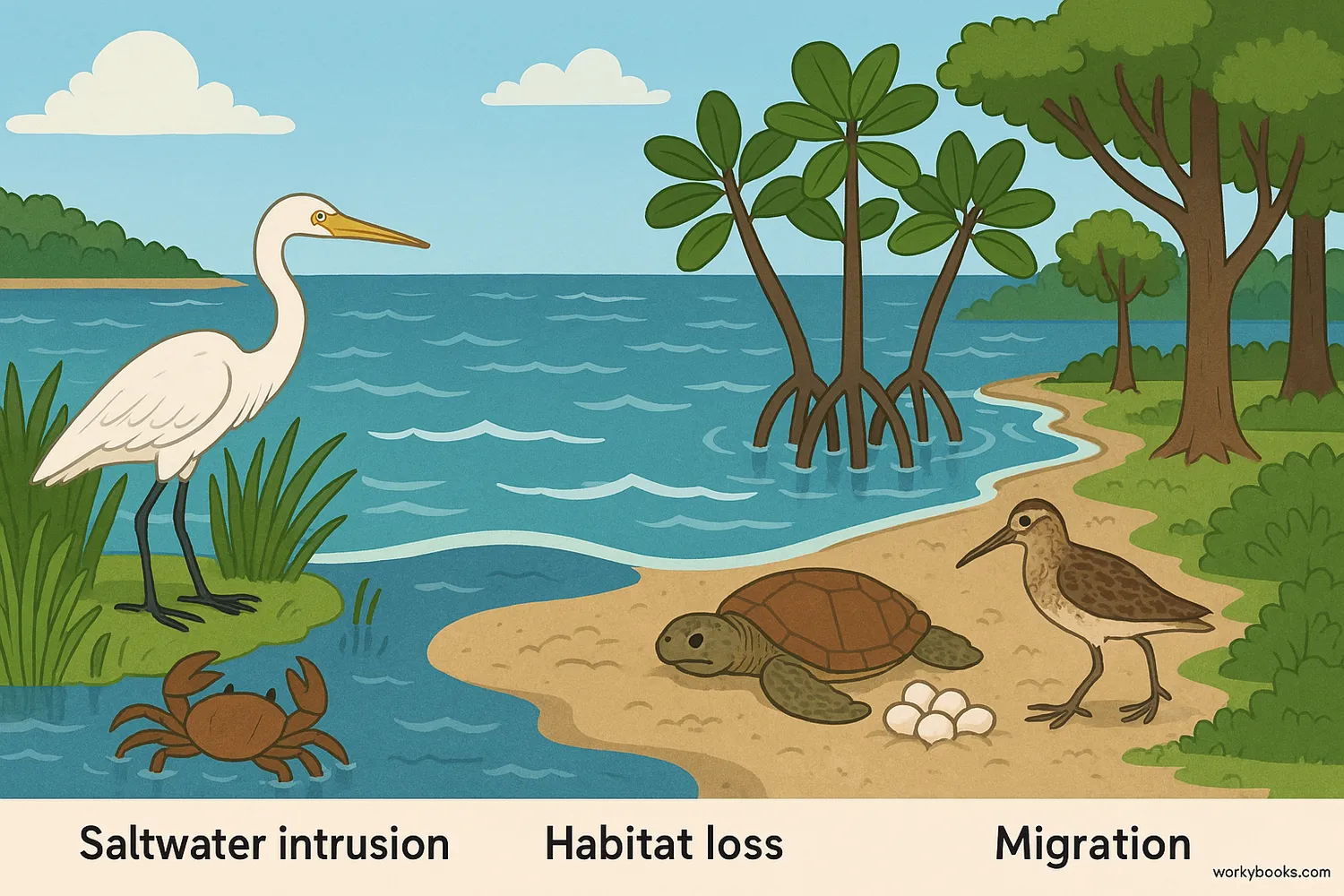
Rising seas don't just affect people—they reshape the homes of countless coastal animals. As ocean water levels increase due to climate change, the water creeps higher onto shorelines. This flooding and erosion destroy the habitats where coastal wildlife lives, feeds, and raises young. Evidence shows that many species face serious threats as their homes disappear beneath the waves.
Sea turtles provide a clear example of how sea level rise harms wildlife. Female sea turtles return to sandy beaches to lay their eggs each year. When rising water floods these beaches or erosion washes sand away, the turtles lose their nesting sites. Shorebirds face similar challenges. These birds depend on mudflats and salt marshes to find food like small crabs and worms. As water levels rise, these feeding areas shrink or vanish completely. Scientists observe that some bird populations decline when their habitat disappears.
Salt marshes and mangroves serve as vital nurseries where young fish grow and hide from predators. These coastal plants can survive in salty water and help protect shorelines. However, these ecosystems can drown if water rises faster than the plants can grow upward or move inland. When mangroves and marshes die, fish populations may decrease because young fish lose safe places to develop.
The problem worsens when human development sits right behind the shoreline. Roads, buildings, and walls block wildlife from moving to higher ground as water rises. This situation creates a coastal squeeze. Animals get trapped between rising water on one side and human structures on the other. They have nowhere to retreat. This represents one more way climate change shrinks the wild places animals need to survive.
Along the Chesapeake Bay in Maryland, researchers documented how sea level rise affects marsh birds. Between 1990 and 2015, the bay lost over 2,000 acres of tidal marsh. Bird species that nest in these marshes showed population declines during this same period. This evidence demonstrates the connection between habitat loss and wildlife impacts.
Understanding how sea level rise affects wildlife matters because healthy ecosystems support many species working together. When one habitat disappears, it can trigger changes throughout the entire coastal ecosystem. Protecting coastal wildlife requires addressing climate change and preserving space for habitats to shift inland as seas continue to rise.
Interesting Fact: Some coastal marshes can keep pace with sea level rise by building up soil with plant roots and trapped sediment, but only if water rises less than about 5 millimeters per year. Many areas now experience faster rates.
Comprehension quiz (10 questions)
1. What causes sea level rise to affect coastal wildlife habitats?
2. How does sea level rise specifically harm sea turtles?
3. What does the term 'coastal squeeze' mean in the passage?
4. According to the passage, what role do salt marshes and mangroves play for fish?
5. What evidence from the Chesapeake Bay supports the connection between habitat loss and wildlife impacts?
6. Why can mangroves and salt marshes drown as sea levels rise?
7. Based on the passage, which statement best describes how ecosystem changes affect wildlife populations?
8. What makes the coastal squeeze problem worse for wildlife?
9. True or False: Coastal marshes can always keep pace with sea level rise no matter how fast water levels increase.
10. True or False: According to the passage, protecting coastal wildlife requires both addressing climate change and preserving space for habitats to shift inland.
Perfect for the way you teach
- Build comprehension skills
- Auto-graded quiz
- Differentiated reading
- Read together at home
- Improve fluency
- Quiet reading time
- Reading curriculum support
- Independent practice
- Track Lexile growth