This learning resource is available in interactive and printable formats. The interactive worksheet can be played online and assigned to students. The Printable PDF version can be downloaded and printed for completion by hand.
This passage explores the Han Dynasty, a transformative era in Ancient China known for its remarkable inventions, territorial growth, and lasting influence on world history. Aligned with CA HSS 6.6 and CCSS RH.6-8.2, students will analyze social hierarchy, technological advancements like paper and the seismograph, the expansion of the Silk Road, and the impact of strong emperors such as Emperor Wu. The passage incorporates primary evidence, cause-and-effect relationships, and historical context, challenging students to think critically. Activities include a glossary, timeline, multiple-choice quiz, writing prompts, and graphic organizers. Read aloud audio and a Spanish translation are provided, making this a comprehensive resource for world and ancient history classrooms.
CONTENT PREVIEW
Expand content preview
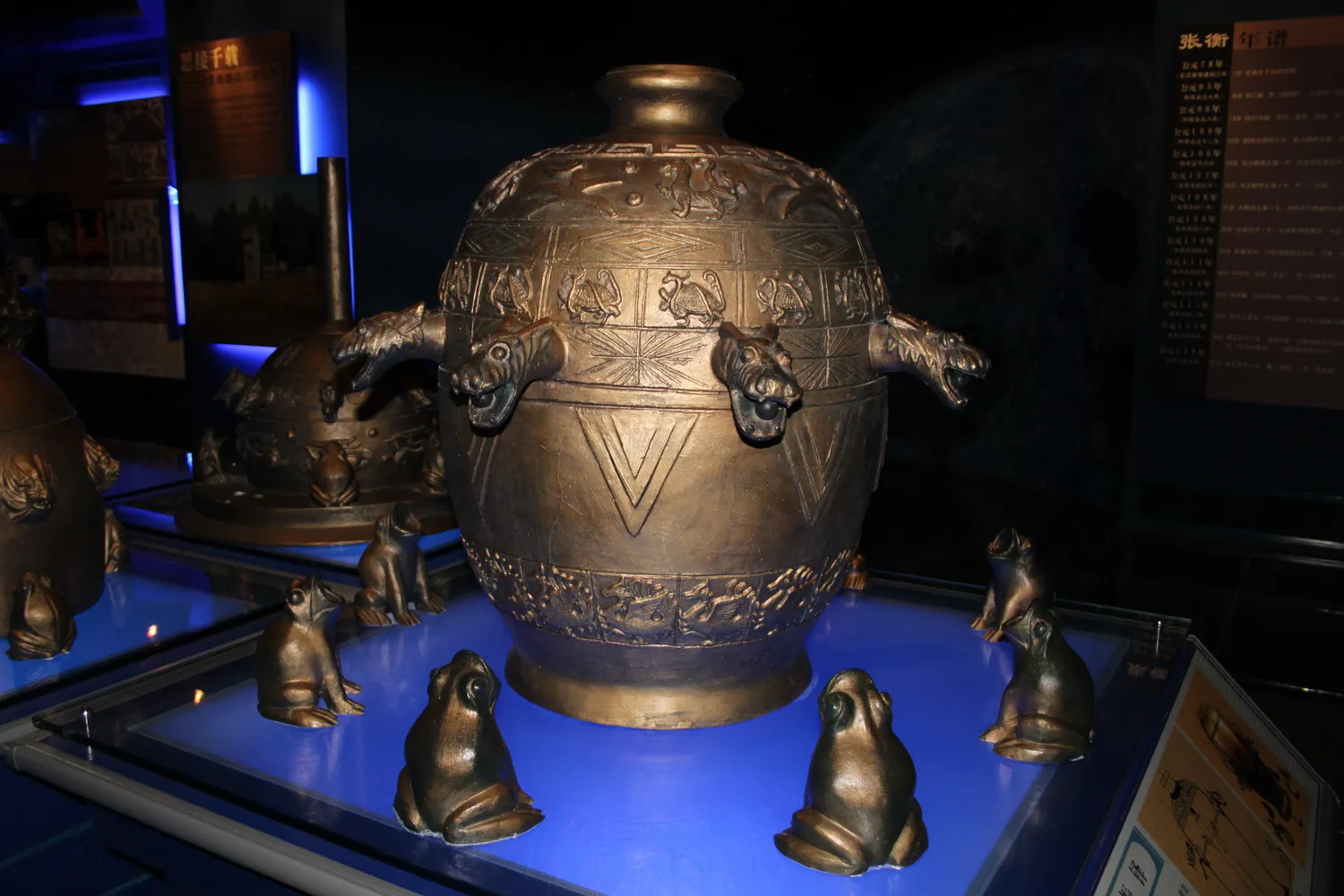
Han Dynasty Earthquake-detecting Machine Model by Gary Todd / Wikimedia Commons
The Han Dynasty ruled China from 206 BCE to 220 CE and is considered one of the greatest periods in Chinese history. During these four centuries, China experienced tremendous growth, both in territory and in ideas. The Han Dynasty followed the short-lived Qin Dynasty and brought stability and prosperity to the region, leaving a legacy that influenced Chinese culture for thousands of years.
One of the most important achievements of the Han Dynasty was the expansion of the empire's borders. Under strong emperors like Emperor Wu, the Han armies pushed westward, reaching as far as Central Asia. This expansion enabled the creation of the Silk Road, a trade network connecting China with the Mediterranean world. This network allowed valuable goods like silk, spices, and jade to move across continents. Archaeological evidence, such as silk fragments found in ancient Roman sites, shows how far Han products traveled.
The Han Dynasty was also a golden age of innovation. Chinese inventors developed paper around 105 CE, which made writing and record-keeping much easier than previous methods using bamboo or silk. Another important invention was the seismograph, a device that detected earthquakes. The Chinese historian Sima Qian wrote detailed records during this period, giving historians an invaluable primary source about Han society and daily life.
Society in the Han Dynasty was organized in a strict hierarchy. At the top was the emperor, followed by nobles, scholars, farmers, artisans, and merchants. The civil service system allowed talented individuals to earn government jobs by passing exams, rather than just being born into noble families. This encouraged education and helped create a capable government. Farmers were highly respected, as agriculture was the backbone of the Han economy, while merchants, though often wealthy, had a lower social status. Daily life was shaped by Confucian values, emphasizing respect for elders and the importance of family.
The Han Dynasty's inventions and expansion had lasting effects on China and the world. The spread of Chinese goods and ideas through the Silk Road connected distant cultures, while paper and other technologies changed the way people lived and communicated. The civil service system became a model for later governments, showing how merit could be valued over birthright. The Han Dynasty’s achievements are still remembered as a high point in Chinese civilization.
This period shows how innovations and expansion can shape not only one society, but also the wider world by connecting people and ideas across great distances.
Interesting Fact: Ban Zhao, a famous Han Dynasty female historian, wrote "Lessons for Women," one of the earliest surviving works on women’s education in world history.
When did the Han Dynasty begin?
206 BCE105 CE220 CE141 BCE
Which emperor expanded Han borders?
Emperor WuSima QianBan ZhaoCai Lun
What did the Silk Road connect?
China and MediterraneanChina and IndiaRome and GreeceJapan and Korea
What was invented around 105 CE?
PaperGunpowderThe compassPorcelain
Why was the civil service system important?
It chose leaders by examsIt built trade routesIt made silkIt invented paper
How did Han inventions change society?
Made life easierStopped warsEnded tradeLowered taxes
The Han Dynasty ruled after the Qin. True or false?
TrueFalse
What does 'hierarchy' mean?
People ranked by statusA type of inventionA trade routeA written record
Perfect For:
👩🏫 Teachers
• Reading comprehension practice
• Auto-graded assessments
• Literacy skill development
👨👩👧👦 Parents
• Reading practice at home
• Comprehension improvement
• Educational reading time
🏠 Homeschoolers
• Reading curriculum support
• Independent reading practice
• Progress monitoring
Reading Features:
📖
Reading Passage
Engaging fiction or nonfiction text
❓
Comprehension Quiz
Auto-graded questions
📊
Instant Feedback
Immediate results and scoring
📄
Printable Version
Download for offline reading
🔊
Read Aloud
Voice-over with word highlighting
Reviews & Ratings
No reviews yet. Be the first to share your experience!
Related Content
Life in Ancient China
This comprehensive history reading passage explores daily life and social structure in Ancient China, focusing on the ro...
Geography of Ancient China
This passage examines the geographic advantages and challenges faced by Ancient China, exploring how natural features li...
Bronze in Ancient China
This passage explores the significance of bronze in Ancient China, focusing on its use in rituals, weapons, and expressi...
Confucianism, Daoism, and Buddhism in China
This rigorous ancient history reading passage explores the development and impact of Confucianism, Daoism, and Buddhism ...
Evidence in Ancient History
This engaging history reading passage investigates how archaeologists and historians discover clues about how ancient pe...
Ancient Theocracy
This engaging history reading passage explores the concept of theocracy in ancient civilizations, where priests and reli...
Ancient Canaan
This educational passage explores the land of Canaan, the historical homeland of the ancient Israelites. Students will l...
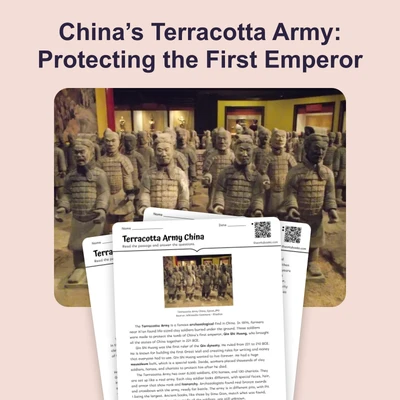
The First Emperor: Qin Shi Huangdi Unites China
This comprehensive reading passage explores the rise of Qin Shi Huangdi, the first emperor who united ancient China. Stu...
Shi Huangdi: First Emperor of China
This rigorous history reading passage explores the remarkable reign of Shi Huangdi, the first emperor of China, and his ...
Ban Zhao: China's Woman Scholar
This passage explores the life and legacy of Ban Zhao, one of ancient China's most respected scholars and the author of ...
Ancient Philosophy
This reading passage takes students on a journey through the philosophical traditions of ancient Greece, India, and Chin...
Ancient Literature
This passage explores the importance of ancient stories and poems from civilizations such as Greece, India, and Israel. ...
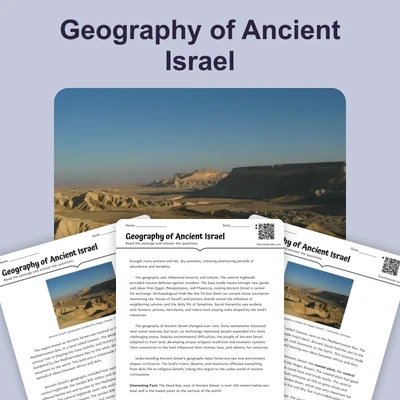
Geography of Ancient Israel
This passage explores the rich geography of Ancient Israel, focusing on how landforms, climate, and natural resources sh...
Ancient Money Barter
This passage explores the fascinating evolution from barter to the earliest coins in ancient civilizations, focusing on ...
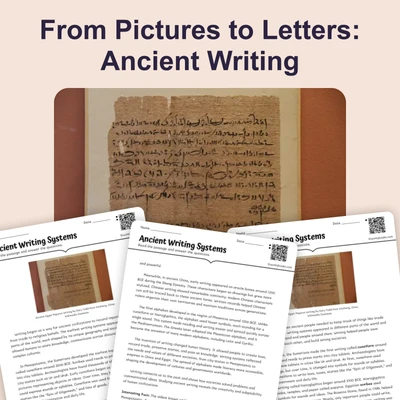
Ancient Writing Systems
This engaging history reading passage explores the origins and evolution of ancient writing systems, including cuneiform...
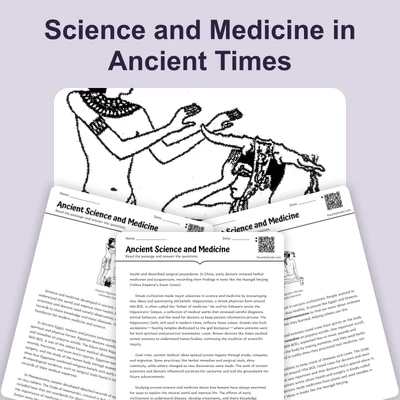
Ancient Science and Medicine
This comprehensive reading passage explores the development of science and medicine in ancient civilizations, including ...
Ancient Agriculture Farming
This passage explores the transformative impact of farming on ancient societies, examining how the Neolithic Revolution ...
Social structures in Ancient World
This passage explores the organization and significance of family life in ancient societies, focusing on how extended fa...
Ancient Mathematics
This passage explores the essential role of mathematics in ancient civilizations, including Mesopotamia, Egypt, Greece, ...
Trade Across Ancient India
This history reading passage explores Ancient India's trade networks and their impact on global connections. Students wi...