How Circuits Convert Energy — Reading Comprehension
Rate this
Premium Resource
Present
Present in classroom. No work saved
Assign
Classroom with student accounts, Track progress
Quick Play
No student accounts, assign with a link
Grades
3
4
5
Standards
NGSS 4-PS3-2
PRINT+DIGITAL RESOURCE
This learning resource is available in interactive and printable formats. The interactive worksheet can be played online and assigned to students. The Printable PDF version can be downloaded and printed for completion by hand.
This 250-word reading passage introduces Grade 4 students to the concept of energy conversion in electric circuits, aligned with NGSS standards PS3.A, PS3.B, and PS3.D. Students discover that electric circuits are pathways that convert electrical energy into other useful forms such as light, heat, motion, and sound. Through real-world examples like light bulbs, motors, and speakers, learners understand that every electrical device is a circuit designed to transform energy for specific purposes. The passage uses simple, age-appropriate language and includes bolded key vocabulary terms with immediate definitions. Audio-integrated features support diverse learners, while differentiated versions ensure accessibility for students at various reading levels. Accompanying activities include multiple-choice comprehension questions, writing prompts that require students to explain and apply concepts, and graphic organizers that help visualize energy transformation processes. This resource builds foundational understanding of energy conversion, preparing students for hands-on investigations and deeper exploration of physical science concepts. Perfect for elementary science classrooms implementing NGSS standards.
CONTENT PREVIEW
Expand content preview
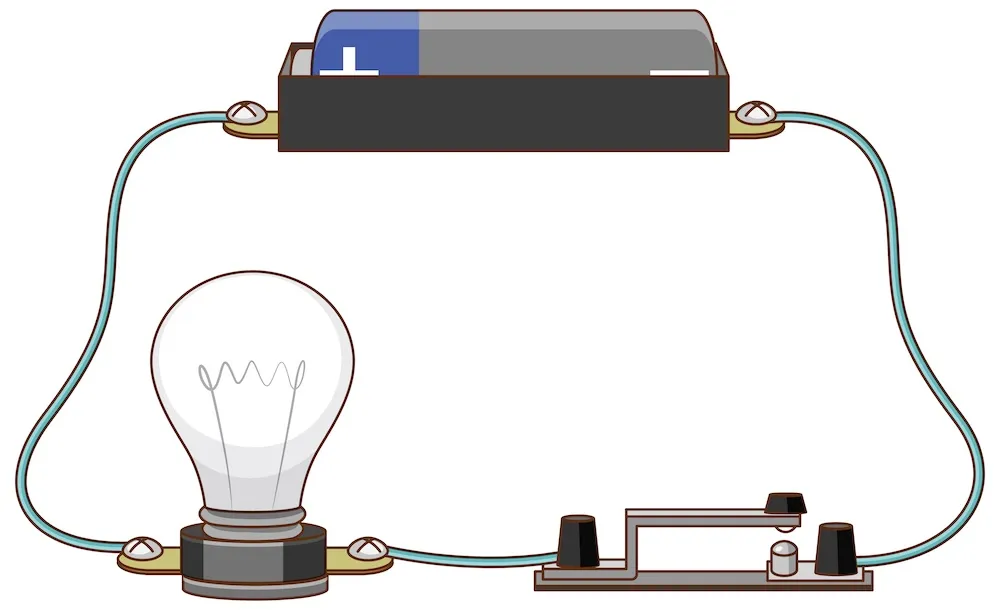
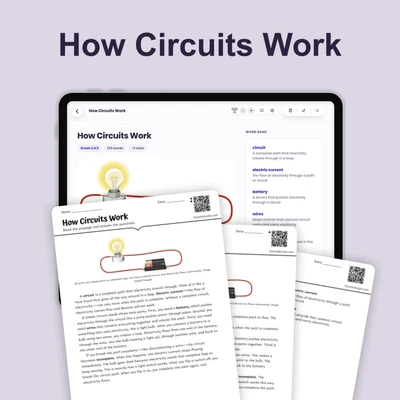
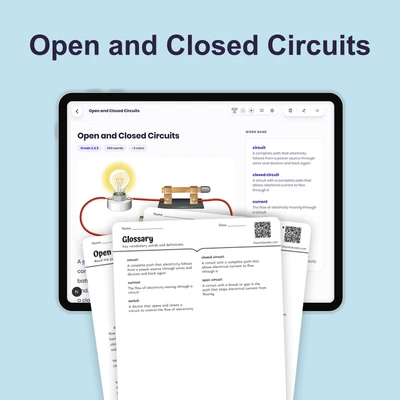
An electric circuit is a complete pathway that allows electricity to flow from a power source, through wires, and back again. Circuits are important because they convert, or change, electrical energy into other useful forms of energy that we need every day.
When you turn on a lamp, the circuit converts electrical energy into light so you can see. The light bulb also produces heat, which you can feel if you carefully touch the bulb after it has been on for a while. A circuit with a light bulb changes electrical energy into both light energy and heat energy.
Some circuits contain motors instead of light bulbs. A motor is a device that spins or moves when electricity flows through it. These circuits convert electrical energy into mechanical energy, which means energy of motion. Fans, toy cars, and blenders all use motors to create movement.
Other circuits have speakers that convert electrical energy into sound energy. When you listen to music on a radio or hear your teacher's voice through a speaker, electrical energy is being changed into sound waves that travel to your ears.
Every electrical device you use—from flashlights to computers—is a circuit designed to convert energy from one form to another for a specific purpose. Understanding how circuits work helps us use energy wisely and safely.
What is an electric circuit?
A pathway for electricity to flowA type of batteryA kind of light bulbA power plant
What two energy forms does a light bulb produce?
Sound and motionLight and heatHeat and motionLight and sound
What does a motor convert electrical energy into?
Light energySound energyMechanical energyHeat energy
Why would a toy car need a circuit?
To convert electrical energy into motionTo make loud soundsTo produce bright lightsTo stay completely still
How does a speaker change energy?
Changes sound into electricityChanges motion into heatChanges electrical energy into soundChanges light into motion
Which device converts electrical energy into mechanical energy?
A light bulbA fanA speakerA flashlight
All electrical devices are circuits.
TrueFalse
What does 'convert' mean in this passage?
To break somethingTo change from one form to anotherTo make something biggerTo turn something off
Perfect For:
👩🏫 Teachers
• Reading comprehension practice
• Auto-graded assessments
• Literacy skill development
👨👩👧👦 Parents
• Reading practice at home
• Comprehension improvement
• Educational reading time
🏠 Homeschoolers
• Reading curriculum support
• Independent reading practice
• Progress monitoring
Reading Features:
📖
Reading Passage
Engaging fiction or nonfiction text
❓
Comprehension Quiz
Auto-graded questions
📊
Instant Feedback
Immediate results and scoring
📄
Printable Version
Download for offline reading
🔊
Read Aloud
Voice-over with word highlighting
Reviews & Ratings
No reviews yet. Be the first to share your experience!
Related Content
How Speed Affects Energy
This Grade 4 physical science reading passage introduces students to the relationship between speed and kinetic energy, ...
NGSS 4-PS3-2
Parts of a Circuit
This engaging 250-word passage introduces Grade 4-5 students to the essential components of electric circuits aligned wi...
NGSS 4-PS3-2
Why Does Ice Melt in Your Hand
This engaging 250-word reading passage introduces fourth-grade students to the fundamental concepts of thermal energy an...
NGSS 4-PS3-2
What Is Energy Transfer
This engaging reading passage introduces elementary students to the concept of energy transfer, aligned with NGSS standa...
NGSS 4-PS3-2
What Is Electric Current?
This 250-word informational science passage introduces elementary students to the concept of electric current and how it...
NGSS 4-PS3-2
How Circuits Work
This 250-word informational reading passage introduces Grade 4-5 students to the fundamental concepts of electric circui...
NGSS 4-PS3-2
Open and Closed Circuits
This engaging 250-word reading passage teaches Grade 4-5 students about open and closed circuits, aligned with NGSS 4-PS...
NGSS 4-PS3-2
What Are Conductors
This engaging Grade 4-5 science passage introduces students to conductors and their essential role in electrical systems...
NGSS 4-PS3-2
What Are Insulators
This engaging Grade 4-5 science passage explores insulators and their critical role in electrical safety. Students learn...
NGSS 4-PS3-2
Circuits in Daily Life
This engaging 250-word science passage introduces Grade 4-5 students to the concept of electric circuits in daily life. ...
NGSS 4-PS3-2
Why Do Lights Turn On With a Switch
This 250-word reading passage introduces fourth-grade students to the fundamental concept of how switches control electr...
NGSS 4-PS3-2
How Does a Flashlight Work
This 250-word informational reading passage helps Grade 4 students understand energy transformation through the familiar...
NGSS 4-PS3-2
Why Does Metal Feel Colder Than Wood
This engaging 250-word reading passage helps fourth-grade students understand an important physical science concept: why...
NGSS 4-PS3-2
How Heat Moves Between Objects
This 250-word reading passage introduces fourth-grade students to the concept of heat transfer between objects in direct...