This learning resource is available in interactive and printable formats. The interactive worksheet can be played online and assigned to students. The Printable PDF version can be downloaded and printed for completion by hand.
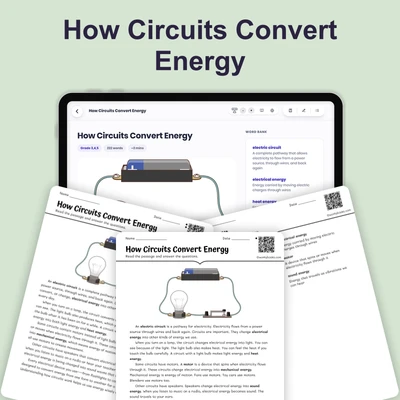
This engaging 250-word science passage introduces Grade 4-5 students to the concept of electric circuits in daily life. Aligned with NGSS standard 4-PS3-2, the passage explains how circuits are the hidden pathways that power everything from simple flashlights to complex computers and smartphones. Students learn about circuit components, how electricity flows through complete loops, and why understanding circuits helps us use electrical energy safely. The passage connects abstract concepts to concrete examples students encounter every day—light switches, remote controls, microwaves, and tablets. Through clear explanations and relatable analogies, students discover how dependent modern life is on electrical circuits and develop an appreciation for the technology around them. This audio-integrated resource includes a simplified differentiated version, Spanish translations, glossary terms, comprehension questions, writing activities, and graphic organizers. Perfect for teaching about energy transfer, electrical systems, and everyday technology, this passage helps students identify circuits in their homes, schools, and devices while building scientific literacy and critical thinking skills essential for understanding our electrically powered world.
CONTENT PREVIEW
Expand content preview
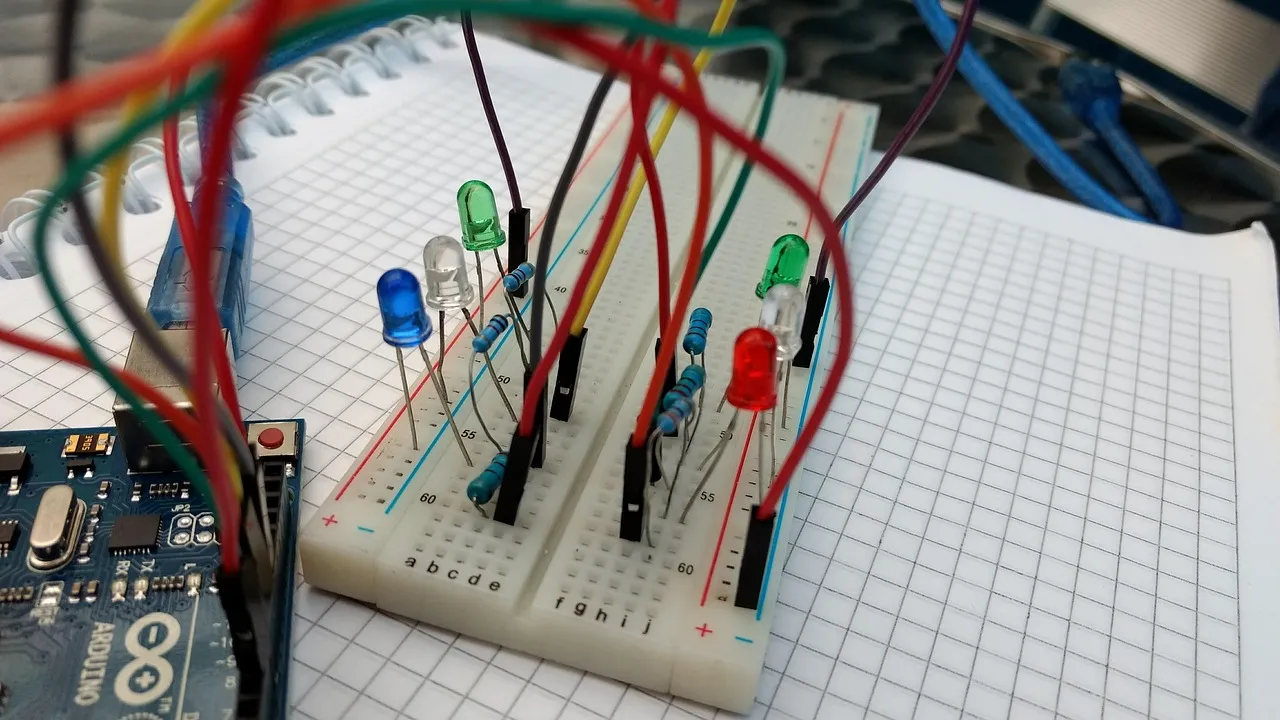
Electric circuits: The invisible pathways powering our modern world. Image Credit halejandropmartz / Pixabay.
A circuit is a complete path that electricity flows through. Circuits are important because they allow electrical energy to power the devices we use every day.
Circuits do something special—they change electrical energy into other forms of energy. Electrical energy is the energy that flows through wires and powers devices. When electricity flows through a circuit, different parts of the circuit convert that energy into forms we can use.
A light bulb in a circuit converts electrical energy into light energy. The electricity flows through a thin wire inside the bulb, making it glow and produce light. A buzzer converts electrical energy into sound energy. When electricity flows through the buzzer, it vibrates and creates sound waves we can hear. A motor converts electrical energy into motion energy. The electricity makes parts inside the motor spin, creating movement that can power toys, fans, or tools.
Think of a circuit like a water slide. Water flows down the slide (like electricity flows through wires), and at the bottom, the water does work—it splashes and moves things around. Similarly, electricity flows through a circuit and does work by creating light, sound, or motion.
Engineers design devices by choosing the right parts to convert electrical energy into the form they need. A flashlight needs light, so it uses a bulb. An alarm needs sound, so it uses a buzzer. Understanding how circuits convert energy helps us create useful tools and devices.
What is a circuit?
A path electricity flows throughA type of batteryA kind of wireA form of energy
What does a light bulb convert?
Electrical energy into light energyLight energy into electrical energySound energy into motion energyMotion energy into sound energy
What does a motor create?
LightSoundMotionHeat
How does a buzzer make sound?
It glows and produces lightIt spins and creates movementIt vibrates and creates sound wavesIt heats up and makes noise
Why do engineers design different devices?
To convert energy into needed formsTo make devices more expensiveTo use more electricityTo create bigger circuits
What flows through wires in a circuit?
WaterAirElectrical energyLight
Circuits can only convert energy into light.
TrueFalse
What does 'convert' mean?
To stop something from workingTo change from one form to anotherTo make something biggerTo turn off a device
Perfect For:
👩🏫 Teachers
• Reading comprehension practice
• Auto-graded assessments
• Literacy skill development
👨👩👧👦 Parents
• Reading practice at home
• Comprehension improvement
• Educational reading time
🏠 Homeschoolers
• Reading curriculum support
• Independent reading practice
• Progress monitoring
Reading Features:
📖
Reading Passage
Engaging fiction or nonfiction text
❓
Comprehension Quiz
Auto-graded questions
📊
Instant Feedback
Immediate results and scoring
📄
Printable Version
Download for offline reading
🔊
Read Aloud
Voice-over with word highlighting
Reviews & Ratings
No reviews yet. Be the first to share your experience!
Related Content
How Speed Affects Energy
This Grade 4 physical science reading passage introduces students to the relationship between speed and kinetic energy, ...
NGSS 4-PS3-2
Parts of a Circuit
This engaging 250-word passage introduces Grade 4-5 students to the essential components of electric circuits aligned wi...
NGSS 4-PS3-2
Why Does Ice Melt in Your Hand
This engaging 250-word reading passage introduces fourth-grade students to the fundamental concepts of thermal energy an...
NGSS 4-PS3-2
What Is Energy Transfer
This engaging reading passage introduces elementary students to the concept of energy transfer, aligned with NGSS standa...
NGSS 4-PS3-2
What Is Electric Current?
This 250-word informational science passage introduces elementary students to the concept of electric current and how it...
NGSS 4-PS3-2
How Circuits Work
This 250-word informational reading passage introduces Grade 4-5 students to the fundamental concepts of electric circui...
NGSS 4-PS3-2
Open and Closed Circuits
This engaging 250-word reading passage teaches Grade 4-5 students about open and closed circuits, aligned with NGSS 4-PS...
NGSS 4-PS3-2
What Are Conductors
This engaging Grade 4-5 science passage introduces students to conductors and their essential role in electrical systems...
NGSS 4-PS3-2
What Are Insulators
This engaging Grade 4-5 science passage explores insulators and their critical role in electrical safety. Students learn...
NGSS 4-PS3-2
Why Do Lights Turn On With a Switch
This 250-word reading passage introduces fourth-grade students to the fundamental concept of how switches control electr...
NGSS 4-PS3-2
How Does a Flashlight Work
This 250-word informational reading passage helps Grade 4 students understand energy transformation through the familiar...
NGSS 4-PS3-2
Why Does Metal Feel Colder Than Wood
This engaging 250-word reading passage helps fourth-grade students understand an important physical science concept: why...
NGSS 4-PS3-2
How Circuits Convert Energy
This 250-word reading passage introduces Grade 4 students to the concept of energy conversion in electric circuits, alig...
NGSS 4-PS3-2
How Heat Moves Between Objects
This 250-word reading passage introduces fourth-grade students to the concept of heat transfer between objects in direct...
NGSS 4-PS3-2
Heat Energy Transfer
This Grade 4 physical science reading passage explores heat energy transfer aligned to NGSS standard 4-PS3-2 and Discipl...
NGSS 4-PS3-2
How Electric Current Transfers Energy
This 250-word reading passage introduces fourth-grade students to the concept of energy transfer through electric curren...
NGSS 4-PS3-2
How Does a Thermos Keep Drinks Hot
This Grade 4 physical science reading passage explores how electrical circuits convert energy from one form to another i...