Why Does Ice Melt in Your Hand — Reading Comprehension
Rate this
Premium Resource
Present
Present in classroom. No work saved
Assign
Classroom with student accounts, Track progress
Quick Play
No student accounts, assign with a link
Grades
3
4
5
Standards
NGSS 4-PS3-2
PRINT+DIGITAL RESOURCE
This learning resource is available in interactive and printable formats. The interactive worksheet can be played online and assigned to students. The Printable PDF version can be downloaded and printed for completion by hand.
This engaging 250-word reading passage introduces fourth-grade students to the fundamental concepts of thermal energy and heat transfer aligned with NGSS 4-PS3-2 standards. Through the relatable example of ice melting in a hand, students explore how thermal energy flows from warmer objects to cooler objects through conduction. The passage explains that when you hold ice, your hand transfers thermal energy to the ice, causing the ice particles to move faster and change from solid to liquid. Students also learn why their hand feels cold during this process—because it is losing thermal energy. The audio-integrated lesson uses simple, grade-appropriate language to build foundational understanding of PS3.A (Definitions of Energy) and PS3.B (Conservation of Energy and Energy Transfer). Key vocabulary terms including thermal energy, conduction, and particles are clearly defined within context. The passage avoids complex scientific jargon while maintaining scientific accuracy, making abstract concepts concrete through everyday experiences. Supplementary activities include comprehension questions, writing prompts, and graphic organizers that reinforce understanding of cause-and-effect relationships in energy transfer. This resource provides teachers with a complete instructional package for introducing heat transfer concepts before hands-on investigations.
CONTENT PREVIEW
Expand content preview
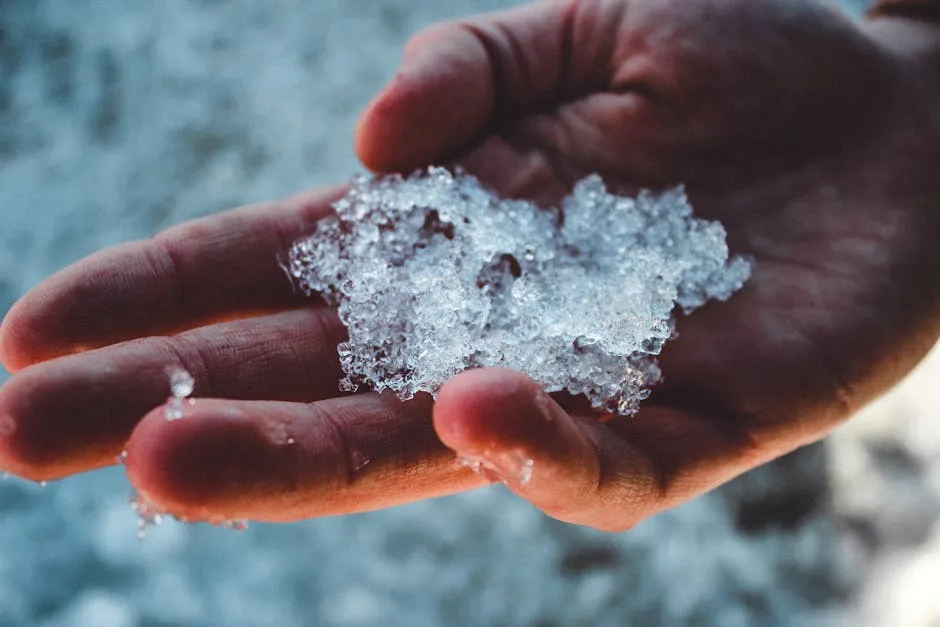
When you hold an ice cube, thermal energy moves from your hand into the ice. This movement of thermal energy is called heat transfer. Image credit Дмитрий Агеев / Pexels.
Thermal energy is the energy of moving particles inside matter. When you hold an ice cube, something interesting happens. Your hand is warmer than the ice, so thermal energy moves from your hand into the ice. This movement of thermal energy is called heat transfer.
Heat always flows from warmer objects to cooler objects. It never flows the other way. This is an important rule about energy. When thermal energy from your hand enters the ice, it makes the ice particles (tiny pieces that make up matter) move faster. Ice is solid water with particles locked in place. As the particles move faster, they break free from their locked positions. The solid ice turns into liquid water. This process is called melting.
Your hand feels cold because it is losing thermal energy to the ice. The ice is taking energy away from your hand. This happens through conduction, which is heat transfer between objects that touch each other.
You can see this same principle in many everyday situations. A cold drink warms up on a hot day because thermal energy moves from the warm air into the cold drink. A metal spoon in hot soup gets warm because thermal energy moves from the soup into the spoon. Understanding how thermal energy moves helps explain why things get warmer or cooler.
What is thermal energy?
Energy of moving particles in matterEnergy from the sun onlyEnergy that makes things coldEnergy stored in batteries
Which direction does heat always flow?
From cold objects to warm objectsFrom warm objects to cold objectsIn both directions equallyHeat does not flow
What happens to ice particles when melting?
They stop moving completelyThey move slower and lock togetherThey move faster and break freeThey disappear into the air
Why does your hand feel cold?
Ice adds cold energy to handHand loses thermal energy to iceIce creates new cold particlesHand stops making thermal energy
What is conduction?
Heat transfer through touching objectsHeat transfer through air onlyMaking objects conduct electricityFreezing water into ice
Why does cold drink warm up?
The drink makes its own heatCold energy leaves the drinkThermal energy moves from air to drinkThe cup heats the drink
Heat can flow from cold to warm objects.
TrueFalse
What are particles?
Large chunks of visible matterTiny pieces that make up matterTypes of energy in objectsTools scientists use for measuring
Perfect For:
👩🏫 Teachers
• Reading comprehension practice
• Auto-graded assessments
• Literacy skill development
👨👩👧👦 Parents
• Reading practice at home
• Comprehension improvement
• Educational reading time
🏠 Homeschoolers
• Reading curriculum support
• Independent reading practice
• Progress monitoring
Reading Features:
📖
Reading Passage
Engaging fiction or nonfiction text
❓
Comprehension Quiz
Auto-graded questions
📊
Instant Feedback
Immediate results and scoring
📄
Printable Version
Download for offline reading
🔊
Read Aloud
Voice-over with word highlighting
Reviews & Ratings
No reviews yet. Be the first to share your experience!
Related Content
How Speed Affects Energy
This Grade 4 physical science reading passage introduces students to the relationship between speed and kinetic energy, ...
NGSS 4-PS3-2
Parts of a Circuit
This engaging 250-word passage introduces Grade 4-5 students to the essential components of electric circuits aligned wi...
NGSS 4-PS3-2
What Is Energy Transfer
This engaging reading passage introduces elementary students to the concept of energy transfer, aligned with NGSS standa...
NGSS 4-PS3-2
What Is Electric Current?
This 250-word informational science passage introduces elementary students to the concept of electric current and how it...
NGSS 4-PS3-2
How Circuits Work
This 250-word informational reading passage introduces Grade 4-5 students to the fundamental concepts of electric circui...
NGSS 4-PS3-2
Open and Closed Circuits
This engaging 250-word reading passage teaches Grade 4-5 students about open and closed circuits, aligned with NGSS 4-PS...
NGSS 4-PS3-2
What Are Conductors
This engaging Grade 4-5 science passage introduces students to conductors and their essential role in electrical systems...
NGSS 4-PS3-2
What Are Insulators
This engaging Grade 4-5 science passage explores insulators and their critical role in electrical safety. Students learn...
NGSS 4-PS3-2
Circuits in Daily Life
This engaging 250-word science passage introduces Grade 4-5 students to the concept of electric circuits in daily life. ...
NGSS 4-PS3-2
Why Do Lights Turn On With a Switch
This 250-word reading passage introduces fourth-grade students to the fundamental concept of how switches control electr...
NGSS 4-PS3-2
How Does a Flashlight Work
This 250-word informational reading passage helps Grade 4 students understand energy transformation through the familiar...
NGSS 4-PS3-2
Why Does Metal Feel Colder Than Wood
This engaging 250-word reading passage helps fourth-grade students understand an important physical science concept: why...
NGSS 4-PS3-2
How Circuits Convert Energy
This 250-word reading passage introduces Grade 4 students to the concept of energy conversion in electric circuits, alig...
NGSS 4-PS3-2
How Heat Moves Between Objects
This 250-word reading passage introduces fourth-grade students to the concept of heat transfer between objects in direct...