How Heat Moves Between Objects — Reading Comprehension
Rate this
Present
Present in classroom. No work saved
Assign
Classroom with student accounts, Track progress
Quick Play
No student accounts, assign with a link
Grades
3
4
5
Standards
NGSS 4-PS3-2
PRINT+DIGITAL RESOURCE
This learning resource is available in interactive and printable formats. The interactive worksheet can be played online and assigned to students. The Printable PDF version can be downloaded and printed for completion by hand.
This 250-word reading passage introduces fourth-grade students to the concept of heat transfer between objects in direct contact. Aligned to NGSS standard 4-PS3-2 and Disciplinary Core Idea PS3.B: Conservation of Energy and Energy Transfer, the passage explains how heat energy naturally moves from warmer objects to cooler objects when they touch. Using familiar examples such as holding a cold glass of water, warming hands on a hot mug, or cooking food in a hot pan, students build foundational understanding of thermal energy transfer. The passage includes bolded key vocabulary terms like heat, temperature, and thermal energy, each defined in context for accessibility. Audio-integrated features support diverse learners by providing read-aloud options for both the standard and simplified differentiated versions. The educational package includes Spanish translations of both passage versions, a comprehensive glossary, multiple-choice comprehension questions, writing activities, and graphic organizers. These scaffolded materials help students develop scientific understanding through reading, discussion, and hands-on investigation. The content avoids technical terminology like conduction while focusing on observable phenomena that students can relate to their daily experiences, making abstract energy concepts concrete and understandable for elementary learners.
CONTENT PREVIEW
Expand content preview
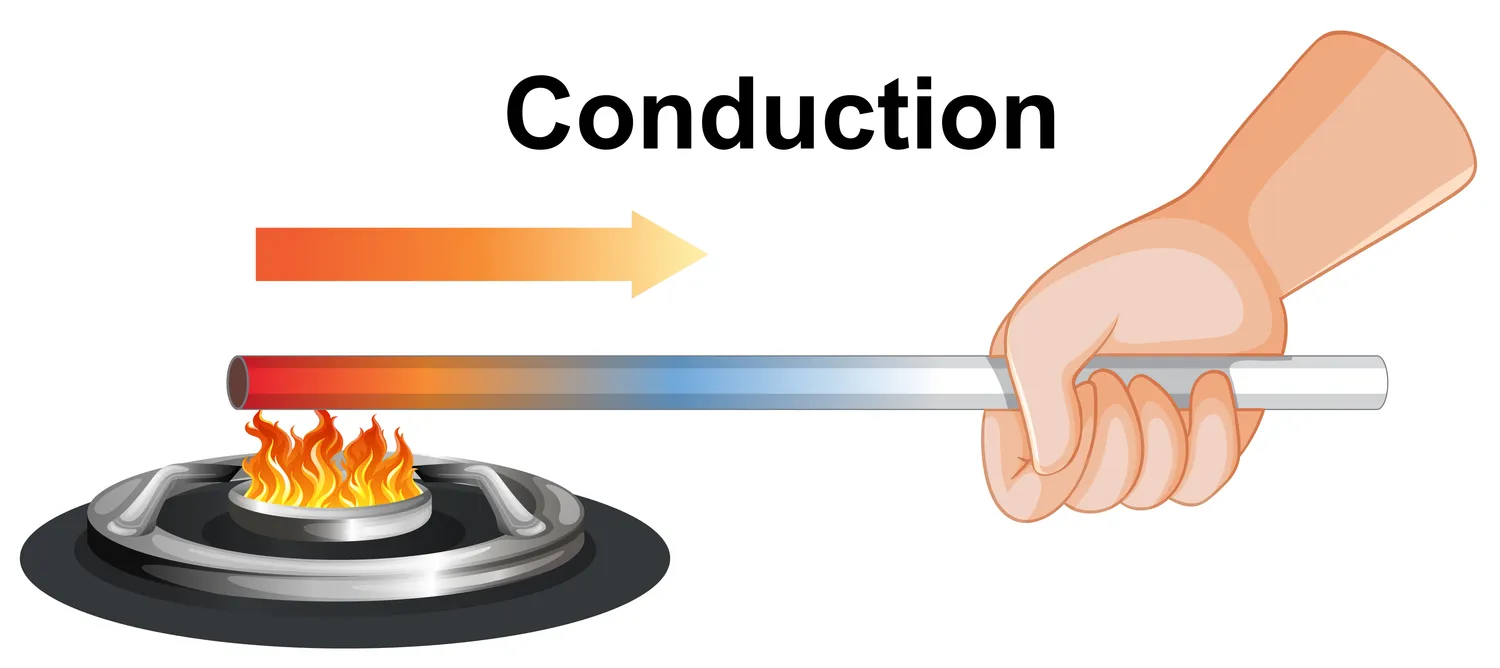
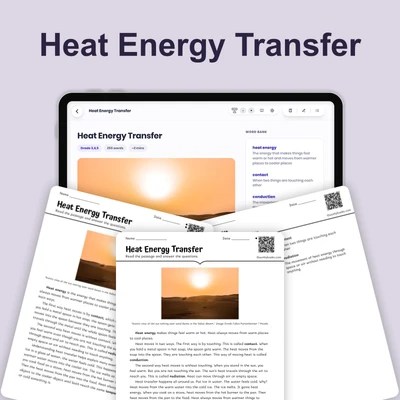
Conduction is the transfer of heat energy through direct contact between objects. Image credit Frepik.
Heat is a type of energy that can move from one object to another. Heat always moves in the same direction—from warmer objects to cooler objects. This happens when objects touch each other. Understanding how heat moves helps us cook food, stay warm, and use energy wisely.
When you hold a cold glass of water, your hand feels cold. This happens because heat energy moves from your warm hand into the cold glass. Your hand has a higher temperature, which means it has more heat energy. The glass has a lower temperature, so it has less heat energy. Heat always travels from the object with more heat energy to the object with less heat energy.
The same thing happens when you cook. A hot pan sitting on the stove has lots of heat energy. When you place cold food in the pan, heat moves from the hot pan into the cooler food. The food gets warmer and cooks. The pan might cool down a little bit as it gives some of its heat to the food.
You can feel heat moving in many everyday situations. When you warm your hands on a hot mug of cocoa, heat moves from the mug to your hands. When you sit on a cold bench, heat moves from your body to the bench. The movement of heat continues until both objects reach the same temperature. Then the heat stops moving because there is no difference in temperature anymore.
Which direction does heat always move?
From warm objects to cool objectsFrom cool objects to warm objectsHeat does not move at allHeat moves in all directions equally
What is temperature?
How fast an object movesHow hot or cold something isThe color of an objectHow heavy something is
What happens when you hold a cold glass?
Heat moves from glass to handHeat moves from hand to glassNo heat moves at allThe glass creates new heat
Why does food cook in a pan?
Food creates its own heatAir heats the food directlyHeat moves from pan to foodThe pan gets colder
When does heat stop moving between objects?
After exactly five minutesWhen they reach same temperatureWhen one object disappearsHeat never stops moving
What happens to your hands on hot cocoa?
Your hands get colderYour hands stay same temperatureHeat moves from mug to handsHands give heat to the mug
Heat is a type of energy.
TrueFalse
What does heat energy mean?
Energy from the sun onlyEnergy that moves from warm to coolEnergy that makes things blueEnergy that stops all movement
Perfect For:
👩🏫 Teachers
• Reading comprehension practice
• Auto-graded assessments
• Literacy skill development
👨👩👧👦 Parents
• Reading practice at home
• Comprehension improvement
• Educational reading time
🏠 Homeschoolers
• Reading curriculum support
• Independent reading practice
• Progress monitoring
Reading Features:
📖
Reading Passage
Engaging fiction or nonfiction text
❓
Comprehension Quiz
Auto-graded questions
📊
Instant Feedback
Immediate results and scoring
📄
Printable Version
Download for offline reading
🔊
Read Aloud
Voice-over with word highlighting
Reviews & Ratings
No reviews yet. Be the first to share your experience!
Related Content
How Speed Affects Energy
This Grade 4 physical science reading passage introduces students to the relationship between speed and kinetic energy, ...
NGSS 4-PS3-2
Parts of a Circuit
This engaging 250-word passage introduces Grade 4-5 students to the essential components of electric circuits aligned wi...
NGSS 4-PS3-2
Why Does Ice Melt in Your Hand
This engaging 250-word reading passage introduces fourth-grade students to the fundamental concepts of thermal energy an...
NGSS 4-PS3-2
What Is Energy Transfer
This engaging reading passage introduces elementary students to the concept of energy transfer, aligned with NGSS standa...
NGSS 4-PS3-2
What Is Electric Current?
This 250-word informational science passage introduces elementary students to the concept of electric current and how it...
NGSS 4-PS3-2
How Circuits Work
This 250-word informational reading passage introduces Grade 4-5 students to the fundamental concepts of electric circui...
NGSS 4-PS3-2
Open and Closed Circuits
This engaging 250-word reading passage teaches Grade 4-5 students about open and closed circuits, aligned with NGSS 4-PS...
NGSS 4-PS3-2
What Are Conductors
This engaging Grade 4-5 science passage introduces students to conductors and their essential role in electrical systems...
NGSS 4-PS3-2
What Are Insulators
This engaging Grade 4-5 science passage explores insulators and their critical role in electrical safety. Students learn...
NGSS 4-PS3-2
Circuits in Daily Life
This engaging 250-word science passage introduces Grade 4-5 students to the concept of electric circuits in daily life. ...
NGSS 4-PS3-2
Why Do Lights Turn On With a Switch
This 250-word reading passage introduces fourth-grade students to the fundamental concept of how switches control electr...
NGSS 4-PS3-2
How Does a Flashlight Work
This 250-word informational reading passage helps Grade 4 students understand energy transformation through the familiar...
NGSS 4-PS3-2
Why Does Metal Feel Colder Than Wood
This engaging 250-word reading passage helps fourth-grade students understand an important physical science concept: why...
NGSS 4-PS3-2
How Circuits Convert Energy
This 250-word reading passage introduces Grade 4 students to the concept of energy conversion in electric circuits, alig...