Why Do Lights Turn On With a Switch
Interactive passage with audio narration, comprehension questions, and printable PDF.
By completing this purchase you agree to our Terms of Use and Privacy Policy. Your subscription renews automatically until you cancel. You can cancel anytime from your account settings. All sales are final and non-refundable. Digital content is available for download in your account immediately upon purchase.
What's included
Why Do Lights Turn On With a Switch preview and details
About this printable Why Do Lights Turn On With a Switch science reading passage, NGSS-aligned (Grades 3-5)
Sample passage and quiz from Why Do Lights Turn On With a Switch
Reading passage and comprehension quiz preview
Why Do Lights Turn On With a Switch
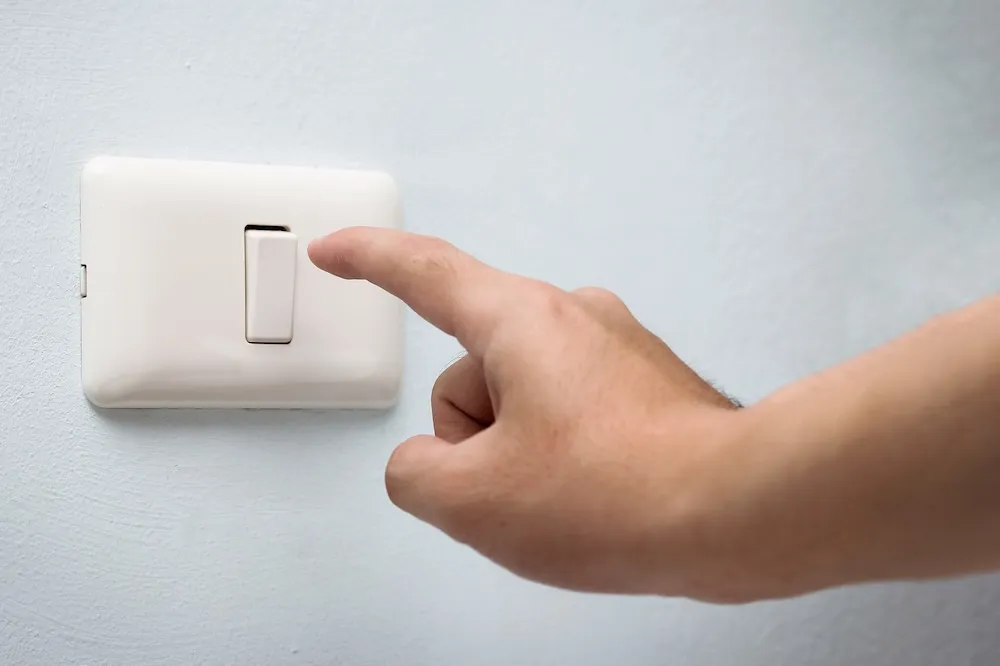
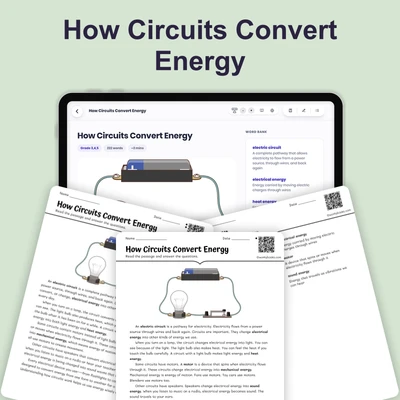
A switch is a device that controls the flow of electricity in a circuit. A circuit is a complete path that electricity follows to power things like light bulbs. When you flip a switch, you control whether electricity can move through that path.
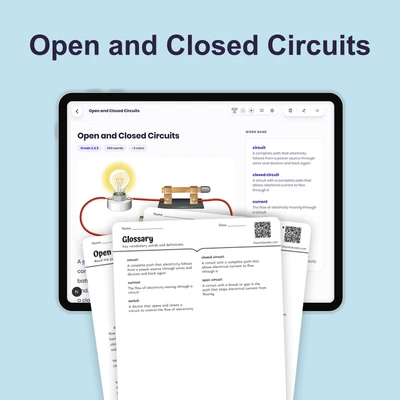
When a switch is in the "off" position, it creates a gap in the circuit. This gap is like a broken bridge. Current, which is the flow of electricity, cannot cross the gap, so it stops moving. Without current flowing through the wires to the light bulb, the bulb stays dark. This is called an open circuit.
When you flip the switch to the "on" position, it closes the gap in the circuit. Now the path is complete again, like fixing the bridge. Current can flow from the energy source through the wires to the light bulb. When current reaches the bulb, electrical energy changes into light energy and heat energy. The bulb lights up!
Think of a circuit like water flowing through a hose. The switch is like a valve. When the valve is closed, water cannot flow. When you open the valve, water flows through the hose. The switch works the same way with electricity.
It is important to understand that the switch does not create energy. The energy comes from a source like a battery or power outlet. The switch simply opens or closes the path, controlling whether energy can flow to the light bulb.
Comprehension quiz (8 questions)
1. What does a switch control in a circuit?
2. What is an open circuit?
3. Where does electrical energy come from?
4. Why does the bulb stay dark when switch is off?
5. What happens when current reaches the light bulb?
6. How is a switch like a valve?
7. A switch creates electrical energy.
8. What is current?
Perfect for the way you teach
- Build comprehension skills
- Auto-graded quiz
- Differentiated reading
- Read together at home
- Improve fluency
- Quiet reading time
- Reading curriculum support
- Independent practice
- Track Lexile growth