How Does a Flashlight Work
Interactive passage with audio narration, comprehension questions, and printable PDF.
By completing this purchase you agree to our Terms of Use and Privacy Policy. Your subscription renews automatically until you cancel. You can cancel anytime from your account settings. All sales are final and non-refundable. Digital content is available for download in your account immediately upon purchase.
What's included
How Does a Flashlight Work preview and details
About this printable How Does a Flashlight Work science reading passage, NGSS-aligned (Grades 3-5)
Sample passage and quiz from How Does a Flashlight Work
Reading passage and comprehension quiz preview
How Does a Flashlight Work
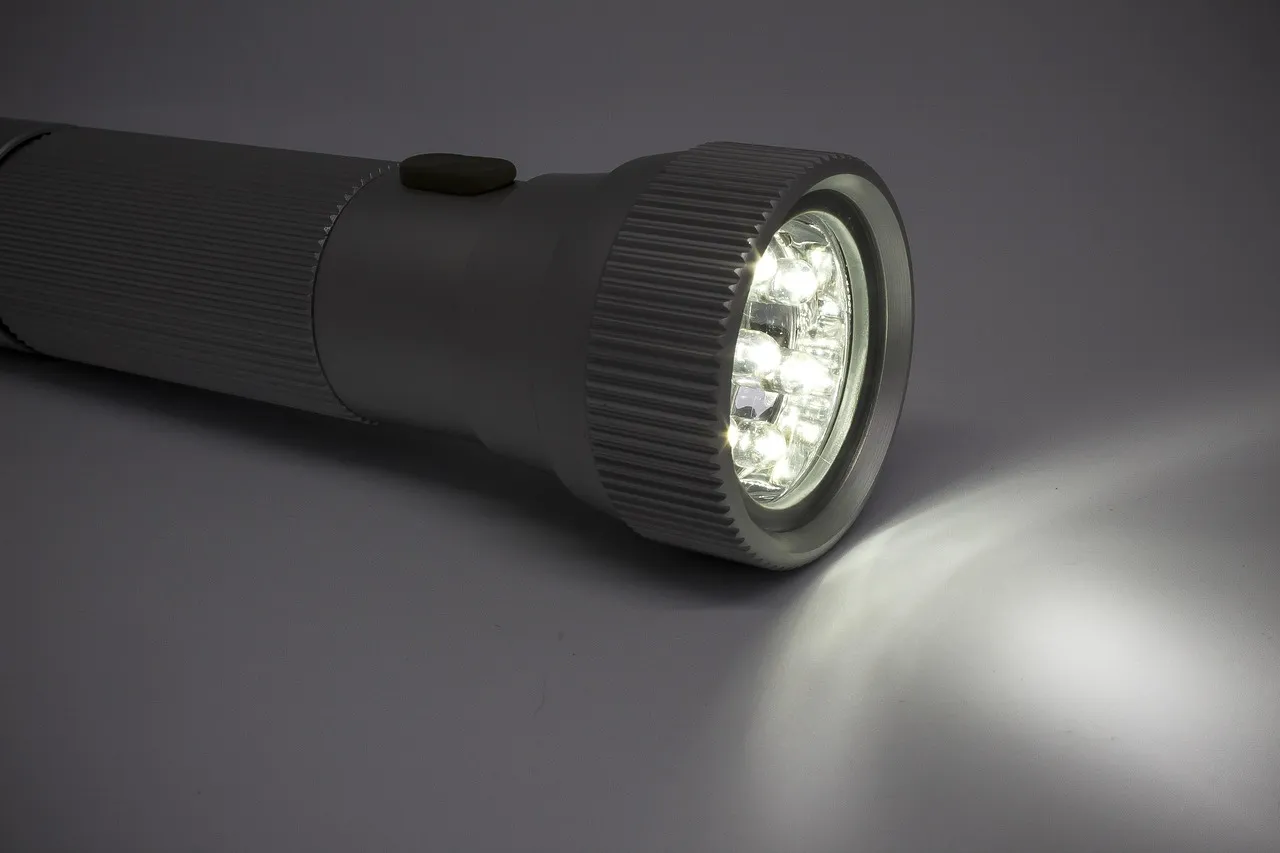
A flashlight is a useful tool that changes one form of energy into another through a process called energy transformation. Image credit stux / Pixabay.
A flashlight is a useful tool that changes one form of energy into another. This process is called energy transformation, which means energy changes from one type to a different type. Understanding how a flashlight works helps us see how energy moves and changes in many devices we use every day.
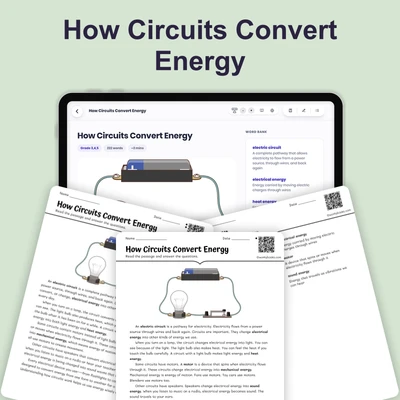
Inside a flashlight are batteries that store chemical energy. Chemical energy is energy stored in materials that can be released. When you press the flashlight's switch, you close a circuit, which is a complete path that lets electricity flow. The chemical energy in the batteries then converts to electrical energy, which is energy that moves through wires.
The electrical energy travels through wires to reach the bulb. At the bulb, another energy transformation happens. The electrical energy converts to light energy, which is energy we can see, and some thermal energy, which is heat energy. This is why a flashlight bulb feels warm after it has been on for a while.
Behind the bulb is a curved piece of shiny metal called a reflector. The reflector directs the light forward in a beam, making the flashlight more useful. This one small device shows a chain of energy transformations: chemical energy to electrical energy to light energy and thermal energy. Each step is important for the flashlight to work properly.
Comprehension quiz (8 questions)
1. What type of energy do batteries store?
2. What happens when you press the switch?
3. What does the reflector do in flashlight?
4. Why does a flashlight bulb feel warm?
5. What energy travels through the wires?
6. What energy types does bulb produce?
7. A circuit is a complete path.
8. What does energy transformation mean?
Perfect for the way you teach
- Build comprehension skills
- Auto-graded quiz
- Differentiated reading
- Read together at home
- Improve fluency
- Quiet reading time
- Reading curriculum support
- Independent practice
- Track Lexile growth