How Tsunamis Affect People — Reading Comprehension
Rate this
Premium Resource
Present
Present in classroom. No work saved
Assign
Classroom with student accounts, Track progress
Quick Play
No student accounts, assign with a link
Grades
3
4
5
Standards
NGSS 4-ESS3-2
PRINT+DIGITAL RESOURCE
This learning resource is available in interactive and printable formats. The interactive worksheet can be played online and assigned to students. The Printable PDF version can be downloaded and printed for completion by hand.
This engaging 250-word reading passage introduces fourth-grade students to the devastating impacts of tsunamis on coastal communities, aligned with NGSS standard 4-ESS3-2. Students explore how powerful tsunami waves destroy buildings, cars, and trees, and how flooding extends far inland beyond areas people thought were safe. The passage explains the dangers of debris carried by rushing water and the long-term effects including destroyed infrastructure, contaminated water supplies, and damaged farmland from salt water. Students learn the critical importance of early warning systems and quick evacuation to high ground in saving lives. The audio-integrated passage uses age-appropriate language and real-world examples to help students understand natural hazards and human impacts. Accompanied by comprehension questions, writing activities, and graphic organizers, this resource builds foundational understanding of how tsunamis affect people and communities. The passage includes bolded vocabulary terms with clear definitions, making complex earth science concepts accessible to grade-level readers. Perfect for introducing natural disaster preparedness and the relationship between Earth systems and human society in your elementary science classroom.
CONTENT PREVIEW
Expand content preview
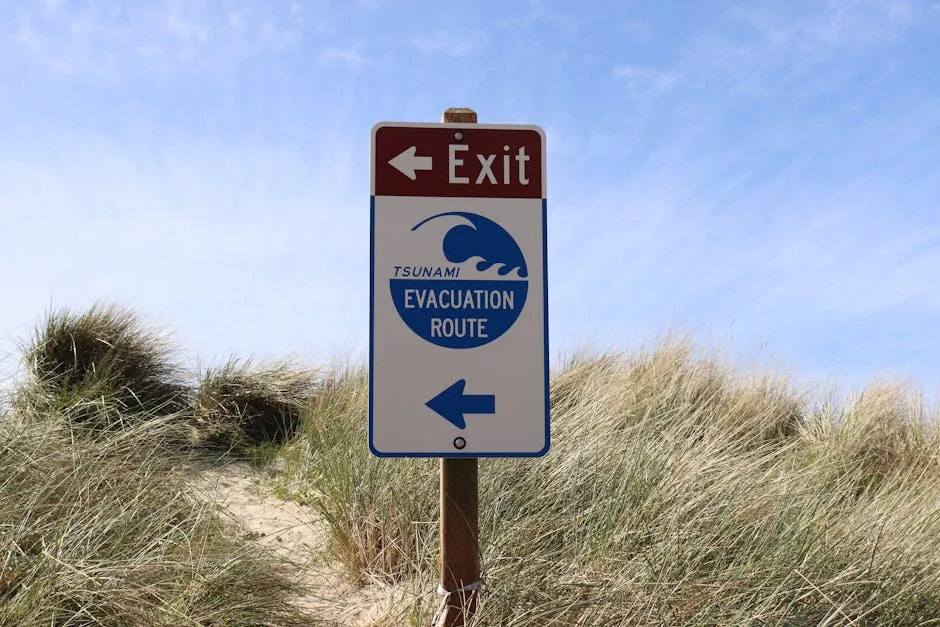
Communities in tsunami zones practice evacuation drills and post signs showing routes to higher ground. Image credit Max J / Pexels.
A tsunami is a series of huge ocean waves caused by underwater earthquakes or volcanic eruptions. These powerful waves can cause terrible damage when they reach land. Understanding how tsunamis affect people helps communities prepare and stay safe.
When a tsunami reaches the coast, the waves can be as tall as a building. The rushing water has enormous force, like thousands of fire hoses spraying at once. Coastal communities—towns and cities near the ocean—face the greatest danger. The waves sweep away buildings, cars, and trees. Everything in the tsunami's path can be destroyed in minutes.
The flooding doesn't stop at the beach. Water can travel far inland, which means away from the coast and deeper into the land. Areas that seem safe from the ocean can suddenly be underwater. The rushing water carries dangerous debris—broken pieces of buildings, cars, and other objects that can hurt people.
After the tsunami, communities face even more problems. The salt water damages infrastructure—important systems like roads, bridges, power lines, and water pipes. Drinking water becomes contaminated, or unsafe to use. Farmland is ruined because salt water kills crops.
Scientists have learned that early warning systems save lives. When sensors detect a tsunami, sirens alert people to evacuate immediately to high ground. Communities that practice tsunami drills and have evacuation plans protect their residents better.
Interesting Fact: The 2004 Indian Ocean tsunami traveled across the ocean at speeds up to 500 miles per hour—as fast as a jet plane—but slowed down as it approached shallow coastal waters.
What causes a tsunami to form?
Strong winds over the oceanUnderwater earthquakes or volcanic eruptionsHeavy rainfall near the coastMelting ice from glaciers
How tall can tsunami waves be?
As tall as a personAs tall as a carAs tall as a buildingAs tall as a tree
What does debris carried by tsunamis include?
Only sand and seaweedBroken buildings, cars, and other objectsJust ocean water and saltOnly fish and sea animals
Why does farmland get ruined after tsunamis?
Too much sunshine damages the cropsAnimals eat all the plantsSalt water kills the cropsThe soil becomes too dry
What should people do during tsunami warning?
Stay inside their homes and waitGo to the beach to watchEvacuate quickly to high groundDrive toward the ocean
How do early warning systems help communities?
They stop tsunamis from formingThey make the waves smallerThey alert people to evacuate and save livesThey clean up debris automatically
Tsunami waves only affect areas right at beach.
TrueFalse
What does the word 'infrastructure' mean?
Types of ocean animalsImportant systems like roads and bridgesDifferent kinds of wavesBuildings near the beach
Perfect For:
👩🏫 Teachers
• Reading comprehension practice
• Auto-graded assessments
• Literacy skill development
👨👩👧👦 Parents
• Reading practice at home
• Comprehension improvement
• Educational reading time
🏠 Homeschoolers
• Reading curriculum support
• Independent reading practice
• Progress monitoring
Reading Features:
📖
Reading Passage
Engaging fiction or nonfiction text
❓
Comprehension Quiz
Auto-graded questions
📊
Instant Feedback
Immediate results and scoring
📄
Printable Version
Download for offline reading
🔊
Read Aloud
Voice-over with word highlighting
Reviews & Ratings
No reviews yet. Be the first to share your experience!
Related Content
What Are Tsunamis
This Grade 4 science reading passage introduces students to tsunamis, aligning with NGSS standard 4-ESS3-2. Students lea...
NGSS 4-ESS3-2
What Are Avalanches
This engaging 250-word reading passage introduces fourth-grade students to avalanches and their impact on mountain commu...
NGSS 4-ESS3-2
Landslides
This engaging 350-word reading passage introduces Grade 4-5 students to landslides as powerful natural events where soil...
NGSS 4-ESS3-2
What Are Earthquakes
This engaging 250-word reading passage introduces fourth-grade students to the concept of earthquakes as natural hazards...
NGSS 4-ESS3-2
How Earthquakes Affect People
This 250-word informational reading passage introduces Grade 4 students to the ways earthquakes affect people and commun...
NGSS 4-ESS3-2ESS3.B
What Are Volcanoes
This engaging 250-word reading passage introduces fourth-grade students to volcanoes and volcanic activity, aligned with...
NGSS 4-ESS3-2
How Volcanoes Affect People
This 250-word reading passage introduces fourth-grade students to the ways volcanic eruptions affect people and communit...
NGSS 4-ESS3-2
What Are Weather Hazards
This Grade 4 science reading passage introduces students to weather hazards as part of the NGSS 4-ESS3-2 standard focusi...
NGSS 4-ESS3-2ESS3.B
What Are Tornadoes
This engaging Grade 4 science reading passage introduces students to tornadoes, one of nature's most powerful and danger...
NGSS 4-ESS3-2
What Are Hurricanes
This Grade 4 science reading passage introduces students to hurricanes and their impact on coastal communities, aligned ...
NGSS 4-ESS3-2
What Are Floods
This engaging 250-word reading passage introduces fourth-grade students to floods as natural hazards, aligned with NGSS ...
NGSS 4-ESS3-2
What Are Wildfires
This 250-word reading passage explains what wildfires are and introduces Grade 4 students to key concepts about these na...
NGSS 4-ESS3-2
What Are Droughts
This 250-word reading passage introduces fourth-grade students to the concept of droughts as defined in NGSS 4-ESS3-2. S...