This learning resource is available in interactive and printable formats. The interactive worksheet can be played online and assigned to students. The Printable PDF version can be downloaded and printed for completion by hand.
This engaging Grade 4 science reading passage introduces students to tornadoes, one of nature's most powerful and dangerous weather phenomena. Aligned with NGSS standard 4-ESS3-2, the passage explains what tornadoes are, how they form from thunderstorm clouds, and the incredible destructive power of their spinning winds. Students learn about Tornado Alley in the central United States and why this region experiences more tornadoes than other areas. The passage emphasizes the importance of weather alerts and tornado sirens in keeping communities safe. Audio-integrated content supports diverse learners, while differentiated versions ensure all students can access the core science concepts. Vocabulary is carefully scaffolded with bold key terms and immediate definitions. The passage connects to real-world applications of weather monitoring and emergency preparedness, helping students understand how science knowledge protects people from natural hazards.
CONTENT PREVIEW
Expand content preview
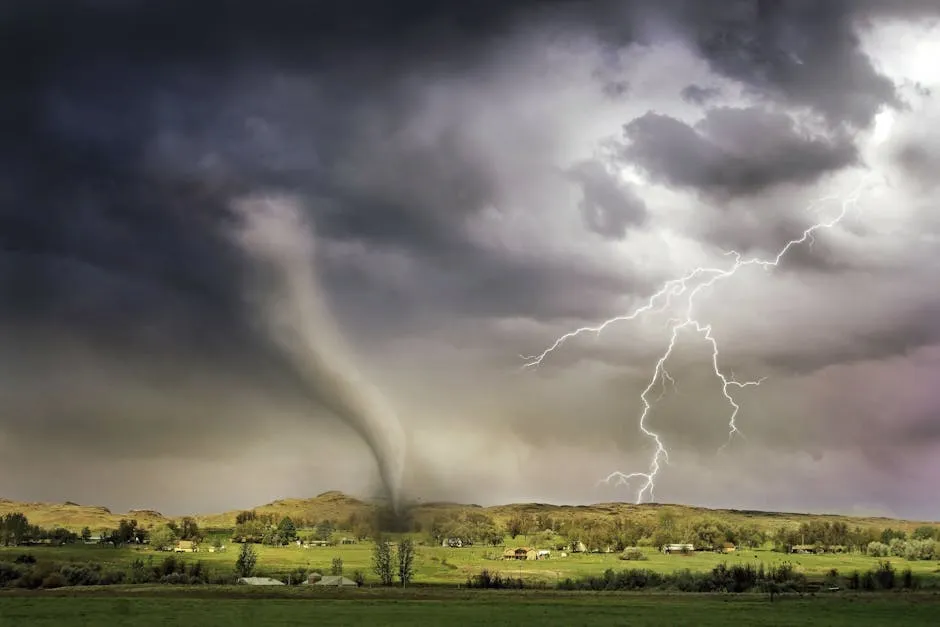
"A powerful tornado and vibrant lightning striking over a rural countryside landscape." by Ralph W. lambrecht / Pexels.
A tornado is a violently spinning column of air that reaches from a thunderstorm cloud down to the ground. Tornadoes are important to understand because they are one of nature's most dangerous weather events and can threaten lives and property.
Tornadoes form when warm, moist air meets cold, dry air during a thunderstorm. This creates spinning winds that can become a funnel cloud—a cone-shaped cloud that extends downward. When the funnel touches the ground, it becomes a tornado. The spinning winds inside a tornado can reach speeds over 200 miles per hour. These powerful winds are strong enough to rip roofs off buildings, flip cars over, and pull trees right out of the ground.
Most tornadoes last only a few minutes, but they can leave behind a path of destruction that stretches for miles. Tornadoes happen most often in the central United States, in an area nicknamed Tornado Alley. This region includes parts of Texas, Oklahoma, Kansas, and Nebraska. Tornadoes occur most frequently during spring and summer when warm and cold air masses collide.
Scientists use special tools to track storms and predict when tornadoes might form. When a tornado is spotted, sirens sound and weather alerts are sent to warn people. These warnings give families time to take shelter in basements or interior rooms away from windows. Understanding tornadoes helps communities prepare and stay safe.
Interesting Fact: The strongest tornadoes can pick up objects as heavy as railroad cars and carry them through the air for hundreds of feet!
What is a tornado?
A spinning column of airA type of thunderstormA heavy rainstormA snow cloud
How fast can tornado winds blow?
Over 50 miles per hourOver 100 miles per hourOver 200 miles per hourOver 500 miles per hour
Where do most tornadoes happen?
On the coastsIn the mountainsIn Tornado AlleyIn the desert
Why do tornadoes form?
When it rains heavilyWhen warm and cold air meetWhen the sun is very hotWhen snow melts quickly
What helps people stay safe from tornadoes?
Watching television all dayStaying outside during stormsSirens and weather alertsOpening all the windows
What season has the most tornadoes?
Fall and winterSpring and summerOnly winterOnly fall
Tornadoes can last for several hours.
TrueFalse
What is a funnel cloud?
A flat rain cloudA cone-shaped cloud extending downwardA white fluffy cloudA cloud that makes snow
Perfect For:
👩🏫 Teachers
• Reading comprehension practice
• Auto-graded assessments
• Literacy skill development
👨👩👧👦 Parents
• Reading practice at home
• Comprehension improvement
• Educational reading time
🏠 Homeschoolers
• Reading curriculum support
• Independent reading practice
• Progress monitoring
Reading Features:
📖
Reading Passage
Engaging fiction or nonfiction text
❓
Comprehension Quiz
Auto-graded questions
📊
Instant Feedback
Immediate results and scoring
📄
Printable Version
Download for offline reading
🔊
Read Aloud
Voice-over with word highlighting
Reviews & Ratings
No reviews yet. Be the first to share your experience!
Related Content
What Are Tsunamis
This Grade 4 science reading passage introduces students to tsunamis, aligning with NGSS standard 4-ESS3-2. Students lea...
NGSS 4-ESS3-2
How Tsunamis Affect People
This engaging 250-word reading passage introduces fourth-grade students to the devastating impacts of tsunamis on coasta...
NGSS 4-ESS3-2
What Are Avalanches
This engaging 250-word reading passage introduces fourth-grade students to avalanches and their impact on mountain commu...
NGSS 4-ESS3-2
Landslides
This engaging 350-word reading passage introduces Grade 4-5 students to landslides as powerful natural events where soil...
NGSS 4-ESS3-2
What Are Earthquakes
This engaging 250-word reading passage introduces fourth-grade students to the concept of earthquakes as natural hazards...
NGSS 4-ESS3-2
How Earthquakes Affect People
This 250-word informational reading passage introduces Grade 4 students to the ways earthquakes affect people and commun...
NGSS 4-ESS3-2ESS3.B
What Are Volcanoes
This engaging 250-word reading passage introduces fourth-grade students to volcanoes and volcanic activity, aligned with...
NGSS 4-ESS3-2
How Volcanoes Affect People
This 250-word reading passage introduces fourth-grade students to the ways volcanic eruptions affect people and communit...
NGSS 4-ESS3-2
What Are Weather Hazards
This Grade 4 science reading passage introduces students to weather hazards as part of the NGSS 4-ESS3-2 standard focusi...
NGSS 4-ESS3-2ESS3.B
What Are Hurricanes
This Grade 4 science reading passage introduces students to hurricanes and their impact on coastal communities, aligned ...
NGSS 4-ESS3-2
What Are Floods
This engaging 250-word reading passage introduces fourth-grade students to floods as natural hazards, aligned with NGSS ...
NGSS 4-ESS3-2
What Are Wildfires
This 250-word reading passage explains what wildfires are and introduces Grade 4 students to key concepts about these na...
NGSS 4-ESS3-2
What Are Droughts
This 250-word reading passage introduces fourth-grade students to the concept of droughts as defined in NGSS 4-ESS3-2. S...