This learning resource is available in interactive and printable formats. The interactive worksheet can be played online and assigned to students. The Printable PDF version can be downloaded and printed for completion by hand.
This 250-word reading passage explains what wildfires are and introduces Grade 4 students to key concepts about these natural disasters. Aligned with NGSS standard 4-ESS3-2, the passage describes how wildfires are uncontrolled fires burning through forests, grasslands, and brush. Students learn that wildfires can start naturally from lightning strikes or accidentally from human activities. The passage explains how dry and windy conditions cause wildfires to spread extremely fast, destroying trees, homes, and animal habitats while creating dangerous smoke that affects air quality for miles. The content addresses the growing frequency and destructiveness of wildfires in recent years. Written at a Grade 4 reading level, the passage uses simple sentences and everyday vocabulary to build foundational understanding. Key terms like wildfire, vegetation, and habitat are bolded and defined in context. The passage includes an interesting fact about fire speed and is audio-integrated to support diverse learners. Accompanying activities include multiple-choice questions testing recall and comprehension, writing prompts requiring application of concepts, and graphic organizers for analyzing cause-and-effect relationships. A simplified differentiated version and Spanish translations of both passages ensure accessibility for all students.
CONTENT PREVIEW
Expand content preview
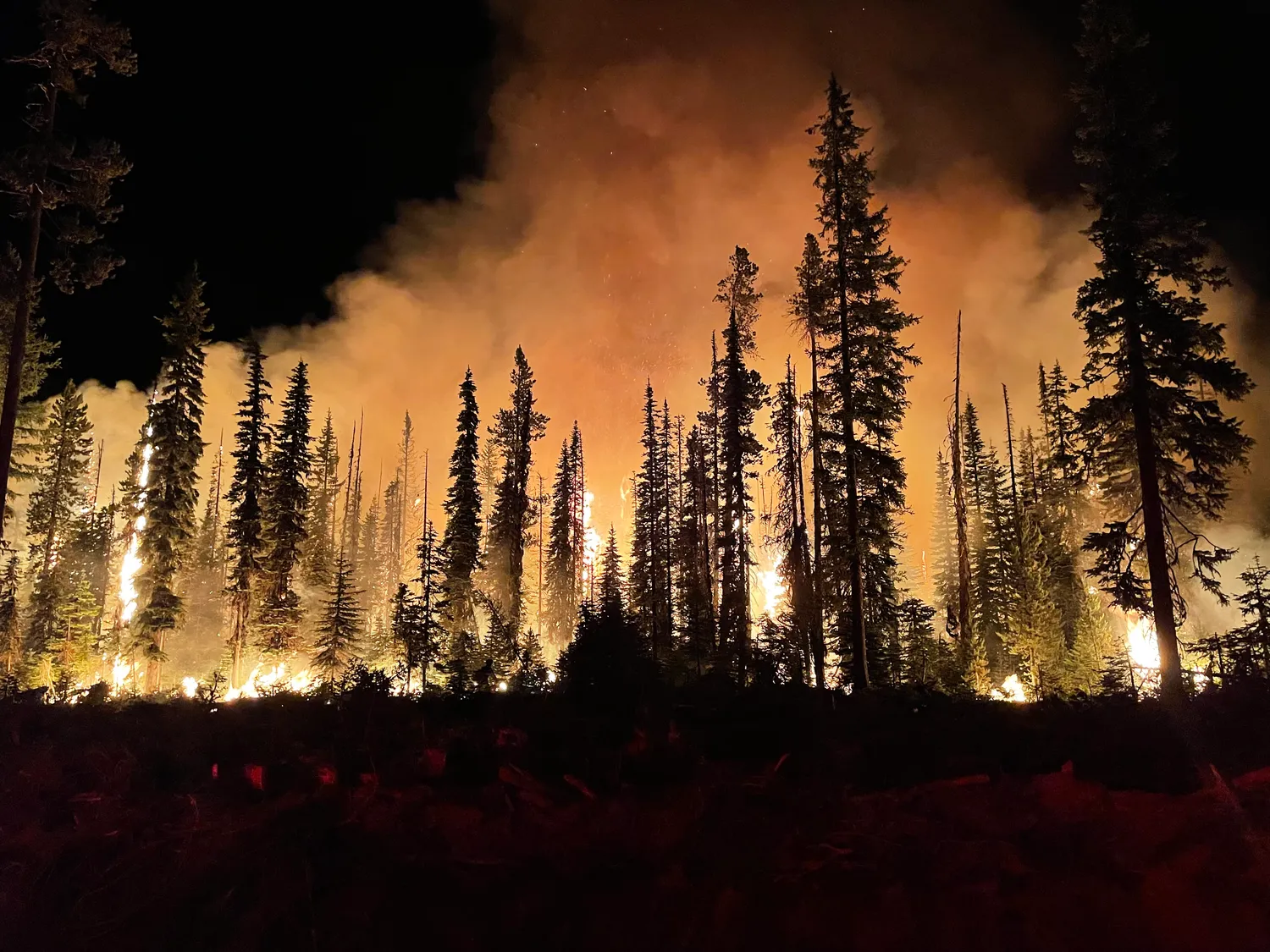
Lick Fire on the Umatilla National Forest burning at night" by U.S. Forest Service- Pacific Northwest Region / Wikimedia Commons
A wildfire is an uncontrolled fire that burns through forests, grasslands, or brush. Unlike a campfire that people can put out, a wildfire spreads on its own and can be very hard to stop. Understanding wildfires helps us protect people, animals, and the places where they live.
Wildfires can start in two main ways. Sometimes lightning strikes dry vegetation, which means plants like grass, bushes, and trees. The lightning spark can start a fire that quickly grows. Other times, people accidentally start wildfires by leaving campfires burning, throwing cigarettes on the ground, or using equipment that makes sparks near dry plants.
Once a wildfire starts in dry, windy conditions, it can spread extremely fast—faster than a person can run. Wind pushes the flames forward and carries burning pieces of wood through the air. These pieces can start new fires far ahead of the main fire. Dry weather makes plants easier to burn, like how dry paper catches fire more easily than wet paper.
Wildfires cause serious damage. They destroy trees and habitat, which is the natural home where animals live. Wildfires also burn down houses and buildings. Thick smoke from wildfires makes the air dangerous to breathe for people and animals, sometimes for miles around the fire. In recent years, wildfires have become more common and more destructive in many parts of the world.
Interesting Fact: Some wildfires can move as fast as 14 miles per hour, which is faster than most people can run!
What is a wildfire?
A controlled campfireAn uncontrolled fire burning through forestsA fire in a fireplaceA small fire in a garden
How can lightning start a wildfire?
By striking wet grassBy striking dry vegetationBy making rain fallBy cooling down the air
What does vegetation mean in the passage?
Animals living in forestsWater in rivers and lakesPlants like grass, bushes, and treesRocks and soil on the ground
Why do wildfires spread faster in windy conditions?
Wind makes plants wetWind pushes flames and carries burning woodWind puts out the fireWind makes the air cold
What damage do wildfires cause?
They only burn small bushesThey destroy trees, homes, and animal habitatsThey make the air cleanerThey help plants grow better
How does dry weather help wildfires spread?
Dry plants catch fire more easilyDry weather stops fires from startingDry weather makes plants wetDry weather creates more rain
Wildfires have become less common in recent years.
TrueFalse
What is a habitat?
A type of wildfireThe natural home where animals liveA tool for fighting firesA kind of dry vegetation
Perfect For:
👩🏫 Teachers
• Reading comprehension practice
• Auto-graded assessments
• Literacy skill development
👨👩👧👦 Parents
• Reading practice at home
• Comprehension improvement
• Educational reading time
🏠 Homeschoolers
• Reading curriculum support
• Independent reading practice
• Progress monitoring
Reading Features:
📖
Reading Passage
Engaging fiction or nonfiction text
❓
Comprehension Quiz
Auto-graded questions
📊
Instant Feedback
Immediate results and scoring
📄
Printable Version
Download for offline reading
🔊
Read Aloud
Voice-over with word highlighting
Reviews & Ratings
No reviews yet. Be the first to share your experience!
Related Content
What Are Tsunamis
This Grade 4 science reading passage introduces students to tsunamis, aligning with NGSS standard 4-ESS3-2. Students lea...
NGSS 4-ESS3-2
How Tsunamis Affect People
This engaging 250-word reading passage introduces fourth-grade students to the devastating impacts of tsunamis on coasta...
NGSS 4-ESS3-2
What Are Avalanches
This engaging 250-word reading passage introduces fourth-grade students to avalanches and their impact on mountain commu...
NGSS 4-ESS3-2
Landslides
This engaging 350-word reading passage introduces Grade 4-5 students to landslides as powerful natural events where soil...
NGSS 4-ESS3-2
What Are Earthquakes
This engaging 250-word reading passage introduces fourth-grade students to the concept of earthquakes as natural hazards...
NGSS 4-ESS3-2
How Earthquakes Affect People
This 250-word informational reading passage introduces Grade 4 students to the ways earthquakes affect people and commun...
NGSS 4-ESS3-2ESS3.B
What Are Volcanoes
This engaging 250-word reading passage introduces fourth-grade students to volcanoes and volcanic activity, aligned with...
NGSS 4-ESS3-2
How Volcanoes Affect People
This 250-word reading passage introduces fourth-grade students to the ways volcanic eruptions affect people and communit...
NGSS 4-ESS3-2
What Are Weather Hazards
This Grade 4 science reading passage introduces students to weather hazards as part of the NGSS 4-ESS3-2 standard focusi...
NGSS 4-ESS3-2ESS3.B
What Are Tornadoes
This engaging Grade 4 science reading passage introduces students to tornadoes, one of nature's most powerful and danger...
NGSS 4-ESS3-2
What Are Hurricanes
This Grade 4 science reading passage introduces students to hurricanes and their impact on coastal communities, aligned ...
NGSS 4-ESS3-2
What Are Floods
This engaging 250-word reading passage introduces fourth-grade students to floods as natural hazards, aligned with NGSS ...
NGSS 4-ESS3-2
What Are Droughts
This 250-word reading passage introduces fourth-grade students to the concept of droughts as defined in NGSS 4-ESS3-2. S...