This learning resource is available in interactive and printable formats. The interactive worksheet can be played online and assigned to students. The Printable PDF version can be downloaded and printed for completion by hand.
This engaging 250-word reading passage introduces fourth-grade students to the concept of earthquakes as natural hazards. Aligned with NGSS standard 4-ESS3-2, the passage explains what earthquakes are, why they occur, and where they happen most frequently on Earth. Students learn that earthquakes are sudden shaking events that can range from barely noticeable tremors to powerful events that damage buildings and infrastructure. The passage uses age-appropriate language to describe earthquake zones, duration, and effects including ground cracks, collapsed bridges, and crumbling buildings. Audio-integrated features support diverse learners by providing read-aloud options. The educational material includes a simplified differentiated version for struggling readers, Spanish translations of both passages, a comprehensive glossary of key terms, an 8-question multiple-choice quiz testing recall and comprehension, writing activities requiring 2-4 sentence responses, and two graphic organizers in table format. The cause-and-effect and vocabulary graphic organizers help students organize their understanding of earthquake impacts and key terminology. This complete lesson package provides teachers with ready-to-use materials for introducing earth science concepts about natural hazards and their effects on human communities.
CONTENT PREVIEW
Expand content preview
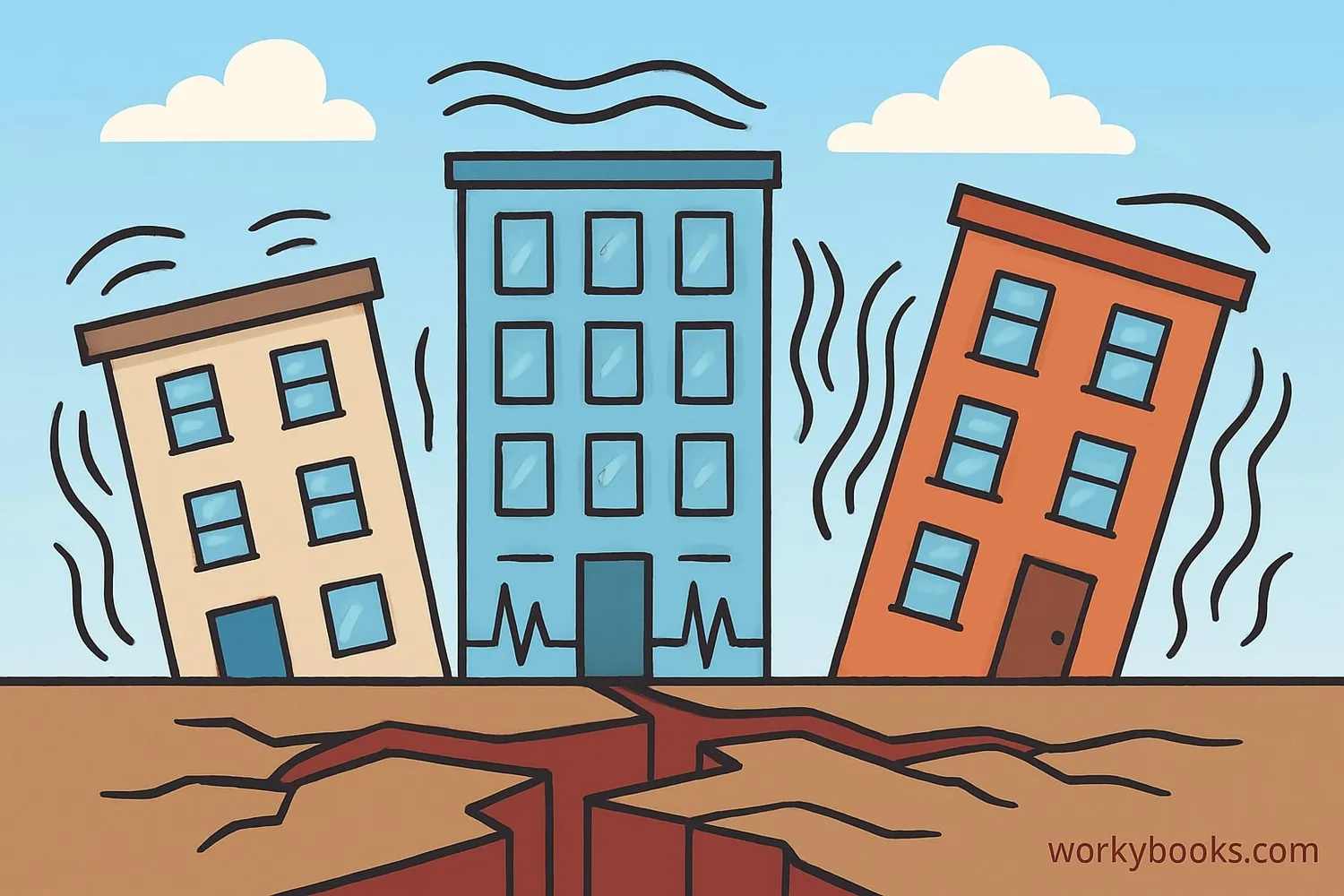
Illustration showing the shaking caused by an earthquake
An earthquake is a sudden shaking of the ground. The shaking happens when large pieces of Earth's outer layer, called tectonic plates, move against each other. These plates are like giant puzzle pieces that fit together to cover our planet. They move very slowly, but sometimes they get stuck. When they finally slip, the ground shakes.
Earthquakes can be very gentle or extremely powerful. Some earthquakes are so small that people cannot feel them at all. Other earthquakes are strong enough to knock down buildings, crack roads, and break bridges. The shaking usually lasts only seconds to a few minutes, but it can cause enormous damage in that short time.
Earthquakes can happen anywhere on Earth, but they happen most often in certain areas called earthquake zones. These zones are found along the edges where tectonic plates meet. Places like California, Japan, and Chile experience many earthquakes because they sit on or near these plate edges. Scientists use special instruments called seismographs to measure and record earthquakes. Understanding where and why earthquakes happen helps communities prepare for them and build safer structures.
Interesting Fact: The largest earthquake ever recorded happened in Chile in 1960 and measured 9.5 on the Richter scale. It was so powerful that it created waves that traveled across the entire Pacific Ocean!
What is an earthquake?
A sudden shaking of the groundA storm with heavy rainA very hot dayA type of volcano
What are tectonic plates?
Tools scientists useLarge pieces of Earth's outer layerTypes of earthquakesBuildings that shake
How long do most earthquakes last?
Several hoursAll day longSeconds to a few minutesSeveral weeks
Why do earthquakes happen most often in zones?
Because it rains more thereBecause more people live thereBecause that is where plates meetBecause the weather is warmer
What can strong earthquakes do to buildings?
Make them tallerPaint them different colorsKnock them downMake them float
What tool do scientists use to measure earthquakes?
ThermometerSeismographTelescopeMicroscope
Earthquakes can happen anywhere on Earth.
TrueFalse
What does the word 'sudden' mean?
Happening very slowly over timeHappening quickly without warningHappening only at nightHappening once every year
Perfect For:
👩🏫 Teachers
• Reading comprehension practice
• Auto-graded assessments
• Literacy skill development
👨👩👧👦 Parents
• Reading practice at home
• Comprehension improvement
• Educational reading time
🏠 Homeschoolers
• Reading curriculum support
• Independent reading practice
• Progress monitoring
Reading Features:
📖
Reading Passage
Engaging fiction or nonfiction text
❓
Comprehension Quiz
Auto-graded questions
📊
Instant Feedback
Immediate results and scoring
📄
Printable Version
Download for offline reading
🔊
Read Aloud
Voice-over with word highlighting
Reviews & Ratings
No reviews yet. Be the first to share your experience!
Related Content
What Are Tsunamis
This Grade 4 science reading passage introduces students to tsunamis, aligning with NGSS standard 4-ESS3-2. Students lea...
NGSS 4-ESS3-2
How Tsunamis Affect People
This engaging 250-word reading passage introduces fourth-grade students to the devastating impacts of tsunamis on coasta...
NGSS 4-ESS3-2
What Are Avalanches
This engaging 250-word reading passage introduces fourth-grade students to avalanches and their impact on mountain commu...
NGSS 4-ESS3-2
Landslides
This engaging 350-word reading passage introduces Grade 4-5 students to landslides as powerful natural events where soil...
NGSS 4-ESS3-2
How Earthquakes Affect People
This 250-word informational reading passage introduces Grade 4 students to the ways earthquakes affect people and commun...
NGSS 4-ESS3-2ESS3.B
What Are Volcanoes
This engaging 250-word reading passage introduces fourth-grade students to volcanoes and volcanic activity, aligned with...
NGSS 4-ESS3-2
How Volcanoes Affect People
This 250-word reading passage introduces fourth-grade students to the ways volcanic eruptions affect people and communit...
NGSS 4-ESS3-2
What Are Weather Hazards
This Grade 4 science reading passage introduces students to weather hazards as part of the NGSS 4-ESS3-2 standard focusi...
NGSS 4-ESS3-2ESS3.B
What Are Tornadoes
This engaging Grade 4 science reading passage introduces students to tornadoes, one of nature's most powerful and danger...
NGSS 4-ESS3-2
What Are Hurricanes
This Grade 4 science reading passage introduces students to hurricanes and their impact on coastal communities, aligned ...
NGSS 4-ESS3-2
What Are Floods
This engaging 250-word reading passage introduces fourth-grade students to floods as natural hazards, aligned with NGSS ...
NGSS 4-ESS3-2
What Are Wildfires
This 250-word reading passage explains what wildfires are and introduces Grade 4 students to key concepts about these na...
NGSS 4-ESS3-2
What Are Droughts
This 250-word reading passage introduces fourth-grade students to the concept of droughts as defined in NGSS 4-ESS3-2. S...