This learning resource is available in interactive and printable formats. The interactive worksheet can be played online and assigned to students. The Printable PDF version can be downloaded and printed for completion by hand.
This engaging 350-word reading passage introduces Grade 4-5 students to landslides as powerful natural events where soil, rocks, and debris suddenly slide down hills or mountains. Aligned with NGSS standard 4-ESS3-2, the passage explores how heavy rain, earthquakes, and removing trees from hillsides can trigger landslides. Students learn about the dangers these events pose to communities, including their ability to bury roads, homes, and anything in their path. The content uses age-appropriate analogies and concrete examples to help students understand complex geological processes. Audio-integrated features support diverse learners by providing multiple ways to access the information. The passage includes bolded key vocabulary terms with immediate definitions, making scientific concepts accessible. Students engage with cause-and-effect relationships in nature while connecting abstract geological processes to real-world applications. Supplementary activities include comprehension questions, writing prompts, and graphic organizers that reinforce understanding of landslide triggers, effects, and prevention strategies. This comprehensive resource helps elementary students develop scientific literacy while understanding important earth science phenomena that affect human communities.
CONTENT PREVIEW
Expand content preview
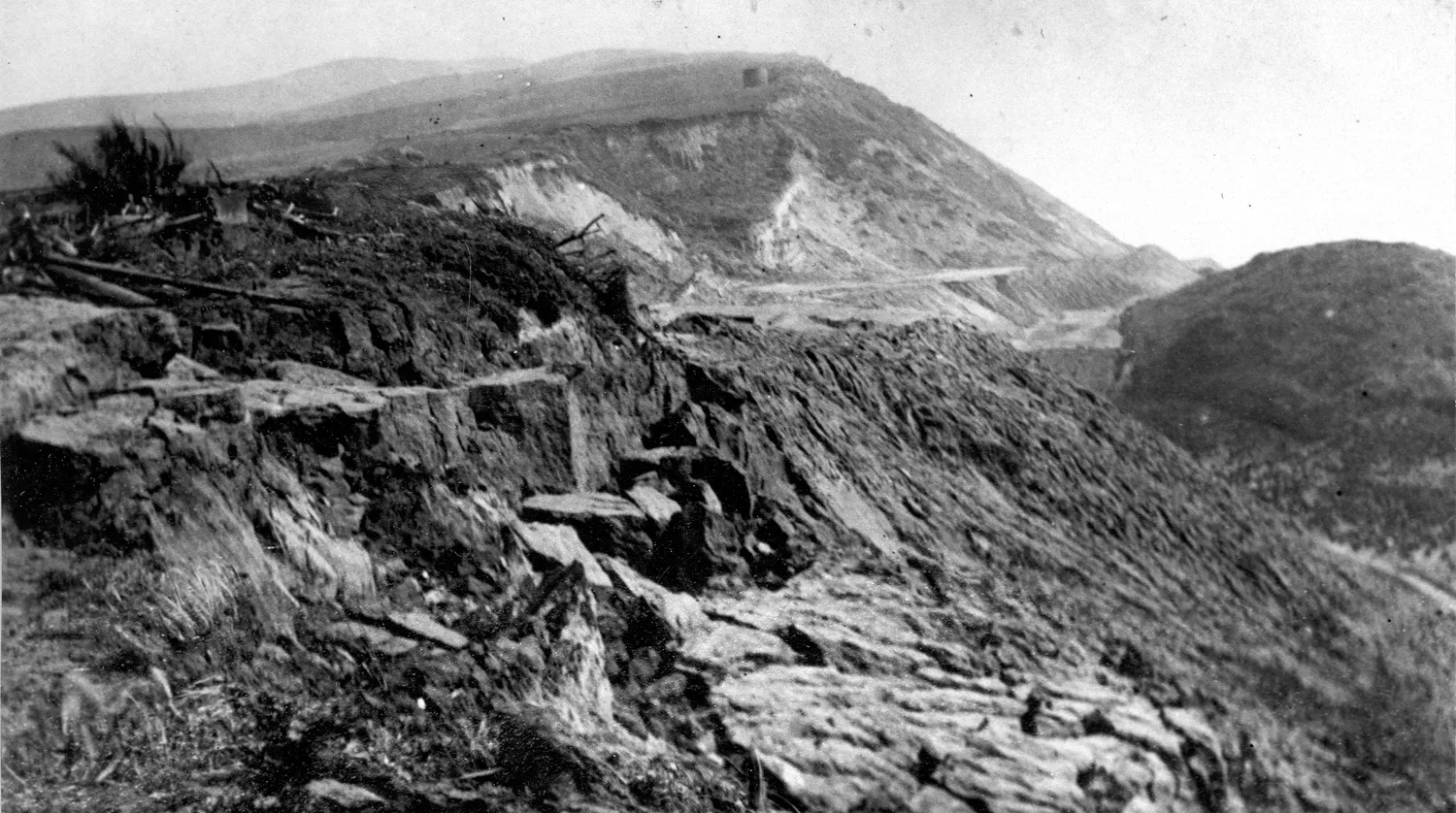
Mussel Rock landslide due to 1906 San Francisco Earthquake by US Geological Survey / Wikimedia Commons
A landslide is a sudden movement of rock, soil, and debris (broken pieces of rock and dirt) down a slope (a hillside or mountain). Landslides are important to understand because they can happen quickly and cause serious damage to communities and the environment.
Landslides often happen during or after heavy rain. When water soaks into the ground, it makes the soil heavy and slippery, like wet mud on a playground slide. The weight of the water-soaked soil can cause it to slide downhill. Earthquakes can also trigger (start or cause) landslides by shaking the ground and loosening rocks and soil. Volcanic eruptions and human activities like cutting into hillsides for roads and buildings can trigger landslides too.
When a landslide occurs, it can bury homes, block roads, dam rivers, and completely change the shape of the land in just minutes. Hillsides that have been cleared of trees are especially vulnerable (at risk or in danger) because plant roots help hold the soil in place. Without these roots acting like anchors, the soil is more likely to slide away.
Understanding what causes landslides helps people make safer choices about where to build homes and how to protect hillsides from sliding.
Interesting Fact: The fastest landslide ever recorded moved at speeds over 200 miles per hour, faster than most cars on a highway!
What is a landslide?
A sudden movement down a slopeA type of rainstormA way to build roadsA kind of tree root
What makes soil heavy and slippery?
Earthquakes shaking the groundWater soaking into the groundTree roots holding soilBuilding roads on hillsides
What can trigger a landslide?
Only heavy rainOnly earthquakesRain, earthquakes, and human activitiesOnly volcanic eruptions
Why do tree roots help prevent landslides?
They make the soil wetterThey hold the soil in placeThey make hills steeperThey block all the rain
What can landslides do to rivers?
Make them flow fasterTurn them into oceansDam them and block flowMake them disappear completely
Which hillsides are most vulnerable to landslides?
Hills covered with many treesHills that have been clearedHills with lots of rocksHills near the ocean
Tree roots act like anchors for soil.
TrueFalse
What does the word 'trigger' mean?
To stop something from happeningTo start or cause somethingTo move very slowlyTo build on a hillside
Perfect For:
👩🏫 Teachers
• Reading comprehension practice
• Auto-graded assessments
• Literacy skill development
👨👩👧👦 Parents
• Reading practice at home
• Comprehension improvement
• Educational reading time
🏠 Homeschoolers
• Reading curriculum support
• Independent reading practice
• Progress monitoring
Reading Features:
📖
Reading Passage
Engaging fiction or nonfiction text
❓
Comprehension Quiz
Auto-graded questions
📊
Instant Feedback
Immediate results and scoring
📄
Printable Version
Download for offline reading
🔊
Read Aloud
Voice-over with word highlighting
Reviews & Ratings
No reviews yet. Be the first to share your experience!
Related Content
What Are Tsunamis
This Grade 4 science reading passage introduces students to tsunamis, aligning with NGSS standard 4-ESS3-2. Students lea...
NGSS 4-ESS3-2
How Tsunamis Affect People
This engaging 250-word reading passage introduces fourth-grade students to the devastating impacts of tsunamis on coasta...
NGSS 4-ESS3-2
What Are Avalanches
This engaging 250-word reading passage introduces fourth-grade students to avalanches and their impact on mountain commu...
NGSS 4-ESS3-2
What Are Earthquakes
This engaging 250-word reading passage introduces fourth-grade students to the concept of earthquakes as natural hazards...
NGSS 4-ESS3-2
How Earthquakes Affect People
This 250-word informational reading passage introduces Grade 4 students to the ways earthquakes affect people and commun...
NGSS 4-ESS3-2ESS3.B
What Are Volcanoes
This engaging 250-word reading passage introduces fourth-grade students to volcanoes and volcanic activity, aligned with...
NGSS 4-ESS3-2
How Volcanoes Affect People
This 250-word reading passage introduces fourth-grade students to the ways volcanic eruptions affect people and communit...
NGSS 4-ESS3-2
What Are Weather Hazards
This Grade 4 science reading passage introduces students to weather hazards as part of the NGSS 4-ESS3-2 standard focusi...
NGSS 4-ESS3-2ESS3.B
What Are Tornadoes
This engaging Grade 4 science reading passage introduces students to tornadoes, one of nature's most powerful and danger...
NGSS 4-ESS3-2
What Are Hurricanes
This Grade 4 science reading passage introduces students to hurricanes and their impact on coastal communities, aligned ...
NGSS 4-ESS3-2
What Are Floods
This engaging 250-word reading passage introduces fourth-grade students to floods as natural hazards, aligned with NGSS ...
NGSS 4-ESS3-2
What Are Wildfires
This 250-word reading passage explains what wildfires are and introduces Grade 4 students to key concepts about these na...
NGSS 4-ESS3-2
What Are Droughts
This 250-word reading passage introduces fourth-grade students to the concept of droughts as defined in NGSS 4-ESS3-2. S...