How Volcanoes Affect People — Reading Comprehension
Rate this
Premium Resource
Present
Present in classroom. No work saved
Assign
Classroom with student accounts, Track progress
Quick Play
No student accounts, assign with a link
Grades
3
4
5
Standards
NGSS 4-ESS3-2
PRINT+DIGITAL RESOURCE
This learning resource is available in interactive and printable formats. The interactive worksheet can be played online and assigned to students. The Printable PDF version can be downloaded and printed for completion by hand.
This 250-word reading passage introduces fourth-grade students to the ways volcanic eruptions affect people and communities, aligned with NGSS standard 4-ESS3-2 (ESS3.B: Natural Hazards). Students explore how lava flows destroy homes, farms, roads, and forests, and learn about the dangers of volcanic ash that can bury towns, make breathing difficult, and damage airplane engines. The passage explains mudflows created when volcanic ash mixes with rain or melting snow, and how these can rush down mountainsides to bury communities. Students also discover how ash clouds can block sunlight and affect weather patterns far from the volcano. Despite these dangers, the passage explains why many people choose to live near volcanoes due to the fertile volcanic soil. Written in accessible, grade-appropriate language, this passage builds foundational understanding of natural hazards and human-environment interactions. The content includes audio integration to support diverse learners and features bolded key vocabulary terms with immediate definitions. Real-world examples help students connect scientific concepts to observable phenomena, preparing them for hands-on investigations and classroom discussions about natural hazards and their impacts on human communities.
CONTENT PREVIEW
Expand content preview
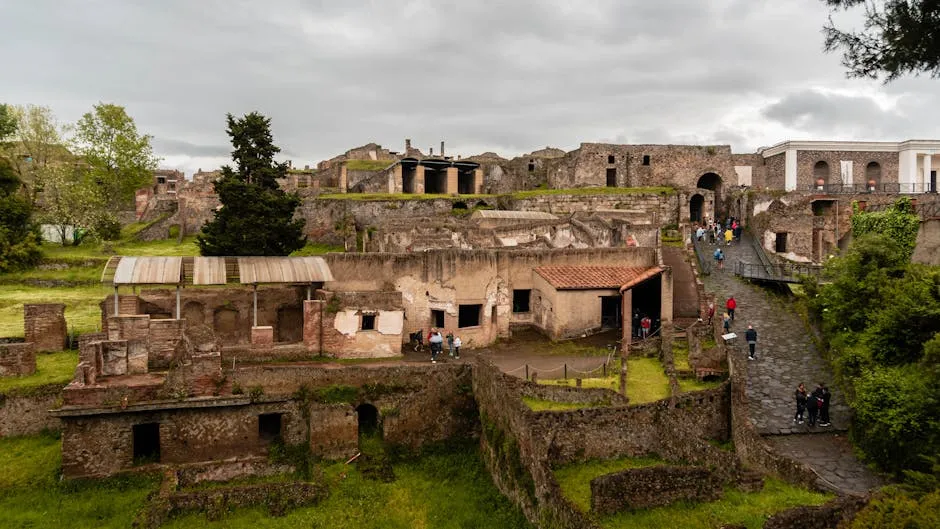
Pompeii a Roman city remarkably preserved under ash and pumice after Mount Vesuvius erupted in 79 A.D." by Alejandro Aznar / Pexels.
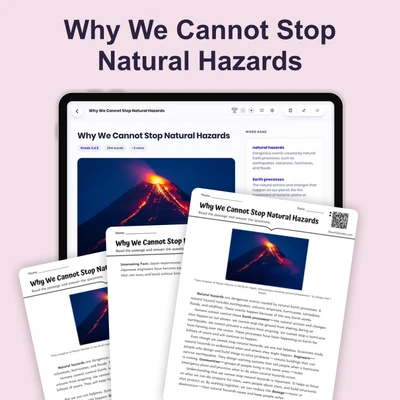
A volcano is an opening in Earth's surface where hot melted rock, ash, and gases escape from deep underground. When a volcano erupts, it can have serious effects on people and the places where they live.
Lava flows—streams of melted rock that pour out of a volcano—can destroy everything in their path. Homes, farms, roads, and forests burn or get buried under the hot lava. Volcanic ash is tiny pieces of rock and glass that shoot into the air during an eruption. This ash can bury entire towns, making it hard for people to breathe and damaging airplane engines if planes fly through ash clouds.
Another danger is mudflows, which happen when volcanic ash mixes with rain or melting snow. These thick rivers of mud rush down mountainsides very fast and can bury whole communities. Ash clouds can also block sunlight and change the weather in places far from the volcano, making temperatures cooler for months.
Despite all these dangers, many people still choose to live near volcanoes. The reason is that volcanic soil—soil made from broken-down lava and ash—is very fertile, which means it is excellent for growing crops. This rich soil helps farmers grow plenty of food, which is why communities have developed near volcanoes for thousands of years.
Interesting Fact: The eruption of Mount Tambora in Indonesia in 1815 sent so much ash into the atmosphere that it blocked sunlight around the world, making 1816 known as "the year without a summer" in many countries!
What is a volcano?
A mountain made of iceOpening where hot rock escapes EarthA deep hole in oceanA type of earthquake
What can lava flows destroy?
Only trees and plantsHomes, farms, roads, and forestsOnly airplane enginesJust the volcano itself
What is volcanic ash made of?
Tiny pieces of rock and glassBurned wood from forestsFrozen water dropletsSand from beaches
Why do mudflows happen near volcanoes?
Lava melts all the iceEarthquakes shake the ground looseAsh mixes with rain or snowWind blows dirt down mountains
How can ash clouds affect weather?
They make it rain moreThey block sunlight and cool temperaturesThey create stronger windsThey have no effect on weather
Why do people live near volcanoes?
Volcanoes are never dangerousThe weather is always warm thereVolcanic soil is fertile for cropsThere are no other places
Volcanic soil is poor for growing plants.
TrueFalse
What does fertile mean?
Dangerous and harmfulExcellent for growing cropsVery hot and dryFull of rocks and stones
Perfect For:
👩🏫 Teachers
• Reading comprehension practice
• Auto-graded assessments
• Literacy skill development
👨👩👧👦 Parents
• Reading practice at home
• Comprehension improvement
• Educational reading time
🏠 Homeschoolers
• Reading curriculum support
• Independent reading practice
• Progress monitoring
Reading Features:
📖
Reading Passage
Engaging fiction or nonfiction text
❓
Comprehension Quiz
Auto-graded questions
📊
Instant Feedback
Immediate results and scoring
📄
Printable Version
Download for offline reading
🔊
Read Aloud
Voice-over with word highlighting
Reviews & Ratings
No reviews yet. Be the first to share your experience!
Related Content
What Are Tsunamis
This Grade 4 science reading passage introduces students to tsunamis, aligning with NGSS standard 4-ESS3-2. Students lea...
NGSS 4-ESS3-2
How Tsunamis Affect People
This engaging 250-word reading passage introduces fourth-grade students to the devastating impacts of tsunamis on coasta...
NGSS 4-ESS3-2
What Are Avalanches
This engaging 250-word reading passage introduces fourth-grade students to avalanches and their impact on mountain commu...
NGSS 4-ESS3-2
Landslides
This engaging 350-word reading passage introduces Grade 4-5 students to landslides as powerful natural events where soil...
NGSS 4-ESS3-2
What Are Earthquakes
This engaging 250-word reading passage introduces fourth-grade students to the concept of earthquakes as natural hazards...
NGSS 4-ESS3-2
How Earthquakes Affect People
This 250-word informational reading passage introduces Grade 4 students to the ways earthquakes affect people and commun...
NGSS 4-ESS3-2ESS3.B
What Are Volcanoes
This engaging 250-word reading passage introduces fourth-grade students to volcanoes and volcanic activity, aligned with...
NGSS 4-ESS3-2
What Are Weather Hazards
This Grade 4 science reading passage introduces students to weather hazards as part of the NGSS 4-ESS3-2 standard focusi...
NGSS 4-ESS3-2ESS3.B
What Are Tornadoes
This engaging Grade 4 science reading passage introduces students to tornadoes, one of nature's most powerful and danger...
NGSS 4-ESS3-2
What Are Hurricanes
This Grade 4 science reading passage introduces students to hurricanes and their impact on coastal communities, aligned ...
NGSS 4-ESS3-2
What Are Floods
This engaging 250-word reading passage introduces fourth-grade students to floods as natural hazards, aligned with NGSS ...
NGSS 4-ESS3-2
What Are Wildfires
This 250-word reading passage explains what wildfires are and introduces Grade 4 students to key concepts about these na...
NGSS 4-ESS3-2
What Are Droughts
This 250-word reading passage introduces fourth-grade students to the concept of droughts as defined in NGSS 4-ESS3-2. S...