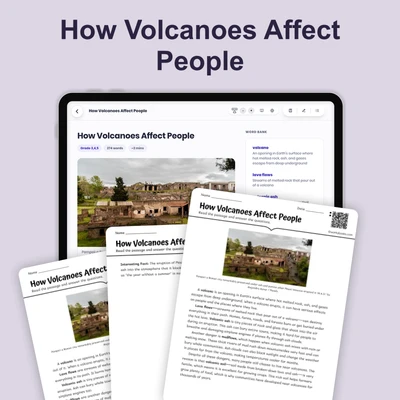
This learning resource is available in interactive and printable formats. The interactive worksheet can be played online and assigned to students. The Printable PDF version can be downloaded and printed for completion by hand.
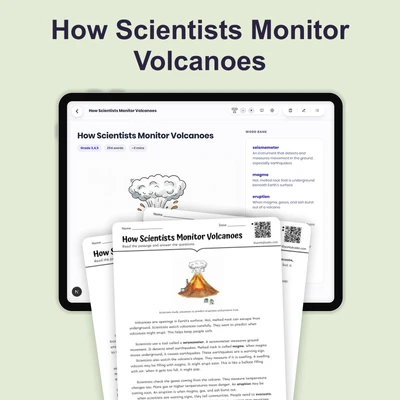
This engaging 250-word reading passage introduces fourth-grade students to volcanoes and volcanic activity, aligned with NGSS standard 4-ESS3-2. Students learn that volcanoes are openings in Earth's surface where melted rock, ash, and gases escape. The passage explains the difference between gentle and violent eruptions, describes how lava flows, and discusses volcanic patterns around the world. Audio-integrated content supports diverse learners by providing text-to-speech functionality. The passage uses age-appropriate language and familiar comparisons to help students understand complex geological processes. Students explore why some volcanoes erupt frequently while others remain dormant for thousands of years. Activities include comprehension questions testing recall and application, writing prompts requiring explanations and real-world connections, and graphic organizers for comparing eruption types and understanding cause-and-effect relationships. The simplified differentiated version provides the same core science content with shorter sentences and scaffolded structure for struggling readers. Spanish translations support English language learners. This comprehensive resource builds foundational understanding of volcanic activity and natural hazards, preparing students for hands-on investigations and deeper exploration of Earth's dynamic processes.
CONTENT PREVIEW
Expand content preview
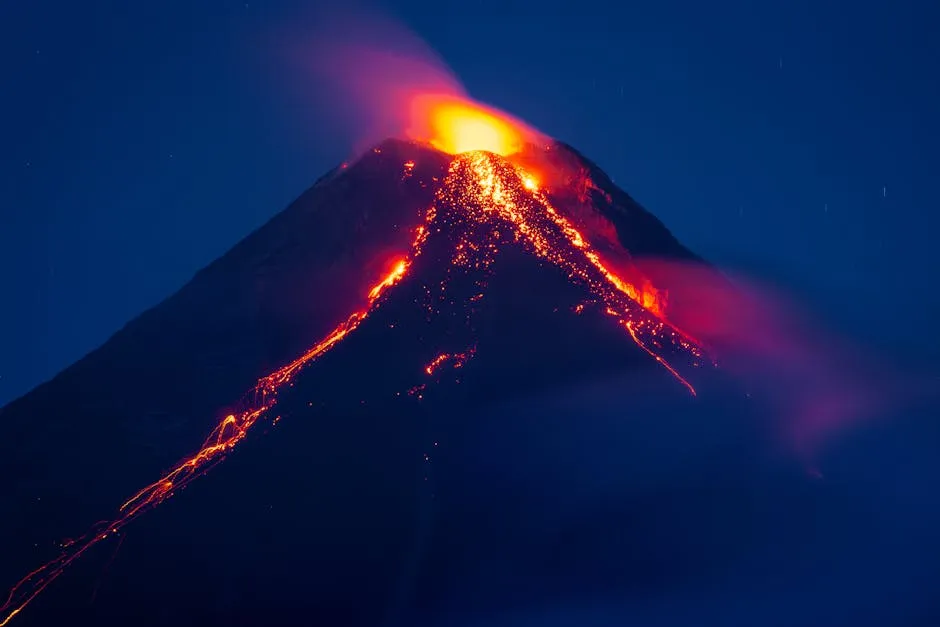
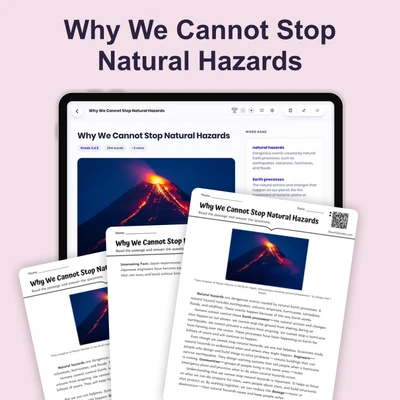
Fiery eruption of Mayon Volcano in the Bicol region, showcasing a stunning natural phenomenon. Sergey Guk / Pexels.
A volcano is an opening in Earth's surface where melted rock, ash, and gases come out. Deep underground, rock gets so hot that it melts into a thick liquid called magma. When magma pushes up through cracks in Earth's crust and reaches the surface, it is called lava. Understanding volcanoes helps scientists predict eruptions and keep people safe from these powerful natural events.
When a volcano erupts, or releases material from inside Earth, it can happen in different ways. Some eruptions are slow and gentle. Lava oozes out like thick honey and flows down the sides of the volcano over days or weeks. Other eruptions are sudden and violent. They send ash and rock flying high into the air. Thick clouds of ash can shoot into the sky and spread for many miles. The type of eruption depends on how thick the magma is and how much gas is trapped inside it.
Volcanoes are found in specific patterns around the world. Many volcanoes form along the edges of large pieces of Earth's crust called plates. Some volcanoes have not erupted in thousands of years and are called dormant. Others erupt frequently and are called active. Scientists study these patterns to understand where volcanic activity is most likely to happen.
Interesting Fact: The largest volcano on Earth is Mauna Loa in Hawaii. It rises more than 13,000 feet above sea level, but if you measure from the ocean floor, it is actually taller than Mount Everest!
What is a volcano?
A mountain made of iceAn opening in Earth's surfaceA deep ocean trenchA type of earthquake
What is magma called after it erupts?
LavaAshGasRock
Where are many volcanoes found?
Only in the oceanAlong edges of Earth's platesIn the center of continentsNear the North Pole
Why do some eruptions become violent?
Because the volcano is oldBecause of weather conditionsBecause of thick magma with gasBecause the volcano is small
How does studying volcanoes help people?
It helps predict eruptions for safetyIt makes volcanoes stop eruptingIt changes the weather patternsIt creates new mountains faster
What causes different types of eruptions?
The size of the volcanoThe thickness of magma and gasThe time of yearThe color of the lava
Dormant volcanoes will never erupt again.
TrueFalse
What does the word 'active' mean?
Never eruptsErupts frequently or recentlyCompletely extinctCovered with ice
Perfect For:
👩🏫 Teachers
• Reading comprehension practice
• Auto-graded assessments
• Literacy skill development
👨👩👧👦 Parents
• Reading practice at home
• Comprehension improvement
• Educational reading time
🏠 Homeschoolers
• Reading curriculum support
• Independent reading practice
• Progress monitoring
Reading Features:
📖
Reading Passage
Engaging fiction or nonfiction text
❓
Comprehension Quiz
Auto-graded questions
📊
Instant Feedback
Immediate results and scoring
📄
Printable Version
Download for offline reading
🔊
Read Aloud
Voice-over with word highlighting
Reviews & Ratings
No reviews yet. Be the first to share your experience!
Related Content
What Are Tsunamis
This Grade 4 science reading passage introduces students to tsunamis, aligning with NGSS standard 4-ESS3-2. Students lea...
NGSS 4-ESS3-2
How Tsunamis Affect People
This engaging 250-word reading passage introduces fourth-grade students to the devastating impacts of tsunamis on coasta...
NGSS 4-ESS3-2
What Are Avalanches
This engaging 250-word reading passage introduces fourth-grade students to avalanches and their impact on mountain commu...
NGSS 4-ESS3-2
Landslides
This engaging 350-word reading passage introduces Grade 4-5 students to landslides as powerful natural events where soil...
NGSS 4-ESS3-2
What Are Earthquakes
This engaging 250-word reading passage introduces fourth-grade students to the concept of earthquakes as natural hazards...
NGSS 4-ESS3-2
How Earthquakes Affect People
This 250-word informational reading passage introduces Grade 4 students to the ways earthquakes affect people and commun...
NGSS 4-ESS3-2ESS3.B
How Volcanoes Affect People
This 250-word reading passage introduces fourth-grade students to the ways volcanic eruptions affect people and communit...
NGSS 4-ESS3-2
What Are Weather Hazards
This Grade 4 science reading passage introduces students to weather hazards as part of the NGSS 4-ESS3-2 standard focusi...
NGSS 4-ESS3-2ESS3.B
What Are Tornadoes
This engaging Grade 4 science reading passage introduces students to tornadoes, one of nature's most powerful and danger...
NGSS 4-ESS3-2
What Are Hurricanes
This Grade 4 science reading passage introduces students to hurricanes and their impact on coastal communities, aligned ...
NGSS 4-ESS3-2
What Are Floods
This engaging 250-word reading passage introduces fourth-grade students to floods as natural hazards, aligned with NGSS ...
NGSS 4-ESS3-2
What Are Wildfires
This 250-word reading passage explains what wildfires are and introduces Grade 4 students to key concepts about these na...
NGSS 4-ESS3-2
What Are Droughts
This 250-word reading passage introduces fourth-grade students to the concept of droughts as defined in NGSS 4-ESS3-2. S...