This learning resource is available in interactive and printable formats. The interactive worksheet can be played online and assigned to students. The Printable PDF version can be downloaded and printed for completion by hand.
This NGSS-aligned reading passage explains global warming, the greenhouse effect, and how human activities like burning fossil fuels and deforestation contribute to rising global temperatures. Students will learn how excess carbon dioxide traps heat in the atmosphere, leading to effects such as melting ice, sea level rise, and extreme weather. The passage also introduces solutions like renewable energy and reforestation. Designed for middle school readers, it includes science vocabulary, reading comprehension questions, and writing prompts to support literacy and NGSS Earth science standards.
CONTENT PREVIEW
Expand content preview
Global warming is the long-term rise in Earth’s average temperature. It’s a part of climate change, which includes changes in weather patterns, sea levels, and extreme events like heatwaves or storms. Scientists have observed that Earth’s temperature has been rising quickly over the last 100 years, especially since the 1970s.
The main cause of global warming is the increase of greenhouse gases in the atmosphere. These gases, like carbon dioxide (CO₂) and methane, trap heat from the sun. This is known as the greenhouse effect. It’s a natural process, but human activities—like burning fossil fuels for cars, electricity, and factories—have added too many greenhouse gases, making the planet warmer than it should be.
One of the biggest sources of CO₂ is the burning of coal, oil, and gas. Cutting down forests also adds to the problem because trees absorb carbon dioxide. When forests are cleared, there are fewer trees to clean the air, and the carbon stored in trees is released back into the atmosphere.
Global warming has many effects on the Earth. It causes ice at the poles to melt, which leads to sea level rise. It also leads to hotter temperatures, droughts, and more wildfires in some areas. Animals are losing habitats, and farmers may have trouble growing crops in changing weather conditions.
People around the world are working to reduce global warming by using cleaner energy sources like solar and wind power, planting trees, and driving electric vehicles.
Fun Fact: The past 10 years have included the hottest years ever recorded on Earth!
What is global warming?
Earth’s rotation speeding upA short heatwave in summerA long-term rise in Earth’s temperatureThe heating of Earth’s core
What causes global warming?
Fewer rainstormsMore volcanoes eruptingExtra greenhouse gases in the atmosphereThe moon being closer to Earth
What are greenhouse gases?
Gases that smell like plantsGases that help plants growGases that trap heat in Earth’s atmosphereGases only found in forests
Which gas is the most common cause of global warming?
OxygenHeliumCarbon dioxide (CO₂)Hydrogen
How do humans add carbon dioxide to the air?
BreathingUsing solar panelsBurning coal, oil, and gasDrinking water
Why does cutting down forests increase global warming?
It adds more animalsTrees use too much waterFewer trees are left to absorb CO₂It makes the air colder
What is the main idea of the passage?
Global warming is caused by natural changesGlobal warming is part of the greenhouse effectGlobal warming is a serious problem caused mostly by humansForests are not important for the environment
How can people help reduce global warming?
Use more plasticCut down more treesDrive electric cars and use clean energyBurn more gas
Perfect For:
👩🏫 Teachers
• Reading comprehension practice
• Auto-graded assessments
• Literacy skill development
👨👩👧👦 Parents
• Reading practice at home
• Comprehension improvement
• Educational reading time
🏠 Homeschoolers
• Reading curriculum support
• Independent reading practice
• Progress monitoring
Reading Features:
📖
Reading Passage
Engaging fiction or nonfiction text
❓
Comprehension Quiz
Auto-graded questions
📊
Instant Feedback
Immediate results and scoring
📄
Printable Version
Download for offline reading
🔊
Read Aloud
Voice-over with word highlighting
Reviews & Ratings
No reviews yet. Be the first to share your experience!
Related Content
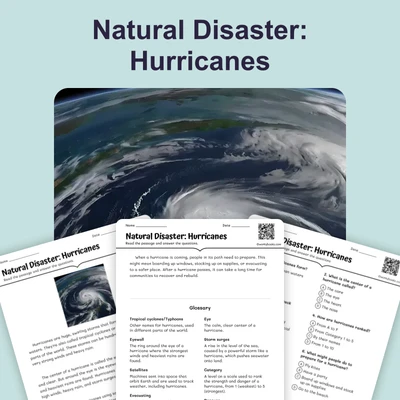
Natural Disaster: Hurricanes
Hurricanes are massive storms with strong winds and rain. Tracking and preparing for them helps protect people in their ...
RI.3.1RI.4.4RI.4.2RI.5.2
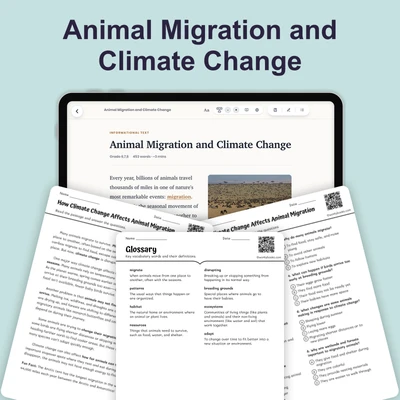
How Climate Change Affects Animal Migration
This NGSS-aligned science reading passage explains how climate change affects animal migration by altering seasonal cues...
MS-LS2-6MS-ESS3-5
What Causes Global Warming?
This NGSS-aligned reading passage explains what causes global warming, focusing on how human activities like burning fos...
MS-ESS3-5
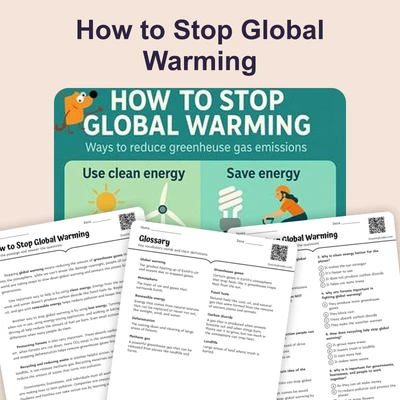
How to Stop Global Warming
This NGSS-aligned reading passage helps students understand how to stop global warming by reducing greenhouse gases. It ...
MS-ESS3-5
Human Impacts: Climate Change
This standards-aligned science reading passage for grades 6-8 explains the mechanisms and effects of human-driven climat...
MS-LS2-4MS-ESS3-5
Climate Change: Vulnerable Ecosystems
This middle school science passage, aligned with NGSS standards MS-ESS3-5 and MS-LS2-4, helps students understand how cl...
MS-ESS3-5MS-LS2-4
Climate Change: Solutions and Mitigation
This passage explores scientific solutions and mitigation strategies for climate change, designed for middle school scie...
MS-ESS3-4MS-ESS3-5
Scientific Inquiry in Earth Science
This passage explores scientific inquiry in Earth science for grades 6-8, aligned with NGSS standards MS-ESS1-4, MS-ESS2...
MS-ESS1-4MS-ESS2-1MS-ESS3-5SEP
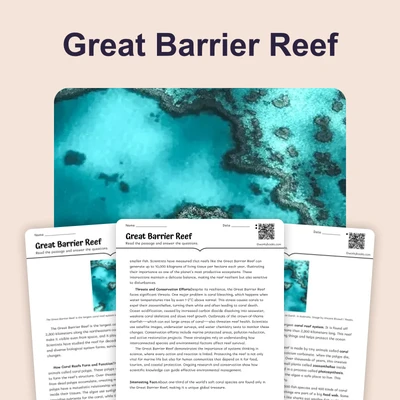
Great Barrier Reef
This passage introduces middle school students to the Great Barrier Reef, the world's largest coral reef system, located...
MS-LS2-1MS-LS2-4MS-ESS3-5
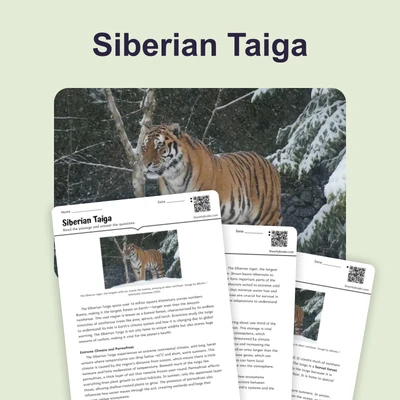
Siberian Taiga
This engaging middle school science passage explores the Siberian Taiga, the world’s largest forest ecosystem, stretchin...
MS-LS2-1MS-ESS3-5
The Greenhouse Effect
This comprehensive middle school science passage explores the greenhouse effect, a process essential to maintaining Eart...
MS-ESS2-6MS-ESS3-5
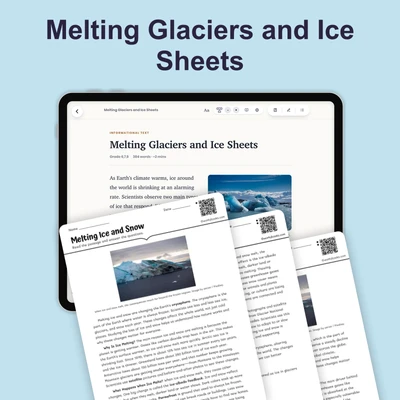
Melting Ice and Snow
This passage, designed for grades 6-8 and aligned with NGSS MS-ESS3-5, explores the mechanisms and impacts of melting ic...
MS-ESS3-5
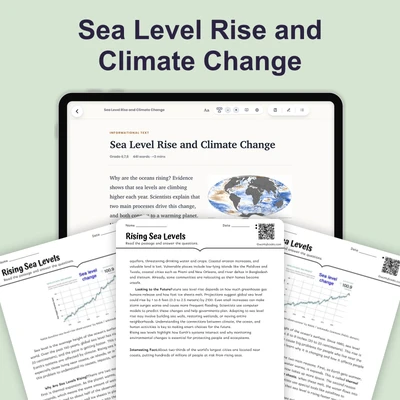
Rising Sea Levels
This science passage, written for grades 6-8, explores the phenomenon of rising sea levels, a key topic aligned with NGS...
MS-ESS3-5
Ice Cores
This passage, aligned with NGSS standards MS-ESS3-5 and MS-ESS1-4, explores the scientific process of extracting and ana...
MS-ESS3-5MS-ESS1-4
How Climate Change Affects Weather
This middle school science passage explores how and why weather patterns are changing globally. Students will learn abou...
MS-ESS3-5
How Climate Change Affects Oceans
This NGSS-aligned passage explores major changes occurring in Earth’s oceans, focusing on the mechanisms and impacts of ...
MS-ESS3-5
Carbon Footprint
This NGSS-aligned passage for grades 6-8 explores the concept of a carbon footprint, focusing on how personal activities...
MS-ESS3-4MS-ESS3-5
El Niño
This middle school science passage provides an in-depth exploration of El Niño, the warm phase of the El Niño-Southern O...
MS-ESS2-6MS-ESS3-5
ENSO and Global Climate
This comprehensive passage explores the El Niño-Southern Oscillation (ENSO), a crucial driver of global climate variabil...