How Climate Change Affects Animal Migration — Reading Comprehension
Rate this
Premium Resource
Present
Present in classroom. No work saved
Assign
Classroom with student accounts, Track progress
Quick Play
No student accounts, assign with a link
Grades
5
6
7
8
Standards
MS-LS2-6
MS-ESS3-5
PRINT+DIGITAL RESOURCE
This learning resource is available in interactive and printable formats. The interactive worksheet can be played online and assigned to students. The Printable PDF version can be downloaded and printed for completion by hand.
This NGSS-aligned science reading passage explains how climate change affects animal migration by altering seasonal cues, food availability, and habitats. Students learn how rising temperatures and shifting ecosystems disrupt the patterns that animals like birds, butterflies, whales, and fish rely on for survival. The passage includes examples of how animals are adapting or struggling to keep up. Designed for middle school science, this resource supports ecosystem and climate standards while improving literacy with vocabulary, comprehension, and critical thinking exercises.
CONTENT PREVIEW
Expand content preview
Many animals migrate to survive. Migration is the movement of animals from one place to another, often based on the seasons. Birds, whales, butterflies, and even caribou migrate to find food, escape cold weather, or have their babies in a safe place. But now, climate change is disrupting these natural patterns.
One major way climate change affects migration is by changing the timing of the seasons. Many animals rely on temperature or daylight to tell them when to migrate. As the planet warms, spring comes earlier in many places. This can cause birds to arrive at their breeding grounds too soon—before insects hatch or plants bloom. If food isn’t available, fewer baby birds survive.
Another problem is that animals may not find the same food or habitat when they arrive. Melting ice, wildfires, and droughts are changing ecosystems. Some wetlands are drying up, and forests are shifting to different locations. This makes it harder for migratory animals like monarch butterflies and certain fish to find the resources they depend on during their journey.
Some animals are trying to change their migration routes or timing. For example, some birds are flying shorter distances or skipping migration altogether. Others are heading farther north to find cooler areas. But these changes don’t always work, and many species can’t adapt quickly enough.
Climate change can also affect how far animals can travel. Some species lose important stopover spots where they rest and eat during long trips. If those places disappear, the animals may not have enough energy to finish their migration.
Fun Fact: The Arctic tern has the longest migration in the world—traveling over 44,000 miles each year between the Arctic and Antarctica!
What is migration?
When animals hibernateWhen animals move between places seasonallyWhen animals stop eatingWhen animals dig underground
Why do many animals migrate?
To avoid other animalsTo find food, stay safe, and raise youngTo follow humansTo explore new habitats
How does climate change affect the timing of migration?
It makes animals strongerIt causes spring to come laterIt changes when animals think it’s time to moveIt makes animals migrate in winter only
What can happen if birds arrive too early at breeding grounds?
Their eggs grow fasterThey find more foodTheir babies have more spaceTheir food may not be ready yet
What is one reason animals may not complete their journey?
They sleep too muchThey lose stopover sites to rest and feedThey get too largeThey change color
What changes are some animals making in response to climate change?
Flying lowerMigrating shorter distances or to new placesLaying more eggsSleeping during summer
What is the main idea of the passage?
All animals stop migratingClimate change is disrupting animal migration patternsBirds are growing largerSeasons never change
Why are wetlands and forests important to migratory animals?
They are colorfulThey provide nesting materialsThey give food and shelter during migrationThey are easier to walk through
Perfect For:
👩🏫 Teachers
• Reading comprehension practice
• Auto-graded assessments
• Literacy skill development
👨👩👧👦 Parents
• Reading practice at home
• Comprehension improvement
• Educational reading time
🏠 Homeschoolers
• Reading curriculum support
• Independent reading practice
• Progress monitoring
Reading Features:
📖
Reading Passage
Engaging fiction or nonfiction text
❓
Comprehension Quiz
Auto-graded questions
📊
Instant Feedback
Immediate results and scoring
📄
Printable Version
Download for offline reading
🔊
Read Aloud
Voice-over with word highlighting
Reviews & Ratings
No reviews yet. Be the first to share your experience!
Related Content
Natural Disaster: Hurricanes
Hurricanes are massive storms with strong winds and rain. Tracking and preparing for them helps protect people in their ...
RI.3.1RI.4.4RI.4.2RI.5.2
What Is Global Warming?
This NGSS-aligned reading passage explains global warming, the greenhouse effect, and how human activities like burning ...
MS-ESS3-5
What Causes Global Warming?
This NGSS-aligned reading passage explains what causes global warming, focusing on how human activities like burning fos...
MS-ESS3-5
How to Stop Global Warming
This NGSS-aligned reading passage helps students understand how to stop global warming by reducing greenhouse gases. It ...
MS-ESS3-5
Human Impacts: Climate Change
This standards-aligned science reading passage for grades 6-8 explains the mechanisms and effects of human-driven climat...
MS-LS2-4MS-ESS3-5
Climate Change: Vulnerable Ecosystems
This middle school science passage, aligned with NGSS standards MS-ESS3-5 and MS-LS2-4, helps students understand how cl...
MS-ESS3-5MS-LS2-4
Climate Change: Solutions and Mitigation
This passage explores scientific solutions and mitigation strategies for climate change, designed for middle school scie...
MS-ESS3-4MS-ESS3-5
Scientific Inquiry in Earth Science
This passage explores scientific inquiry in Earth science for grades 6-8, aligned with NGSS standards MS-ESS1-4, MS-ESS2...
MS-ESS1-4MS-ESS2-1MS-ESS3-5SEP
Great Barrier Reef
This passage introduces middle school students to the Great Barrier Reef, the world's largest coral reef system, located...
MS-LS2-1MS-LS2-4MS-ESS3-5
Siberian Taiga
This engaging middle school science passage explores the Siberian Taiga, the world’s largest forest ecosystem, stretchin...
MS-LS2-1MS-ESS3-5
The Greenhouse Effect
This comprehensive middle school science passage explores the greenhouse effect, a process essential to maintaining Eart...
MS-ESS2-6MS-ESS3-5
Melting Ice and Snow
This passage, designed for grades 6-8 and aligned with NGSS MS-ESS3-5, explores the mechanisms and impacts of melting ic...
MS-ESS3-5
Rising Sea Levels
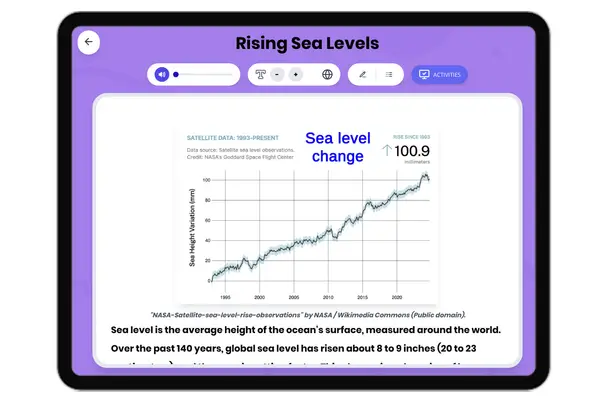
This science passage, written for grades 6-8, explores the phenomenon of rising sea levels, a key topic aligned with NGS...
MS-ESS3-5
Ice Cores
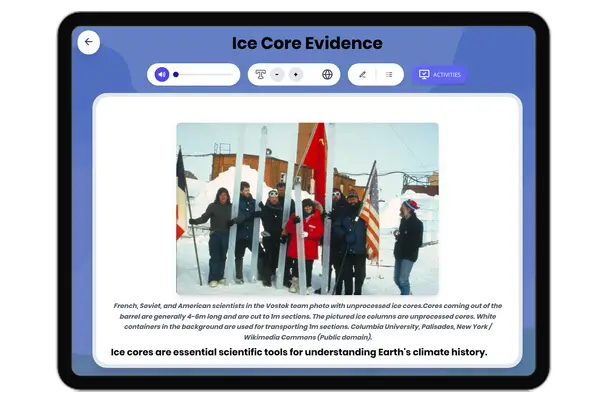
This passage, aligned with NGSS standards MS-ESS3-5 and MS-ESS1-4, explores the scientific process of extracting and ana...
MS-ESS3-5MS-ESS1-4
How Climate Change Affects Weather
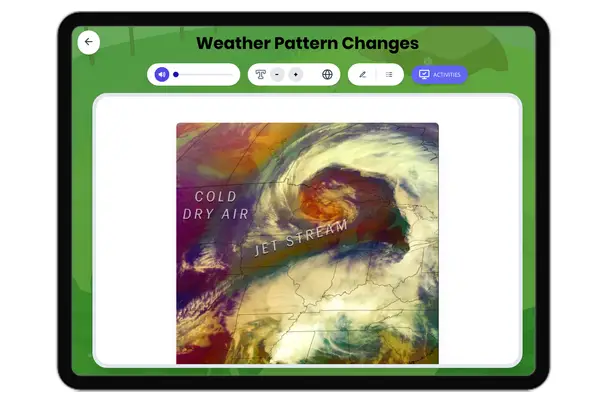
This middle school science passage explores how and why weather patterns are changing globally. Students will learn abou...
MS-ESS3-5
How Climate Change Affects Oceans
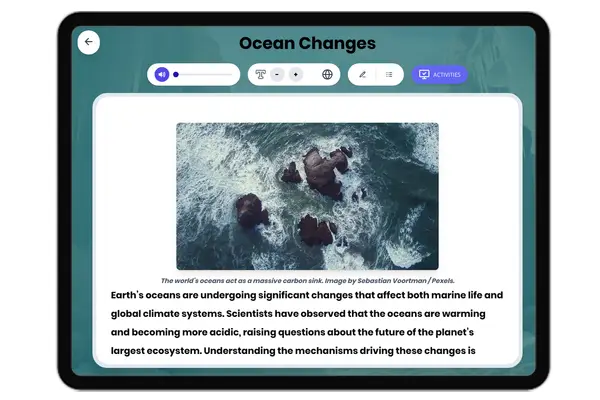
This NGSS-aligned passage explores major changes occurring in Earth’s oceans, focusing on the mechanisms and impacts of ...
MS-ESS3-5
Carbon Footprint
This NGSS-aligned passage for grades 6-8 explores the concept of a carbon footprint, focusing on how personal activities...
MS-ESS3-4MS-ESS3-5
El Niño
This middle school science passage provides an in-depth exploration of El Niño, the warm phase of the El Niño-Southern O...
MS-ESS2-6MS-ESS3-5
ENSO and Global Climate
This comprehensive passage explores the El Niño-Southern Oscillation (ENSO), a crucial driver of global climate variabil...