What Causes Global Warming? — Reading Comprehension
Rate this
Premium Resource
Present
Present in classroom. No work saved
Assign
Classroom with student accounts, Track progress
Quick Play
No student accounts, assign with a link
Grades
5
6
7
8
Standards
MS-ESS3-5
PRINT+DIGITAL RESOURCE
This learning resource is available in interactive and printable formats. The interactive worksheet can be played online and assigned to students. The Printable PDF version can be downloaded and printed for completion by hand.
This NGSS-aligned reading passage explains what causes global warming, focusing on how human activities like burning fossil fuels, deforestation, and farming release greenhouse gases. Students will learn how carbon dioxide, methane, and nitrous oxide trap heat in Earth’s atmosphere, leading to rising temperatures. With clear examples and vocabulary support, this passage is ideal for building reading comprehension and science literacy in middle school students. It supports NGSS Earth and environmental science standards with activities that encourage critical thinking and real-world connections.
CONTENT PREVIEW
Expand content preview
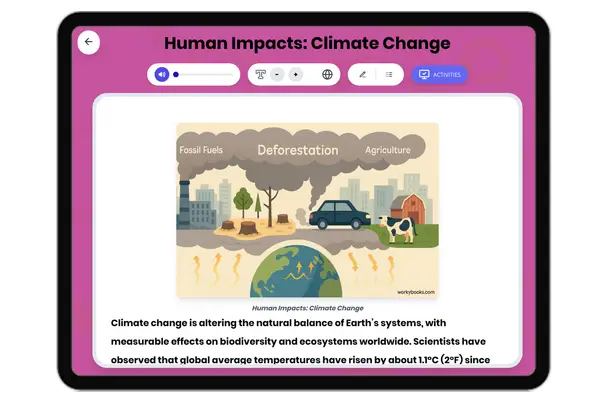
Global warming is the long-term rise in Earth’s average temperature. It is mostly caused by human activities that release gases into the atmosphere. These gases trap heat and make the planet warmer. The biggest cause of global warming is the increase in greenhouse gases like carbon dioxide (CO₂), methane (CH₄), and nitrous oxide (N₂O).
The most common source of these gases is the burning of fossil fuels. Fossil fuels include coal, oil, and natural gas. People burn these fuels to make electricity, power cars and trucks, and run factories. When fossil fuels burn, they release large amounts of carbon dioxide into the air.
Another major cause is deforestation, or cutting down forests. Trees naturally absorb carbon dioxide from the air. When forests are cleared for farming or building, fewer trees are left to clean the air. In addition, when trees are burned or rot, they release stored carbon into the atmosphere.
Farming also adds to global warming. Animals like cows produce methane during digestion, and some fertilizers used on crops release nitrous oxide. These gases are stronger than carbon dioxide and trap even more heat.
Waste from landfills can release methane as food and other materials break down. Even everyday items like air conditioners and refrigerators can leak gases that warm the planet.
Together, these human actions have added too many greenhouse gases to the air. As a result, Earth’s natural balance is changing, and the planet is getting warmer.
Fun Fact: Methane traps about 25 times more heat than carbon dioxide over 100 years!
What is the main cause of global warming?
VolcanoesHuman activities that release greenhouse gasesEarth’s natural cycleToo much sunlight
What are greenhouse gases?
Gases used in farmingGases that help plants growGases that trap heat in the atmosphereGases found only in outer space
Which gas is mostly released when fossil fuels burn?
OxygenCarbon dioxide (CO₂)HeliumNitrogen
What is deforestation?
Planting new treesClearing forests by cutting down treesCleaning up forestsBuilding treehouses
Why does cutting down trees add to global warming?
Trees block sunlightTrees cool the planetTrees release oxygenFewer trees means less CO₂ is removed from the air
What farm animals produce methane?
HorsesPigsChickensCows
What is the main idea of the passage?
Trees make too much CO₂Global warming is caused mostly by human activitiesAnimals are the main reason for warmingAir conditioners are good for the climate
What is one way waste contributes to global warming?
It cools the airIt reduces rainfallLandfills release methane gasTrash turns into fertilizer
Perfect For:
👩🏫 Teachers
• Reading comprehension practice
• Auto-graded assessments
• Literacy skill development
👨👩👧👦 Parents
• Reading practice at home
• Comprehension improvement
• Educational reading time
🏠 Homeschoolers
• Reading curriculum support
• Independent reading practice
• Progress monitoring
Reading Features:
📖
Reading Passage
Engaging fiction or nonfiction text
❓
Comprehension Quiz
Auto-graded questions
📊
Instant Feedback
Immediate results and scoring
📄
Printable Version
Download for offline reading
🔊
Read Aloud
Voice-over with word highlighting
Reviews & Ratings
No reviews yet. Be the first to share your experience!
Related Content
Natural Disaster: Hurricanes
Hurricanes are massive storms with strong winds and rain. Tracking and preparing for them helps protect people in their ...
RI.3.1RI.4.4RI.4.2RI.5.2
How Climate Change Affects Animal Migration
This NGSS-aligned science reading passage explains how climate change affects animal migration by altering seasonal cues...
MS-LS2-6MS-ESS3-5
What Is Global Warming?
This NGSS-aligned reading passage explains global warming, the greenhouse effect, and how human activities like burning ...
MS-ESS3-5
How to Stop Global Warming
This NGSS-aligned reading passage helps students understand how to stop global warming by reducing greenhouse gases. It ...
MS-ESS3-5
Human Impacts: Climate Change
This standards-aligned science reading passage for grades 6-8 explains the mechanisms and effects of human-driven climat...
MS-LS2-4MS-ESS3-5
Climate Change: Vulnerable Ecosystems
This middle school science passage, aligned with NGSS standards MS-ESS3-5 and MS-LS2-4, helps students understand how cl...
MS-ESS3-5MS-LS2-4
Climate Change: Solutions and Mitigation
This passage explores scientific solutions and mitigation strategies for climate change, designed for middle school scie...
MS-ESS3-4MS-ESS3-5
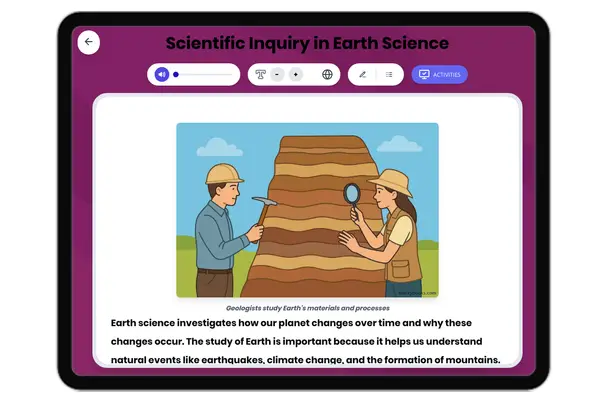
Scientific Inquiry in Earth Science
This passage explores scientific inquiry in Earth science for grades 6-8, aligned with NGSS standards MS-ESS1-4, MS-ESS2...
MS-ESS1-4MS-ESS2-1MS-ESS3-5SEP
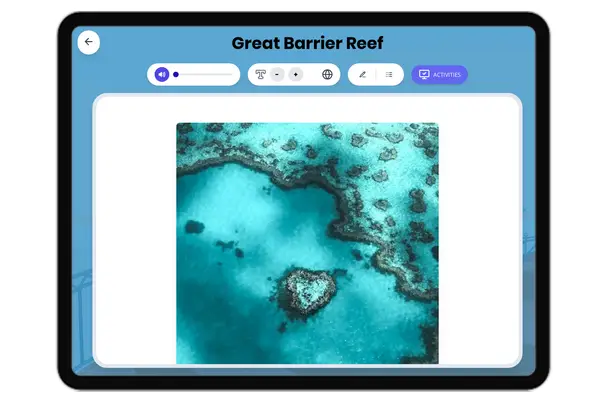
Great Barrier Reef
This passage introduces middle school students to the Great Barrier Reef, the world's largest coral reef system, located...
MS-LS2-1MS-LS2-4MS-ESS3-5
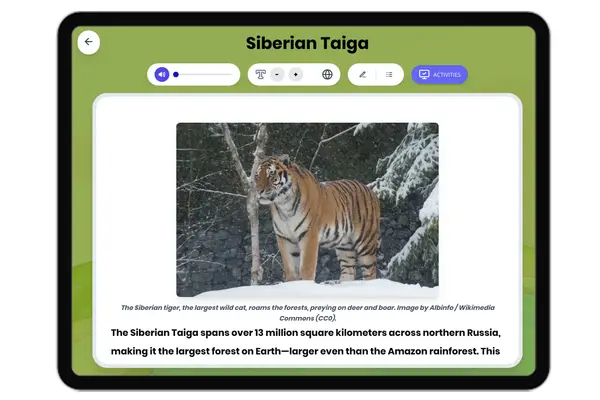
Siberian Taiga
This engaging middle school science passage explores the Siberian Taiga, the world’s largest forest ecosystem, stretchin...
MS-LS2-1MS-ESS3-5
The Greenhouse Effect
This comprehensive middle school science passage explores the greenhouse effect, a process essential to maintaining Eart...
MS-ESS2-6MS-ESS3-5
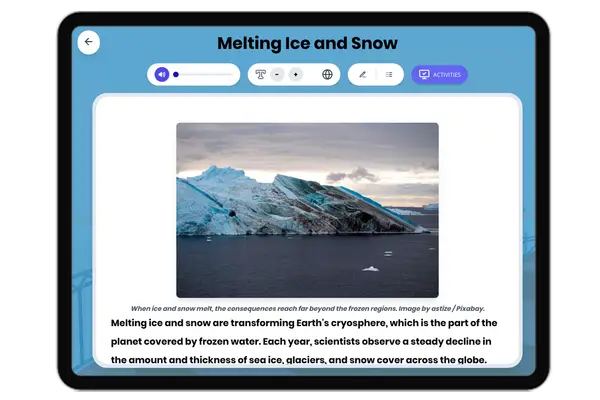
Melting Ice and Snow
This passage, designed for grades 6-8 and aligned with NGSS MS-ESS3-5, explores the mechanisms and impacts of melting ic...
MS-ESS3-5
Rising Sea Levels
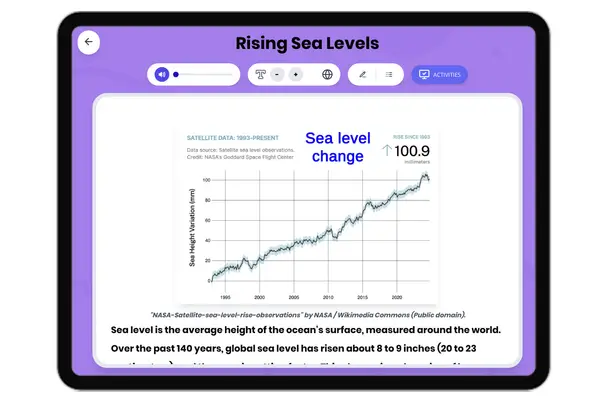
This science passage, written for grades 6-8, explores the phenomenon of rising sea levels, a key topic aligned with NGS...
MS-ESS3-5
Ice Cores
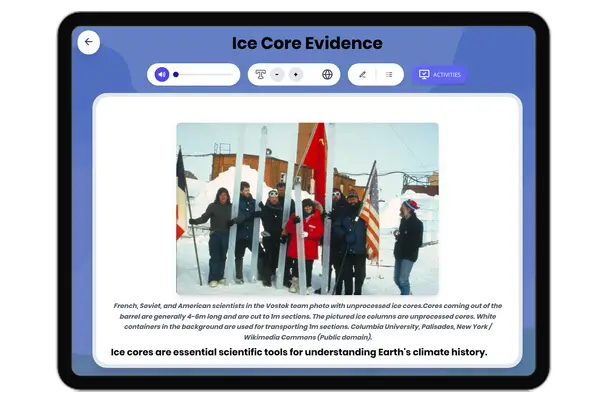
This passage, aligned with NGSS standards MS-ESS3-5 and MS-ESS1-4, explores the scientific process of extracting and ana...
MS-ESS3-5MS-ESS1-4
How Climate Change Affects Weather
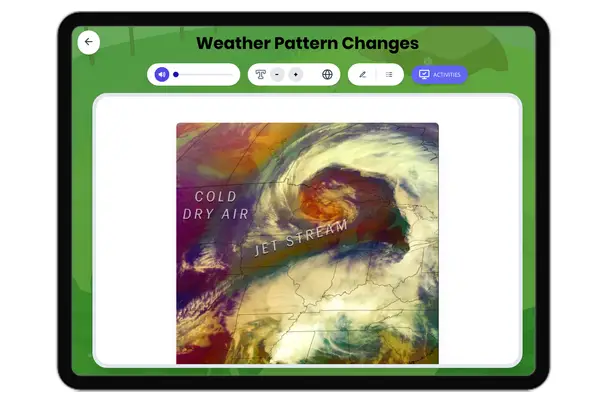
This middle school science passage explores how and why weather patterns are changing globally. Students will learn abou...
MS-ESS3-5
How Climate Change Affects Oceans
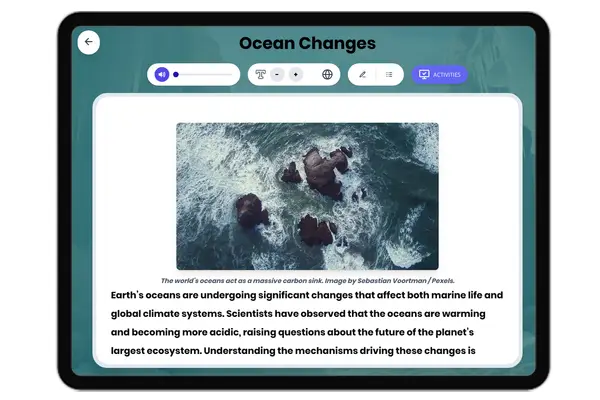
This NGSS-aligned passage explores major changes occurring in Earth’s oceans, focusing on the mechanisms and impacts of ...
MS-ESS3-5
Carbon Footprint
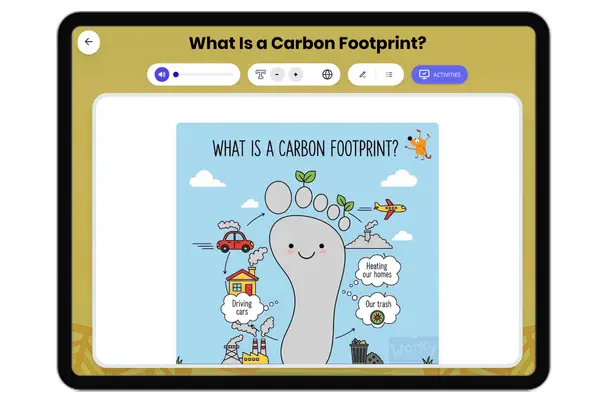
This NGSS-aligned passage for grades 6-8 explores the concept of a carbon footprint, focusing on how personal activities...
MS-ESS3-4MS-ESS3-5
El Niño
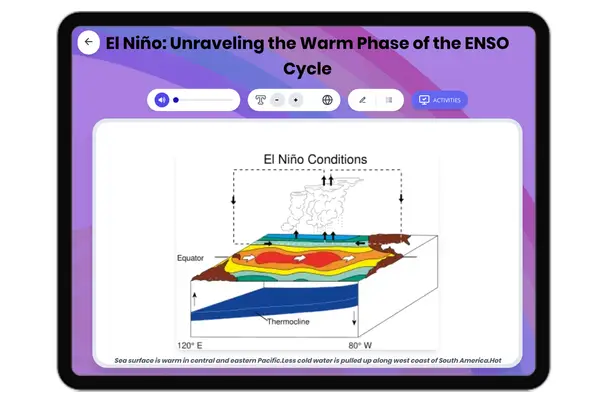
This middle school science passage provides an in-depth exploration of El Niño, the warm phase of the El Niño-Southern O...
MS-ESS2-6MS-ESS3-5
ENSO and Global Climate
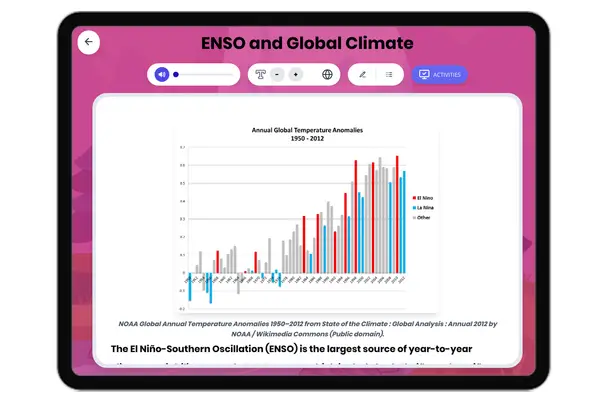
This comprehensive passage explores the El Niño-Southern Oscillation (ENSO), a crucial driver of global climate variabil...