Indigenous Trail Networks
Interactive passage with audio narration, comprehension questions, and printable PDF.
By completing this purchase you agree to our Terms of Use and Privacy Policy. Your subscription renews automatically until you cancel. You can cancel anytime from your account settings. All sales are final and non-refundable. Digital content is available for download in your account immediately upon purchase.
What's included
Indigenous Trail Networks preview and details
About this printable Indigenous Trail Networks reading passage (Grades 5-8)
Sample passage and quiz from Indigenous Trail Networks
Reading passage and comprehension quiz preview
Indigenous Trail Networks
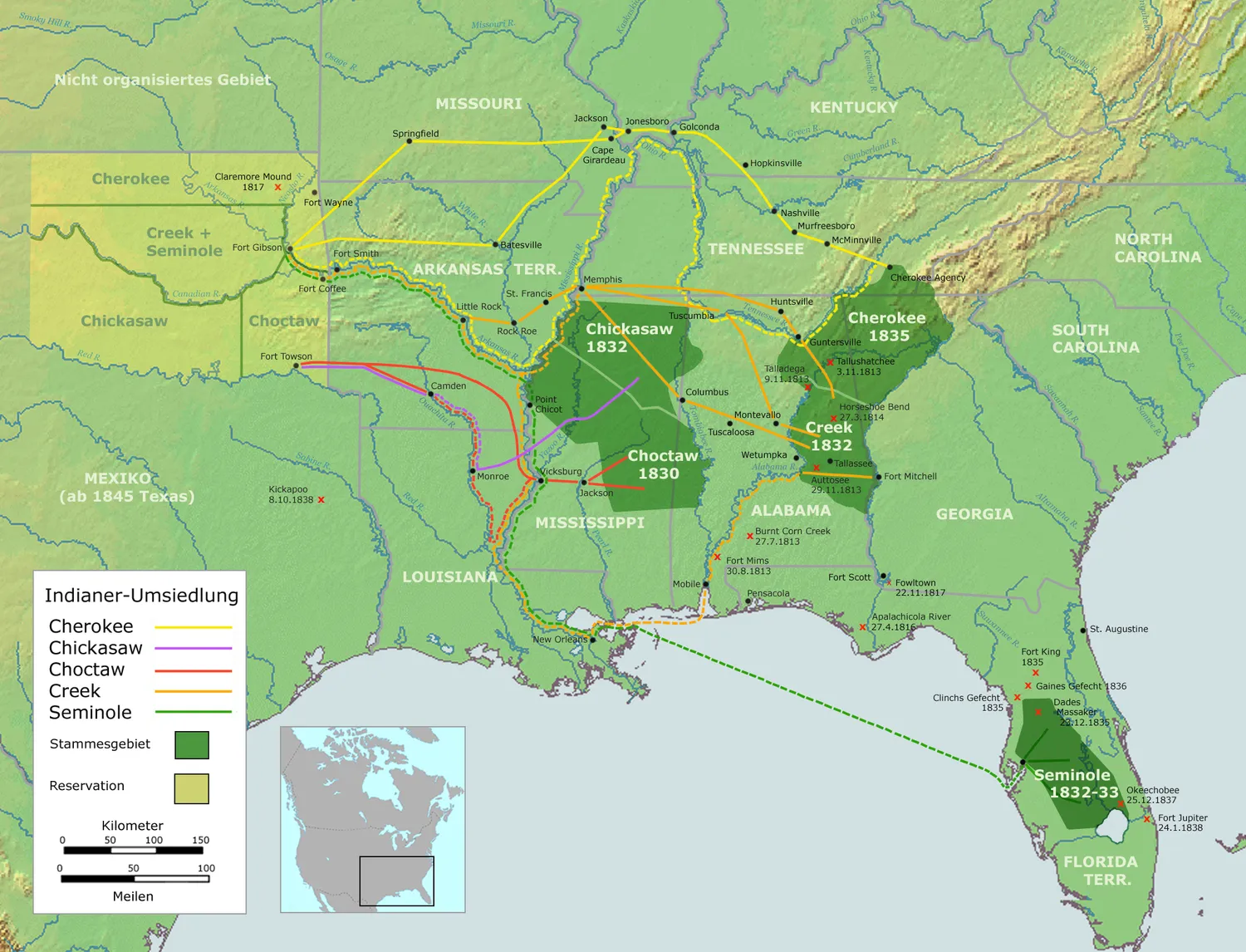
"Trails of Tears" / Wikimedia Commons
Across North, Central, and South America, Indigenous peoples created extensive trail networks long before the arrival of Europeans. These infrastructure systems were not random paths, but carefully planned routes that connected communities, supported trade, and allowed for communication over vast distances. Examples such as the Natchez Trace in the United States, the Great Trail in Canada, and the Inca road system in South America show the advanced engineering and organization of these societies.
The Natchez Trace is a historic trail stretching nearly 440 miles from Natchez, Mississippi to Nashville, Tennessee. Archaeological evidence, such as ancient campsites and tools found along the route, demonstrates that Native Americans used this corridor for centuries before European settlers arrived. The Natchez Trace facilitated trade in goods like salt, copper, shells, and animal skins. It also allowed for the exchange of ideas and news between different groups, proving its importance beyond just transportation.
Further north, the Great Trail (also known as the Great Indian Warpath) stretched from the Atlantic coast of Canada through the Great Lakes region and into the Ohio Valley. This network linked various nations, including the Iroquois, Algonquin, and Huron peoples. Primary sources, such as early European explorer journals, describe well-trodden paths wide enough for many travelers. The Great Trail was used for seasonal migrations, trade, and diplomacy. Its routes often followed natural features like rivers and ridges, showing a deep understanding of geography.
In South America, the Inca Empire developed one of the most impressive road systems in world history. The Inca road system covered over 25,000 miles, connecting the capital city of Cusco to distant provinces across mountains and deserts. Archaeologists have uncovered stone-paved roads, suspension bridges, and waystations known as tambos. Inca messengers called chaski ran along these roads, delivering messages and goods rapidly. The road system supported the movement of armies, tribute, and agricultural products, helping the empire maintain its power and unity.
These networks show how Indigenous societies adapted to their environments and solved complex transportation challenges. Over time, some trails expanded while others faded, but many modern highways and cities still follow these ancient routes. The creation and maintenance of these trails required cooperation, knowledge of land, and social organization. They played a vital role in shaping the history and cultures of the Americas.
Understanding these networks helps us appreciate the ingenuity and achievements of Indigenous peoples. They remind us that advanced communication and engineering existed in the Americas long before European contact, and that these societies were dynamic, innovative, and deeply connected to their lands.
Interesting Fact: Some parts of the Inca road system are still used by villagers in Peru and Ecuador today, over 500 years after their construction.
Comprehension quiz (8 questions)
1. Where does the Natchez Trace begin?
2. Which empire built a 25,000-mile road system?
3. What did the Great Trail connect?
4. Why were Indigenous trail networks important?
5. How did Inca messengers deliver messages?
6. What is a primary source?
7. Some modern roads follow old trails. True or false?
8. What does 'infrastructure' mean?
Perfect for the way you teach
- Build comprehension skills
- Auto-graded quiz
- Differentiated reading
- Read together at home
- Improve fluency
- Quiet reading time
- Reading curriculum support
- Independent practice
- Track Lexile growth