Industrial Revolution Comes to America
Interactive passage with audio narration, comprehension questions, and printable PDF.
By completing this purchase you agree to our Terms of Use and Privacy Policy. Your subscription renews automatically until you cancel. You can cancel anytime from your account settings. All sales are final and non-refundable. Digital content is available for download in your account immediately upon purchase.
What's included
Industrial Revolution Comes to America preview and details
About this printable Industrial Revolution Comes to America reading passage (Grades 6-8)
Sample passage and quiz from Industrial Revolution Comes to America
Reading passage and comprehension quiz preview
Industrial Revolution Comes to America
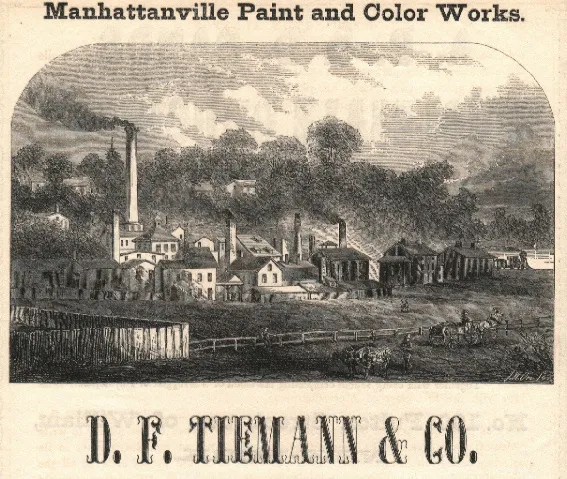
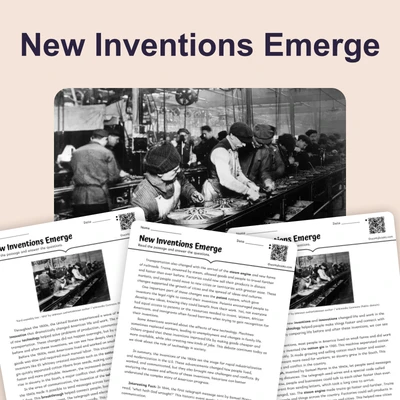
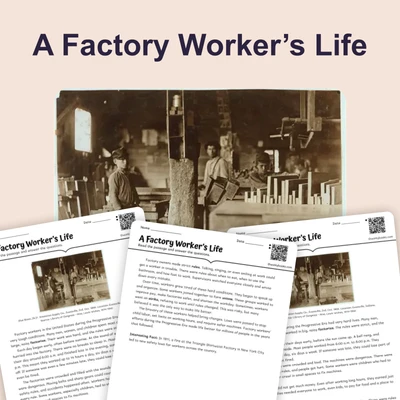
"Daniel F. Tiemann's paint factory in 1850s" / Wikimedia Commons
The Industrial Revolution began to change the United States in the early 1800s. Before this period, most Americans lived on farms and made goods by hand. However, the arrival of new technology, such as steam engines and spinning machines, brought about a dramatic transformation. Factories and mills began to appear, especially in New England, shifting the nation’s economy from agriculture to manufacturing.
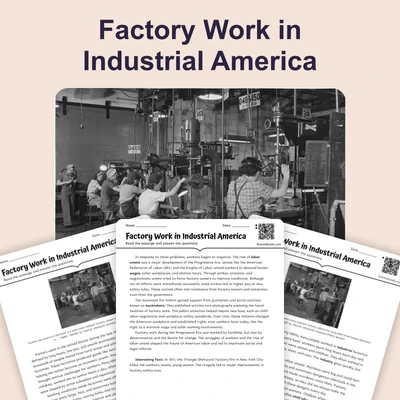
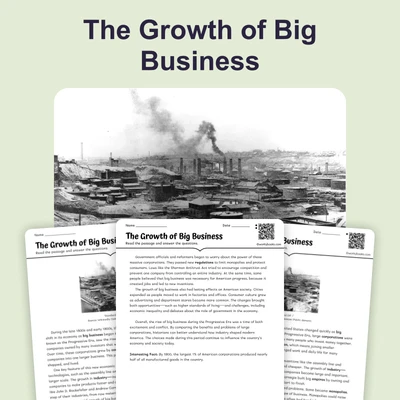
This industrialization created both opportunities and challenges. On one hand, mechanization allowed goods to be produced faster and in larger quantities. Workers could use machines to weave cloth or assemble products, increasing efficiency and lowering costs. On the other hand, harsh working conditions and long hours became common in factories. Many families, including women and children, worked to earn enough to survive.
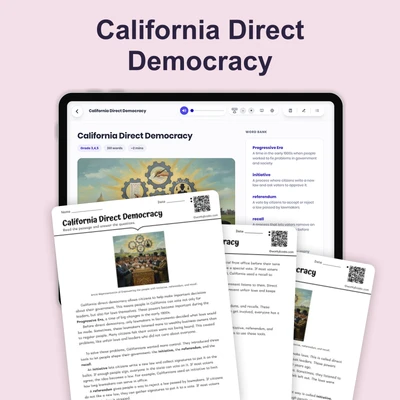
As factories grew, cities expanded rapidly. People moved from rural areas to urban centers in search of jobs. This rapid urbanization led to crowded living conditions and new social problems, such as pollution and poor sanitation. Reformers known as Progressives emerged, hoping to improve factory safety and the lives of workers. Their efforts were part of the Progressive Era, a time of significant social and political change.
One important development was the use of the assembly line, first made famous by Henry Ford. This method involved workers performing specialized tasks in sequence, which sped up production and made goods like automobiles more affordable. The rise of factory systems and mass production also created new types of jobs and shaped the modern American workforce.
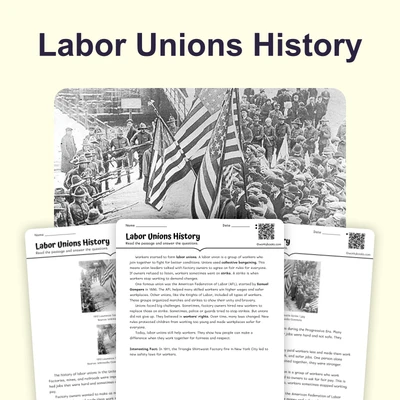
The Industrial Revolution in America was not without conflict. Workers often protested for higher wages and safer conditions. Labor unions formed to demand rights and better treatment. Meanwhile, business owners and inventors argued that innovation and industry would benefit the entire country. This period was marked by both progress and struggle, as Americans navigated the costs and benefits of rapid change.
While industrialization improved the country’s wealth and global power, it also raised important questions about equality, fairness, and the environment. The impact of this era continues to shape American society today, reminding us that every transformation brings both solutions and new challenges.
Interesting Fact: By 1900, the United States had more factory workers than farmers for the first time in its history.
Comprehension quiz (8 questions)
1. When did the Industrial Revolution start in America?
2. What did most Americans do before factories?
3. Who is known for the assembly line?
4. How did mechanization change work?
5. What is urbanization?
6. Why did workers form labor unions?
7. The assembly line made production slower.
8. What does 'industrialization' mean?
Perfect for the way you teach
- Build comprehension skills
- Auto-graded quiz
- Differentiated reading
- Read together at home
- Improve fluency
- Quiet reading time
- Reading curriculum support
- Independent practice
- Track Lexile growth