Lascaux Cave: Prehistoric Art — Reading Comprehension
Rate this
Premium Resource
Present
Present in classroom. No work saved
Assign
Classroom with student accounts, Track progress
Quick Play
No student accounts, assign with a link
Grades
6
7
8
PRINT+DIGITAL RESOURCE
This learning resource is available in interactive and printable formats. The interactive worksheet can be played online and assigned to students. The Printable PDF version can be downloaded and printed for completion by hand.
This engaging passage introduces students to the prehistoric art of Lascaux Cave, a remarkable archaeological discovery in France. The text explores the cave's accidental discovery, the meaning and techniques of the Paleolithic paintings, and their significance to understanding ancient human society. Students will analyze how geography influenced human settlement, examine primary sources like cave art, and consider the lasting impact of Lascaux on our knowledge of the Stone Age. The lesson is aligned with CA HSS 6.2.1 and CCSS RH.6-8.4 standards, supporting the development of historical thinking and informational text skills. Activities include a glossary, timeline, reading quiz, writing prompts, graphic organizers, and both English and Spanish versions of the passage. A read aloud audio feature and coloring page prompt are also provided to support diverse learners exploring this iconic archaeological site.
CONTENT PREVIEW
Expand content preview
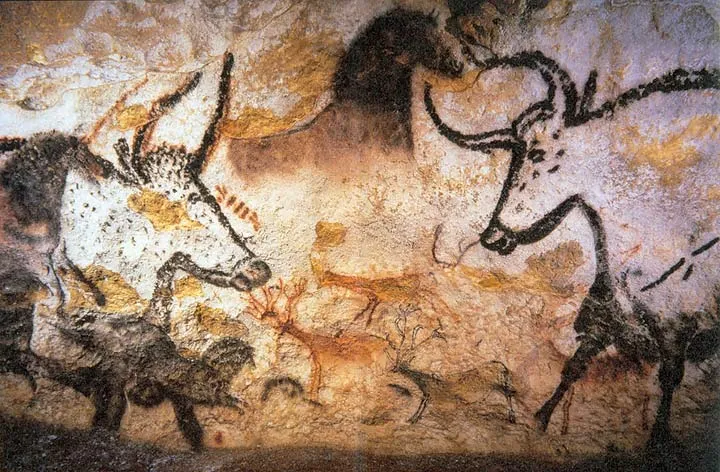
"Lascaux painting" by EU / Wikimedia Commons.
Lascaux Cave in southwestern France is one of the most important archaeological sites ever discovered. The cave contains more than 600 paintings and 1,500 engravings that date back to the Paleolithic period, about 17,000 years ago. These works of art offer a rare glimpse into the lives, beliefs, and skills of early modern humans during the Stone Age.
The discovery of Lascaux Cave happened by accident in 1940. Four teenagers—Marcel Ravidat, Jacques Marsal, Georges Agnel, and Simon Coencas—were exploring the hills near Montignac when their dog, Robot, fell into a hole. When the boys investigated, they found a cave filled with remarkable wall paintings. Archaeologists soon began to study the site, using careful excavation methods to preserve the delicate images. The cave’s main chamber, known as the “Hall of the Bulls,” features massive images of animals such as aurochs, deer, and horses painted with natural pigments. The artists used minerals and charcoal to create vibrant colors and even used scaffolding to reach high ceilings.
The purpose of the Lascaux paintings remains debated among scholars. Many believe the images held spiritual or magical significance, perhaps related to hunting rituals. The presence of detailed animal drawings, rare human figures, and mysterious symbols suggests a complex belief system. For example, the “Shaft Scene” shows a bison and a human-like figure, possibly representing a myth or story. Archaeologists have used primary sources like the paintings themselves, as well as analysis of pigments and tools, to learn about the artists’ techniques and intentions. The cave’s location near a river and fertile land may have made it an important meeting place for Stone Age communities.
Over time, exposure to air and light caused the paintings to deteriorate. To protect this heritage, the French government closed the cave to the public in 1963 and created a replica, Lascaux II, for visitors. Today, scientists use conservation methods and advanced technology to preserve the original site. The discovery of Lascaux has changed our understanding of prehistoric people, showing their artistic skill, social organization, and spiritual life. It connects us to a distant past and reveals the universal human desire to create and communicate.
Lascaux Cave is a powerful example of how archaeological discoveries can transform our knowledge of early societies. It fits into the broader history of human development, where art, technology, and environment shaped the rise of civilizations.
Interesting Fact: The Lascaux Cave was painted over thousands of years, with some images added centuries apart, showing a long tradition of artistic expression.
Where is Lascaux Cave located?
FranceSpainItalyGermany
When was Lascaux Cave discovered?
19401963198317,000 BCE
What is the main chamber called?
Hall of the BullsGreat GalleryLion CaveChamber of Secrets
Why did people paint in Lascaux Cave?
Possibly for ritualsTo store foodFor fun onlyTo sleep inside
How did scientists protect Lascaux Cave?
Closed the cavePainted over artBuilt houses nearbyMoved paintings
What does conservation mean in this passage?
Protect from damageDraw new picturesSell the artHide the cave
Lascaux Cave is in Spain. True or false?
TrueFalse
What is a primary source?
Original object from the pastA modern bookA TV showA new painting
Perfect For:
👩🏫 Teachers
• Reading comprehension practice
• Auto-graded assessments
• Literacy skill development
👨👩👧👦 Parents
• Reading practice at home
• Comprehension improvement
• Educational reading time
🏠 Homeschoolers
• Reading curriculum support
• Independent reading practice
• Progress monitoring
Reading Features:
📖
Reading Passage
Engaging fiction or nonfiction text
❓
Comprehension Quiz
Auto-graded questions
📊
Instant Feedback
Immediate results and scoring
📄
Printable Version
Download for offline reading
🔊
Read Aloud
Voice-over with word highlighting
Reviews & Ratings
No reviews yet. Be the first to share your experience!
Related Content
Underwater Archaeology: Discovering Shipwrecks
This engaging passage explores the field of underwater archaeology, focusing on the discovery and study of ancient shipw...
What is Archaeology?
This engaging passage introduces students to the science of archaeology and how it helps us understand early humans and ...
Evidence in Ancient History
This engaging history reading passage investigates how archaeologists and historians discover clues about how ancient pe...
Protecting and Restoring Ancient Artifacts
This engaging passage explores how scientists, especially archaeologists and conservators, protect and restore artifacts...
Dating Ancient Artifacts
This passage explores the scientific methods used by archaeologists to determine the age of artifacts, such as radiocarb...
Terracotta Army China
This passage examines the remarkable discovery of China’s Terracotta Army, one of the world’s most famous archaeological...
Dead Sea Scrolls: Hidden Texts
This passage explores the remarkable discovery of the Dead Sea Scrolls, one of history’s most significant archaeological...
Paying Taxes in Ancient Times
This reading passage explores the origins and practices of taxation in ancient civilizations, focusing on how early gove...
Stratigraphy: Reading Earth's Layers
This passage introduces students to the science of stratigraphy, a key archaeological method for studying the layers of ...
Ancient Theocracy
This engaging history reading passage explores the concept of theocracy in ancient civilizations, where priests and reli...
Discovery of Rosetta stone
This engaging history reading passage explores the remarkable discovery of the Rosetta Stone and its impact on the study...
Social structures in Ancient World
This passage explores the organization and significance of family life in ancient societies, focusing on how extended fa...
Pompeii: A City Frozen in Time
This engaging passage explores the ancient Roman city of Pompeii, which was buried by the eruption of Mount Vesuvius in ...
Trade in the Ancient World
This reading passage delves into the dynamic world of trade among ancient civilizations, focusing on the Silk Road, Medi...
Ancient Canaan
This educational passage explores the land of Canaan, the historical homeland of the ancient Israelites. Students will l...
Ancient Literature
This passage explores the importance of ancient stories and poems from civilizations such as Greece, India, and Israel. ...
Terracotta Army
This passage explores the fascinating discovery of the Terra-Cotta Army near Xi’an, China, and its significance in ancie...
Howard Carter and the Tomb of King Tut
This detailed history reading passage explores the remarkable discovery of King Tutankhamun's tomb by Howard Carter in 1...
Geography of Ancient Israel
This passage explores the rich geography of Ancient Israel, focusing on how landforms, climate, and natural resources sh...
Ancient Writing Systems
This engaging history reading passage explores the origins and evolution of ancient writing systems, including cuneiform...