Maya Writing and Mathematics — Reading Comprehension
Rate this
Premium Resource
Present
Present in classroom. No work saved
Assign
Classroom with student accounts, Track progress
Quick Play
No student accounts, assign with a link
Grades
5
6
7
8
PRINT+DIGITAL RESOURCE
This learning resource is available in interactive and printable formats. The interactive worksheet can be played online and assigned to students. The Printable PDF version can be downloaded and printed for completion by hand.
This engaging passage explores the remarkable achievements of the Maya civilization in the fields of writing and mathematics. Students will learn about the development of the Maya hieroglyphic writing system, the use of codices, and the role of scribes within Maya society. The passage also details the Maya number system, the concept of zero, and their sophisticated calendar. By analyzing primary sources and archaeological discoveries, students gain insight into how geography, social structure, and religious beliefs influenced Maya innovations. This resource is aligned with CA HSS 6.7 and TEKS 6.2, and supports Common Core informational text standards. The set includes a glossary, multiple-choice quiz, writing activity, graphic organizers, audio read aloud, and a full Spanish translation, making it ideal for classroom or independent study.
CONTENT PREVIEW
Expand content preview
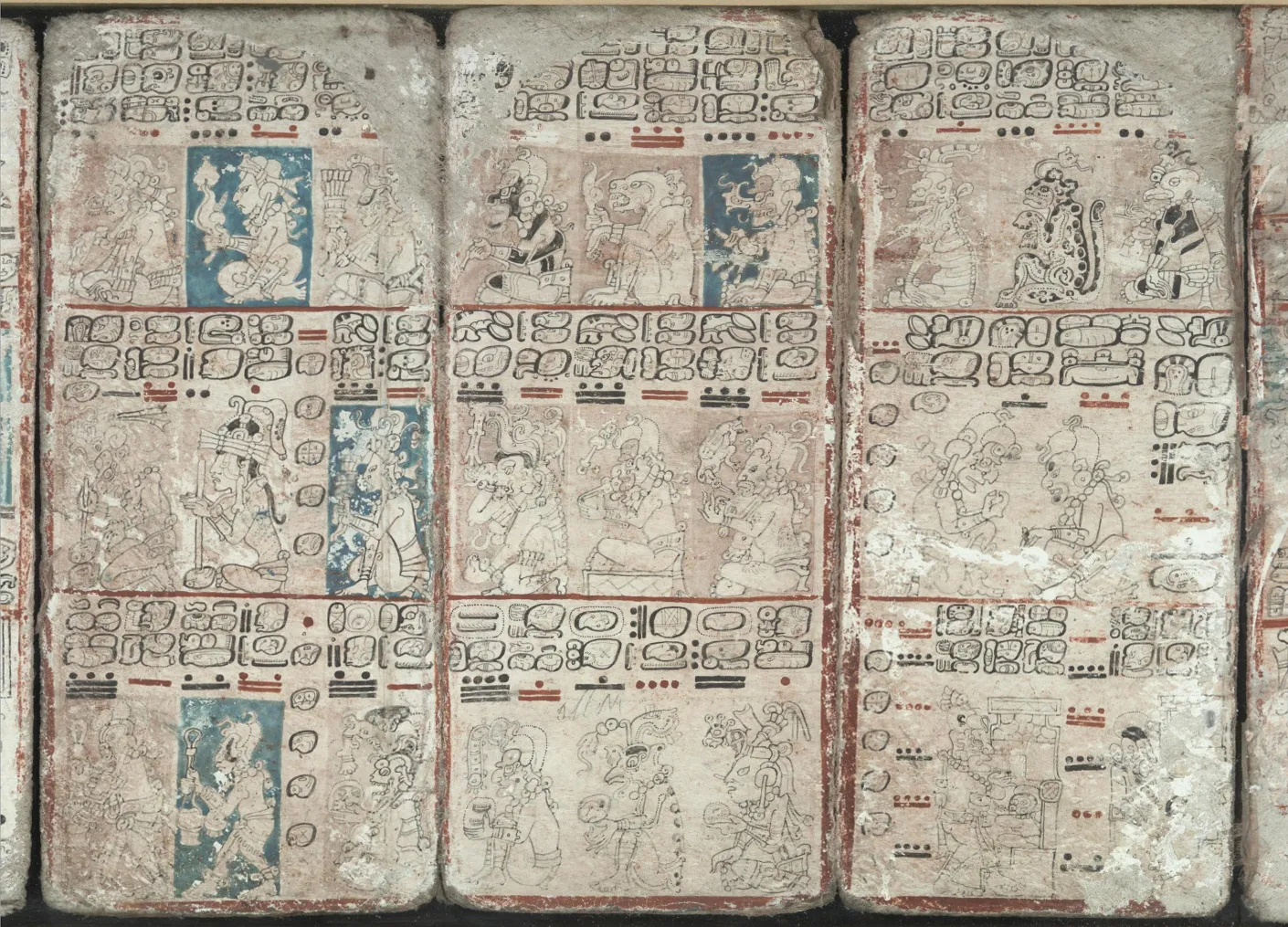
"Madrid Codex Pages" / Wikimedia Commons
The Maya civilization, which flourished in Mesoamerica from about 250 to 900 CE, made extraordinary advances in both writing and mathematics. Their achievements continue to impress scholars and archaeologists today, providing deep insight into the complexity of ancient American societies.
The Maya developed one of the most sophisticated writing systems in the ancient world. This system, known as hieroglyphics, used symbols to represent words, sounds, and ideas. Over 800 unique hieroglyphs have been identified, carved into stone monuments, painted on ceramics, and written in books called codices. For example, the Dresden Codex, discovered in the 18th century, is one of only four surviving Maya books. It contains detailed records of astronomical events and rituals. Maya scribes, who held high status in society, were responsible for recording history, royal events, and religious ceremonies. Their work was crucial in preserving knowledge across generations.
Mathematics was another area where the Maya excelled. They created a vigésimal (base-20) number system, which was very different from the decimal (base-10) system most people use today. One of their most significant contributions was the use of the concept of zero, which appeared in Maya texts as early as 36 BCE. This allowed them to make complex calculations, keep accurate calendars, and manage trade and tribute. Archaeologists have found carved stelae (stone monuments) from Copán and Tikal that display these numbers, providing evidence of their mathematical skill.
The Maya calendar was closely tied to both writing and mathematics. They tracked time using several calendars, including the Long Count calendar, which could record dates over thousands of years. This system was vital for planning agricultural cycles, religious festivals, and political events. The combination of detailed records and advanced math helped Maya leaders organize their city-states and maintain power.
These achievements were shaped by the Maya's geographic environment, which included dense rainforests, rivers, and fertile land. The need to coordinate farming and construction projects led to practical uses for math and writing. The Maya social hierarchy gave scribes and mathematicians important roles, showing the value placed on knowledge and record-keeping. Although many codices were destroyed during the Spanish conquest, ongoing archaeological discoveries continue to reveal new details about Maya intellectual life.
The study of Maya writing and mathematics helps historians understand how ancient societies used knowledge to solve everyday problems and maintain their complex civilizations. It also shows the importance of preserving cultural heritage for future generations.
Interesting Fact: Some Maya numbers were shown with dots and bars, making their math easy to write on stone or bark paper.
What is a Maya codex?
A Maya book with writingA stone templeA type of foodA farming tool
What symbol did Maya math introduce?
ZeroInfinityPiNegative numbers
Which city had stone monuments with numbers?
CopánRomeAthensBabylon
Why were scribes important in Maya society?
They recorded history and ritualsThey built templesThey grew cropsThey fought battles
How did the Maya's geography affect their achievements?
It required careful record-keepingIt made writing impossibleIt led to farming onlyIt stopped city development
Why was the Long Count calendar significant?
It tracked dates for thousands of yearsIt counted only monthsIt was used for cookingIt was only for trade
The Maya writing system used pictures.
TrueFalse
What does 'vigésimal' mean?
Base 20 systemBase 10 systemBase 12 systemBase 5 system
Perfect For:
👩🏫 Teachers
• Reading comprehension practice
• Auto-graded assessments
• Literacy skill development
👨👩👧👦 Parents
• Reading practice at home
• Comprehension improvement
• Educational reading time
🏠 Homeschoolers
• Reading curriculum support
• Independent reading practice
• Progress monitoring
Reading Features:
📖
Reading Passage
Engaging fiction or nonfiction text
❓
Comprehension Quiz
Auto-graded questions
📊
Instant Feedback
Immediate results and scoring
📄
Printable Version
Download for offline reading
🔊
Read Aloud
Voice-over with word highlighting
Reviews & Ratings
No reviews yet. Be the first to share your experience!
Related Content
Evidence in Ancient History
This engaging history reading passage investigates how archaeologists and historians discover clues about how ancient pe...
Ancient Theocracy
This engaging history reading passage explores the concept of theocracy in ancient civilizations, where priests and reli...
Ancient Canaan
This educational passage explores the land of Canaan, the historical homeland of the ancient Israelites. Students will l...
Slavery in Ancient Rome and in the Americas
This educational passage examines the history of slavery in two distinct regions and eras: Ancient Rome and Colonial Ame...
The Americas: Developing in Isolation
This rigorous history reading passage explores how ancient civilizations in the Americas developed in isolation due to t...
Ancient Literature
This passage explores the importance of ancient stories and poems from civilizations such as Greece, India, and Israel. ...
Geography of Ancient Israel
This passage explores the rich geography of Ancient Israel, focusing on how landforms, climate, and natural resources sh...
Ancient Writing Systems
This engaging history reading passage explores the origins and evolution of ancient writing systems, including cuneiform...
Ancient Agriculture Farming
This passage explores the transformative impact of farming on ancient societies, examining how the Neolithic Revolution ...
Ancient Mathematics
This passage explores the essential role of mathematics in ancient civilizations, including Mesopotamia, Egypt, Greece, ...
Ancient Philosophy
This reading passage takes students on a journey through the philosophical traditions of ancient Greece, India, and Chin...
Ancient Athens Democracy
This history reading passage explores the origins and practice of direct democracy in Ancient Athens, one of the world's...
How Maize Transformed Life in the Americas
This passage explores the dramatic impact of maize (corn) on ancient civilizations throughout the Americas. Students wil...
Ancient Science and Medicine
This comprehensive reading passage explores the development of science and medicine in ancient civilizations, including ...
Ancient Monarchy
This reading passage explores the concept of monarchy in ancient civilizations, focusing on the origins, structure, and ...
Women in Ancient Societies
This reading passage explores the complex roles of women in the ancient world, focusing on civilizations such as Mesopot...
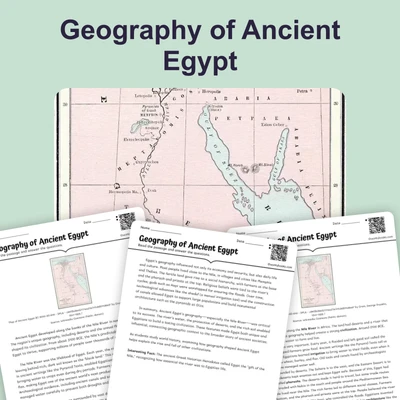
Geography of Ancient Egypt
This passage explores the vital role of geography in the rise of Ancient Egypt, focusing on the importance of the Nile R...
Ancient Money Barter
This passage explores the fascinating evolution from barter to the earliest coins in ancient civilizations, focusing on ...
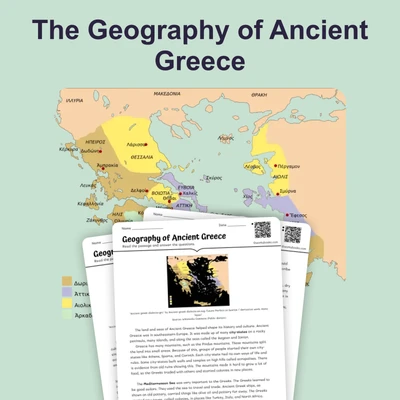
Geography of Ancient Greece
This rigorous history reading passage explores 'The Geography of Ancient Greece,' examining how the region’s mountains, ...
Slavery in Ancient World
This passage explores the complex history of slavery in the ancient world, examining its presence in societies such as M...