Mechanical Energy
Interactive passage with audio narration, comprehension questions, and printable PDF.
By completing this purchase you agree to our Terms of Use and Privacy Policy. Your subscription renews automatically until you cancel. You can cancel anytime from your account settings. All sales are final and non-refundable. Digital content is available for download in your account immediately upon purchase.
What's included
Mechanical Energy preview and details
About this printable Mechanical Energy science reading passage, NGSS-aligned (Grades 5-8)
Sample passage and quiz from Mechanical Energy
Reading passage and comprehension quiz preview
What Is Mechanical Energy
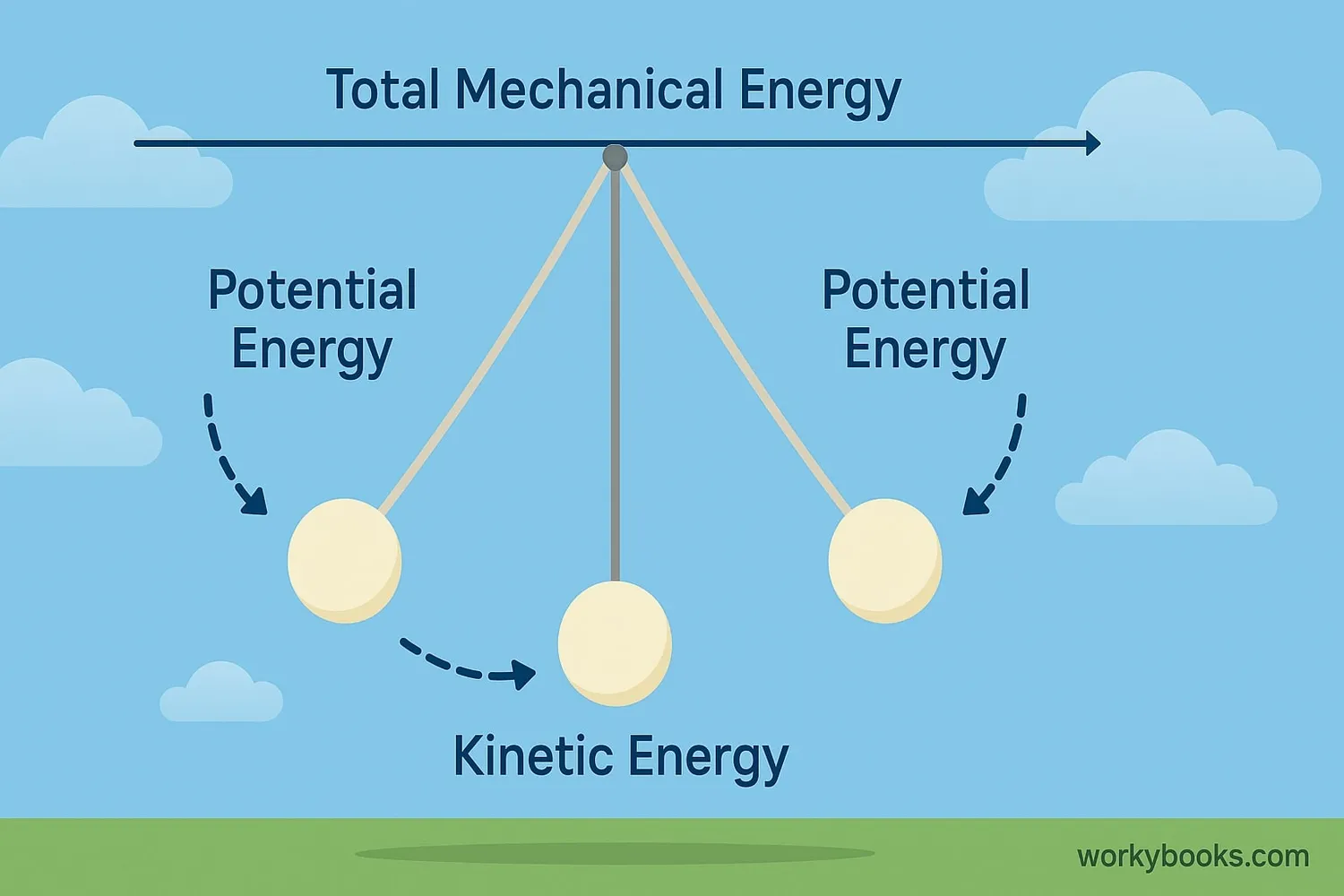
Mechanical energy is the total energy in a system, combining both the energy of motion and the energy of position. When you watch a swinging pendulum or ride a roller coaster, you are observing mechanical energy in action. Understanding how mechanical energy works helps scientists and engineers design safer rides, efficient machines, and even athletic equipment. This passage explores how kinetic energy and potential energy interact, and how the law of conservation of energy applies to real-world systems.
How Mechanical Energy Works
Mechanical energy is the sum of two main types: kinetic energy (KE) and potential energy (PE). Kinetic energy is the energy an object has because it is moving. The faster an object moves, the more kinetic energy it has. Potential energy is stored energy based on an object's position or shape. For example, a roller coaster car at the top of a hill has a large amount of potential energy due to its height above the ground. As it starts to move down the hill, potential energy is converted into kinetic energy. At the bottom, the car has its maximum kinetic energy and minimum potential energy. In an ideal system—one without friction or air resistance—the total mechanical energy (KE + PE) stays the same, even though KE and PE change forms.
Trading Energy: Real-World Examples
The swinging of a pendulum is a clear example of how kinetic and potential energy trade off. At its highest point, the pendulum has maximum potential energy and zero kinetic energy. As it swings downward, potential energy decreases while kinetic energy increases. At the lowest point, kinetic energy is at its peak. A bouncing ball, a roller coaster, and a pole vaulter in motion all show similar energy exchanges. For example, a pole vaulter runs (high kinetic energy), plants the pole, bends it (storing potential energy), and then is launched upward, converting stored potential energy back into kinetic energy as they rise and fall. In each case, mechanical energy is conserved if energy losses to friction or heat are ignored.
Applications and Conservation in the Real World
Although mechanical energy is mostly conserved in ideal systems, real-life situations involve forces like friction and air resistance. These forces turn some mechanical energy into heat, so total mechanical energy appears to decrease, but the lost energy is not destroyed—it is just changed form. Engineers must consider these energy transformations when designing machines, vehicles, and sports equipment. For example, roller coaster designers use the principles of mechanical energy to ensure enough speed for the cars to complete the track safely. Understanding mechanical energy also helps scientists analyze natural phenomena, from landslides to moving rivers.
Mechanical energy is a key idea in physics that connects motion, position, and forces. It illustrates the fundamental principle that energy is never lost, only transformed. By studying mechanical energy, we gain insights into everything from playground swings to massive bridges.
Interesting Fact:
The tallest roller coaster in the world, Kingda Ka, uses principles of mechanical energy to launch riders up a 139-meter tower at speeds over 200 km/h!
Comprehension quiz (10 questions)
1. What is mechanical energy?
2. When a roller coaster car is at the top of a hill, what type of energy is greatest?
3. Which real-world example best shows how kinetic and potential energy trade off?
4. What is an ideal system?
5. In the passage, what happens when friction is present in a system?
6. What does 'conservation of energy' mean in the context of the passage?
7. Which statement is supported by the passage?
8. If a pole vaulter bends the pole, what type of energy is mainly stored?
9. True or False: Mechanical energy is only the energy of moving objects.
10. True or False: In real life, friction can cause some mechanical energy to turn into heat.
Perfect for the way you teach
- Build comprehension skills
- Auto-graded quiz
- Differentiated reading
- Read together at home
- Improve fluency
- Quiet reading time
- Reading curriculum support
- Independent practice
- Track Lexile growth