This learning resource is available in interactive and printable formats. The interactive worksheet can be played online and assigned to students. The Printable PDF version can be downloaded and printed for completion by hand.
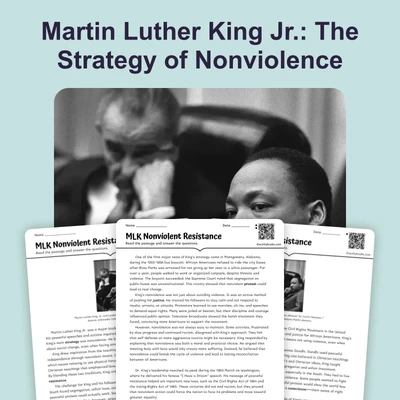
This engaging U.S. history reading passage explores Martin Luther King Jr.'s vision for economic justice during the Civil Rights Movement. Students analyze the causes, motivations, and effects of King's campaign, including the Poor People's Campaign and the historical context surrounding economic inequality. The passage includes a primary source quote from King's speeches and incorporates multiple perspectives, highlighting the complexities of the fight for justice. Activities include a reading comprehension quiz, writing prompts, a cause-and-effect graphic organizer, and a chronological development table. Spanish translations and differentiated versions are provided for accessibility. This passage aligns with CA HSS 8.10 and Common Core standards RI.6.3, RI.6.4, W.6.2, and is perfect for building critical thinking and historical reasoning skills. Read aloud audio is available for extra support.
CONTENT PREVIEW
Expand content preview
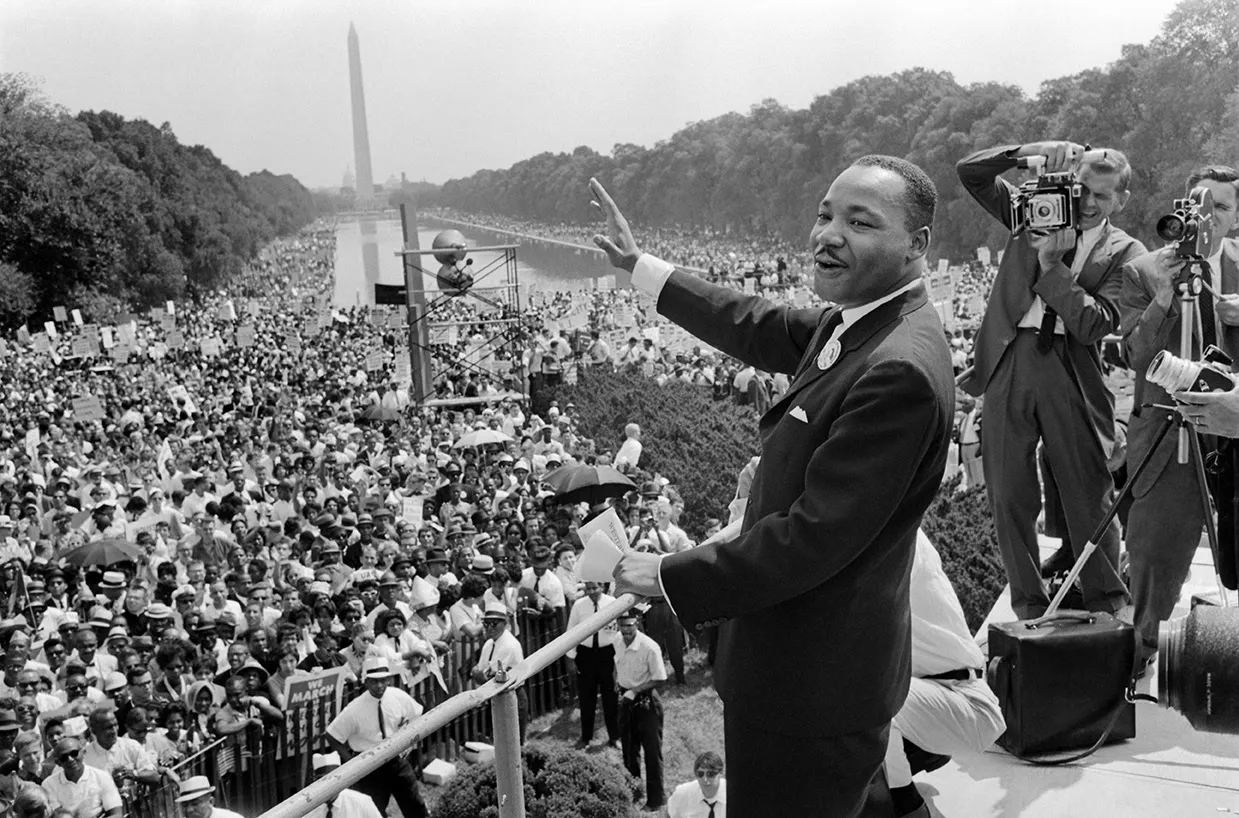
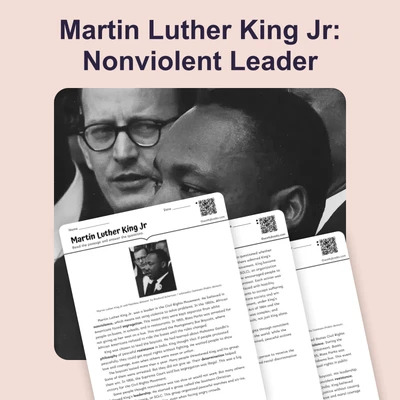
"Martin Luther King Jr. during the famous "I have a dream" speech" by Unknown - AFP / Source: Wikimedia Commons (Public domain).
Dr. Martin Luther King Jr. became famous for his leadership in the Civil Rights Movement, which fought for equality and an end to segregation. However, many people do not realize that King's dream extended beyond legal rights. In the final years of his life, King focused intensely on economic justice. He believed that true freedom required more than the right to vote or attend any school; it also required fair jobs, decent wages, and access to opportunity for all Americans, especially those living in poverty.
King observed that many African Americans, even after new laws were passed, continued to face economic discrimination. They were often paid less, lived in poorer neighborhoods, and had limited access to good jobs. King argued that the struggle for civil rights was incomplete without addressing these basic needs. As a solution, he began to organize campaigns that demanded not only equal treatment under the law but also fairness in the workplace and in society.
One of the most influential events of this period was the 1963 March on Washington for Jobs and Freedom. While people remember King’s famous "I Have a Dream" speech, the march also called for economic reforms like a higher minimum wage, more jobs, and an end to employment discrimination. King worked with labor leaders, religious groups, and other activists to highlight how racism and poverty were connected, and how both needed to be solved together.
King’s push for economic justice faced serious obstacles. Some government leaders and business owners resisted changes that would cost money or challenge existing power. Even some of King’s supporters worried that focusing on economic issues might divide the movement or make it less popular. Nevertheless, King continued his efforts, leading campaigns like the Poor People’s Campaign in 1968. This campaign brought together people of all races to demand jobs, housing, and better living conditions for America’s poor.
King’s vision for economic justice was deeply connected to his belief in the dignity of every person. He argued that a just society must provide every individual with the chance to succeed. While King did not live to see all his goals achieved, his work inspired future movements for economic fairness and equal rights. The struggle for economic justice remains an important part of American history and continues to affect debates about wages, jobs, and poverty today.
Interesting Fact: King was planning a massive protest called the Poor People’s March on Washington when he was assassinated in 1968. The march went forward, drawing attention to poverty in America.
What did King focus on later in life?
Economic justiceWorld War IISpace travelVoting rights only
What major event happened in 1963?
March on WashingtonCivil WarPoor People’s MarchEnd of slavery
What was the Poor People’s Campaign about?
Jobs and housingSpace explorationSportsVoting rights only
Why did King believe economic justice was important?
It meant true freedomIt stopped all warsIt ended all crimeIt helped only businesses
What problem did King see after new laws?
Economic discrimination continuedEveryone became richNo one wanted equalitySchools closed
How did King’s supporters sometimes feel about economic justice?
Worried it could divide movementHappy all the timeUninterested in jobsExcited about poverty
King’s work for economic justice was easy. True or false?
TrueFalse
What does 'employment discrimination' mean?
Unfair treatment at workA type of foodA new lawA school subject
Perfect For:
👩🏫 Teachers
• Reading comprehension practice
• Auto-graded assessments
• Literacy skill development
👨👩👧👦 Parents
• Reading practice at home
• Comprehension improvement
• Educational reading time
🏠 Homeschoolers
• Reading curriculum support
• Independent reading practice
• Progress monitoring
Reading Features:
📖
Reading Passage
Engaging fiction or nonfiction text
❓
Comprehension Quiz
Auto-graded questions
📊
Instant Feedback
Immediate results and scoring
📄
Printable Version
Download for offline reading
🔊
Read Aloud
Voice-over with word highlighting
Reviews & Ratings
No reviews yet. Be the first to share your experience!
Related Content
Chicano Movement: Mexican American Civil Rights
This U.S. History reading passage examines the Chicano Movement, a significant civil rights campaign led by Mexican Amer...
D2.HIS.2.3-5D2.HIS.3.3-5RI.4.3RI.4.4
Civil Rights Act of 1964
This reading passage explores the Civil Rights Act of 1964, a landmark piece of U.S. legislation that outlawed discrimin...
HSS 11.10.5RI.6-8.1RI.6-8.6
Civil Rights Movements: Fighting for Equality
This engaging world history reading passage examines 20th-century civil rights movements, focusing on the United States,...
Voting Rights for African Americans
This passage explores the important history of voting rights for African Americans in the United States, following a cle...
D2.HIS.1-6.3-5RI.4.1RI.4.3RI.4.4
Voting Rights Act 1965
This engaging passage examines the Voting Rights Act of 1965 and its impact on voting rights in the United States. Stude...
D2.HIS.2.3-5D2.HIS.3.3-5RI.6.3RI.6.4
Cesar Chavez and Farm Workers' Rights
This engaging history reading passage explores the life and impact of Cesar Chavez, a key leader in the fight for farm w...
D2.HIS.2.3-5D2.HIS.14.3-5RI.4.3RI.4.4
The Women's Rights Movement Begins
This rigorous history reading passage explores the beginnings of the women's rights movement in the United States during...
D2.HIS.2.3-5D2.HIS.3.3-5RI.4.3RI.4.4
MLK Nonviolent Resistance
This detailed passage examines Martin Luther King Jr.'s strategy of nonviolence during the U.S. Civil Rights Movement. S...
Civil War Causes
This comprehensive U.S. history reading passage investigates the complex causes of the Civil War, focusing on the debate...
D2.HIS.2.3-5D2.HIS.3.3-5RI.4.3RI.4.4
Jackie Robinson: Breaking Baseball's Color Barrier
This passage examines Jackie Robinson's historic role in breaking Major League Baseball's color barrier in 1947. Student...
D2.HIS.2.3-5D2.HIS.3.3-5RI.4.3RI.4.4
March on Washington 1963: I Have Dream
This reading passage examines the March on Washington for Jobs and Freedom in 1963 and the delivery of Dr. Martin Luther...
D2.HIS.2.3-5D2.HIS.3.3-5RI.4.3RI.4.4
New Rights for African Americans
This reading passage explores the journey of African Americans gaining new rights after the Civil War. Students will lea...
D2.HIS.1-4.3-5RI.4.1RI.4.3RI.4.4
Cesar Chavez and United Farm Workers
This history reading passage explores Cesar Chavez and the United Farm Workers' organizing efforts during the Civil Righ...
D2.HIS.2.3-5D2.HIS.3.3-5RI.4.3RI.4.4
The Civil Rights Movement
This worksheet has students read about the Civil Rights Movement. They must summarize the overall goals, paraphrase lead...
Cesar Chavez and Dolores Huerta: Yes, We Can!
This engaging U.S. history reading passage introduces students to the inspiring story of Cesar Chavez and Dolores Huerta...
D2.HIS.2.3-5D2.HIS.3.3-5RI.4.3RI.4.4
Martin Luther King Jr: Nonviolent Leader
This rigorous U.S. history reading passage examines the leadership of Martin Luther King Jr. during the Civil Rights Mov...
HSS 11.10.2RI.6-8.1RI.6-8.6
Larry Itliong and the Grape Strike
This engaging U.S. history reading passage introduces students to Larry Itliong and the Grape Strike, a key event in the...
D2.HIS.2.3-5D2.HIS.3.3-5RI.4.3RI.4.4
Students Sit-Ins 1960
This history reading passage explores the 1960 Sit-Ins, a pivotal moment in the Civil Rights Movement when African Ameri...
D2.HIS.2.3-5D2.HIS.3.3-5RI.4.3RI.4.4
Letter from Birmingham Jail 1963
This passage explores Martin Luther King Jr.'s historic 'Letter from Birmingham Jail' from 1963, a turning point in the ...