This learning resource is available in interactive and printable formats. The interactive worksheet can be played online and assigned to students. The Printable PDF version can be downloaded and printed for completion by hand.
This detailed passage examines Martin Luther King Jr.'s strategy of nonviolence during the U.S. Civil Rights Movement. Students will analyze the historical context, Gandhi's influence on King, training of activists in peaceful protest, and the challenges and successes of nonviolent resistance. The passage integrates a primary source quote and encourages students to evaluate multiple perspectives and complexities of protest strategies. Activities include a multiple-choice quiz, writing prompts focusing on causation and evidence, and graphic organizers to deepen understanding. The passage and all activities align with CA HSS 8.11 and Common Core standards RI.6.3 and RI.6.4. Differentiated and Spanish-translated versions are provided. This resource is ideal for building historical thinking, reading comprehension, and critical analysis skills in middle school classrooms. A read aloud audio option supports diverse learners. Key vocabulary and a timeline help students connect major events and concepts. This is a comprehensive, standards-aligned history reading passage with Spanish translation and accessible activities.
CONTENT PREVIEW
Expand content preview
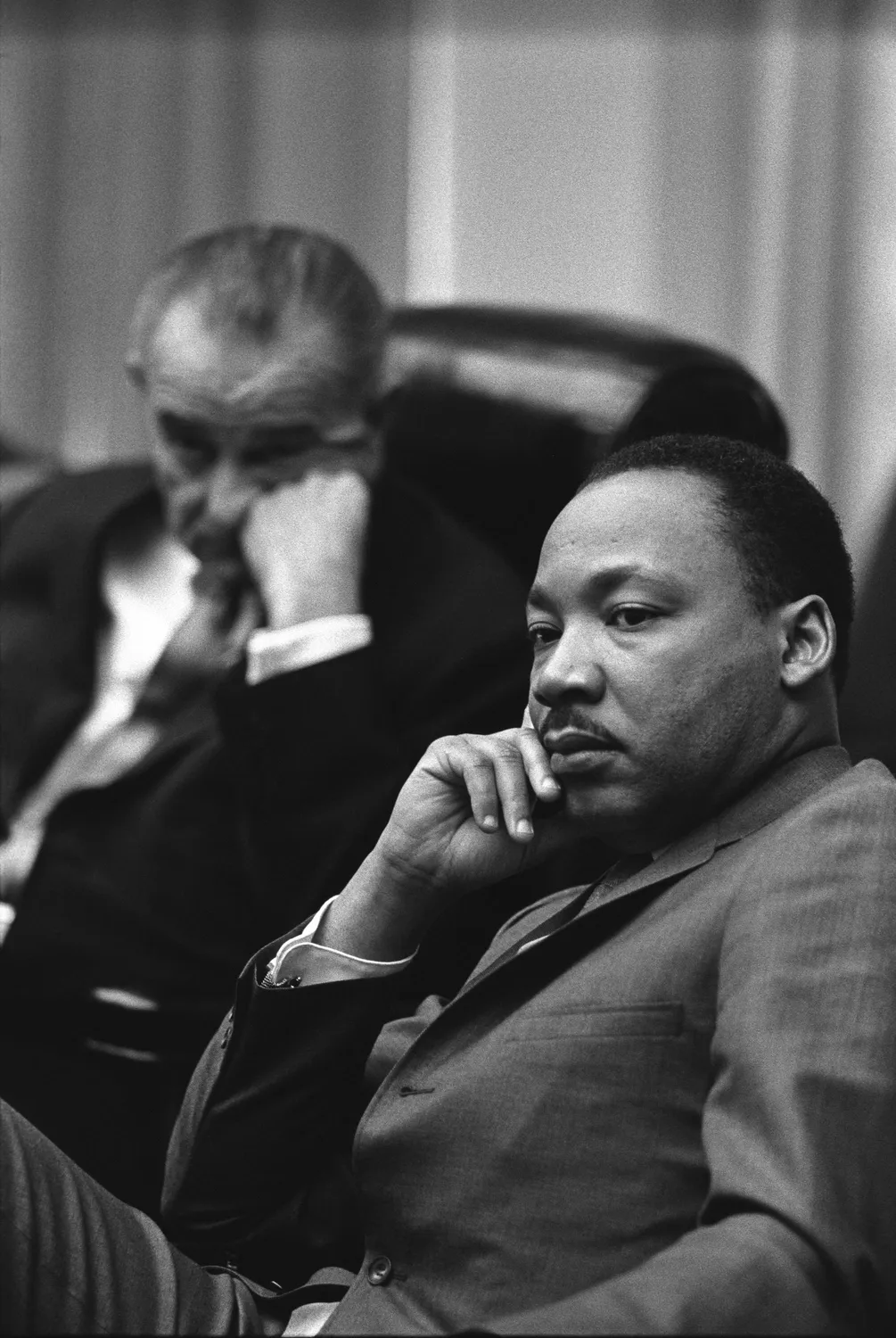
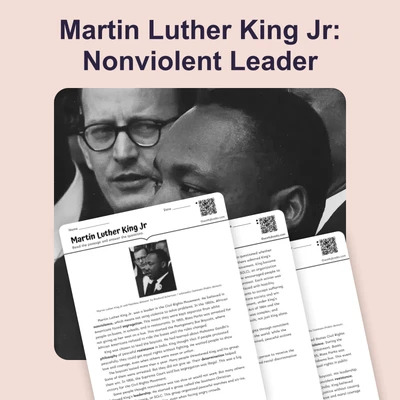
"Martin Luther King, Jr. and Lyndon Johnson" by Yoichi Okamoto / Source: Wikimedia Commons (Public domain).
Martin Luther King Jr. was a major leader in the American Civil Rights Movement. His powerful speeches and actions inspired millions to seek justice and equality. Dr. King’s main strategy was nonviolence. He believed that peaceful protest could bring about social change, even when facing strong opposition.
King drew inspiration from the teachings of Mahatma Gandhi, who led India to independence through nonviolent means. Gandhi’s approach was called nonviolence, which means refusing to use physical force, even against injustice. King also relied on Christian teachings that emphasized love, forgiveness, and turning the other cheek. By blending these two traditions, King created a unique American method of peaceful resistance.
The challenge for King and his followers was enormous. African Americans in the South faced segregation, unfair laws, and violence. Many activists debated whether peaceful protest could actually work. Some believed that only direct confrontation would bring results. King, however, argued that nonviolence could reveal the cruelty of segregation to the nation and the world. He hoped that public conscience—the shared sense of right and wrong—would be awakened by the sight of peaceful protestors being treated unjustly.
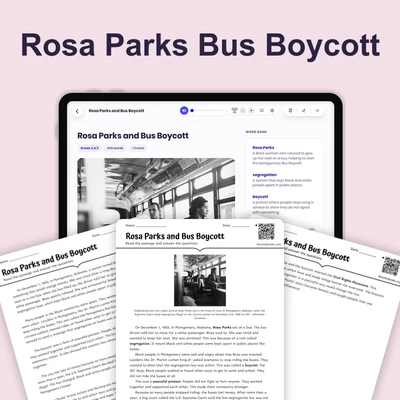
One of the first major tests of King’s strategy came in Montgomery, Alabama, during the 1955-1956 bus boycott. African Americans refused to ride the city buses after Rosa Parks was arrested for not giving up her seat to a white passenger. For over a year, people walked to work or organized carpools, despite threats and violence. The boycott succeeded: the Supreme Court ruled that segregation on public buses was unconstitutional. This victory showed that nonviolent protest could lead to real change.
King’s nonviolence was not just about avoiding violence. It was an active method of pushing for justice. He trained his followers to stay calm and not respond to insults, arrests, or attacks. Protestors learned to use marches, sit-ins, and speeches to demand equal rights. Many were jailed or beaten, but their discipline and courage influenced public opinion. Television broadcasts showed the harsh treatment they faced, convincing more Americans to support the movement.
However, nonviolence was not always easy to maintain. Some activists, frustrated by slow progress and continued racism, disagreed with King’s approach. They felt that self-defense or more aggressive tactics might be necessary. King responded by explaining that nonviolence was both a moral and practical choice. He argued that meeting hate with hate would only create more suffering. Instead, he believed that nonviolence could break the cycle of violence and lead to lasting reconciliation between all Americans.
Dr. King’s leadership reached its peak during the 1963 March on Washington, where he delivered his famous “I Have a Dream” speech. His message of peaceful resistance helped win important new laws, such as the Civil Rights Act of 1964 and the Voting Rights Act of 1965. These victories did not end racism, but they proved that nonviolent action could force the nation to face its problems and move toward greater equality.
Interesting Fact: Martin Luther King Jr. was awarded the Nobel Peace Prize in 1964 for his commitment to nonviolent resistance and civil rights.
Who inspired King’s nonviolence?
Mahatma GandhiAbraham LincolnFrederick DouglassSusan B. Anthony
What city had the famous bus boycott?
MontgomeryAtlantaBirminghamSelma
Which law ended bus segregation?
Supreme Court rulingCivil Rights ActVoting Rights ActEmancipation Proclamation
Why did King choose nonviolence?
To reveal injusticeTo gain moneyTo end all lawsTo leave the country
What effect did TV coverage have?
Gained public supportStopped all protestsCreated new lawsEnded violence
Why did some disagree with King’s methods?
Change was too slowThey disliked marchesThey wanted more speechesThey supported segregation
King’s approach was always violent.
TrueFalse
What does 'conscience' mean in the text?
Sense of right and wrongA group of protestorsA legal courtA form of resistance
Perfect For:
👩🏫 Teachers
• Reading comprehension practice
• Auto-graded assessments
• Literacy skill development
👨👩👧👦 Parents
• Reading practice at home
• Comprehension improvement
• Educational reading time
🏠 Homeschoolers
• Reading curriculum support
• Independent reading practice
• Progress monitoring
Reading Features:
📖
Reading Passage
Engaging fiction or nonfiction text
❓
Comprehension Quiz
Auto-graded questions
📊
Instant Feedback
Immediate results and scoring
📄
Printable Version
Download for offline reading
🔊
Read Aloud
Voice-over with word highlighting
Reviews & Ratings
No reviews yet. Be the first to share your experience!
Related Content
Chicano Movement: Mexican American Civil Rights
This U.S. History reading passage examines the Chicano Movement, a significant civil rights campaign led by Mexican Amer...
D2.HIS.2.3-5D2.HIS.3.3-5RI.4.3RI.4.4
Civil Rights Act of 1964
This reading passage explores the Civil Rights Act of 1964, a landmark piece of U.S. legislation that outlawed discrimin...
HSS 11.10.5RI.6-8.1RI.6-8.6
Civil Rights Movements: Fighting for Equality
This engaging world history reading passage examines 20th-century civil rights movements, focusing on the United States,...
Voting Rights for African Americans
This passage explores the important history of voting rights for African Americans in the United States, following a cle...
D2.HIS.1-6.3-5RI.4.1RI.4.3RI.4.4
Voting Rights Act 1965
This engaging passage examines the Voting Rights Act of 1965 and its impact on voting rights in the United States. Stude...
D2.HIS.2.3-5D2.HIS.3.3-5RI.6.3RI.6.4
Cesar Chavez and Farm Workers' Rights
This engaging history reading passage explores the life and impact of Cesar Chavez, a key leader in the fight for farm w...
D2.HIS.2.3-5D2.HIS.14.3-5RI.4.3RI.4.4
The Women's Rights Movement Begins
This rigorous history reading passage explores the beginnings of the women's rights movement in the United States during...
D2.HIS.2.3-5D2.HIS.3.3-5RI.4.3RI.4.4
Civil War Causes
This comprehensive U.S. history reading passage investigates the complex causes of the Civil War, focusing on the debate...
D2.HIS.2.3-5D2.HIS.3.3-5RI.4.3RI.4.4
Jackie Robinson: Breaking Baseball's Color Barrier
This passage examines Jackie Robinson's historic role in breaking Major League Baseball's color barrier in 1947. Student...
D2.HIS.2.3-5D2.HIS.3.3-5RI.4.3RI.4.4
March on Washington 1963: I Have Dream
This reading passage examines the March on Washington for Jobs and Freedom in 1963 and the delivery of Dr. Martin Luther...
D2.HIS.2.3-5D2.HIS.3.3-5RI.4.3RI.4.4
New Rights for African Americans
This reading passage explores the journey of African Americans gaining new rights after the Civil War. Students will lea...
D2.HIS.1-4.3-5RI.4.1RI.4.3RI.4.4
MLK Economic Justice
This engaging U.S. history reading passage explores Martin Luther King Jr.'s vision for economic justice during the Civi...
Cesar Chavez and United Farm Workers
This history reading passage explores Cesar Chavez and the United Farm Workers' organizing efforts during the Civil Righ...
D2.HIS.2.3-5D2.HIS.3.3-5RI.4.3RI.4.4
The Civil Rights Movement
This worksheet has students read about the Civil Rights Movement. They must summarize the overall goals, paraphrase lead...
Cesar Chavez and Dolores Huerta: Yes, We Can!
This engaging U.S. history reading passage introduces students to the inspiring story of Cesar Chavez and Dolores Huerta...
D2.HIS.2.3-5D2.HIS.3.3-5RI.4.3RI.4.4
Martin Luther King Jr: Nonviolent Leader
This rigorous U.S. history reading passage examines the leadership of Martin Luther King Jr. during the Civil Rights Mov...
HSS 11.10.2RI.6-8.1RI.6-8.6
Larry Itliong and the Grape Strike
This engaging U.S. history reading passage introduces students to Larry Itliong and the Grape Strike, a key event in the...
D2.HIS.2.3-5D2.HIS.3.3-5RI.4.3RI.4.4
Students Sit-Ins 1960
This history reading passage explores the 1960 Sit-Ins, a pivotal moment in the Civil Rights Movement when African Ameri...
D2.HIS.2.3-5D2.HIS.3.3-5RI.4.3RI.4.4
Letter from Birmingham Jail 1963
This passage explores Martin Luther King Jr.'s historic 'Letter from Birmingham Jail' from 1963, a turning point in the ...