Letter from Birmingham Jail 1963 — Reading Comprehension
Rate this
Premium Resource
Present
Present in classroom. No work saved
Assign
Classroom with student accounts, Track progress
Quick Play
No student accounts, assign with a link
Grades
6
7
8
Standards
D2.HIS.2.3-5
D2.HIS.3.3-5
RI.6.3
RI.6.4
W.6.2
PRINT+DIGITAL RESOURCE
This learning resource is available in interactive and printable formats. The interactive worksheet can be played online and assigned to students. The Printable PDF version can be downloaded and printed for completion by hand.
This passage explores Martin Luther King Jr.'s historic 'Letter from Birmingham Jail' from 1963, a turning point in the Civil Rights Movement. Students will analyze why Dr. King wrote the letter, understand the motivations of different groups, and examine the consequences of his words and actions. The passage uses a compare and contrast structure to help students evaluate multiple perspectives, including those of civil rights activists and white religious leaders. Key vocabulary terms are highlighted to support comprehension. Activities include a reading quiz, explanatory writing prompts, a T-chart graphic organizer, and a timeline of events. The passage models historical reasoning and integrates a primary source excerpt from the letter. This resource supports C3 Framework and Common Core standards. The passage also includes a Spanish translation and read aloud audio, making it accessible to diverse learners. Students will gain skills in evidence-based analysis and understand the significance of nonviolent protest in U.S. history.
CONTENT PREVIEW
Expand content preview
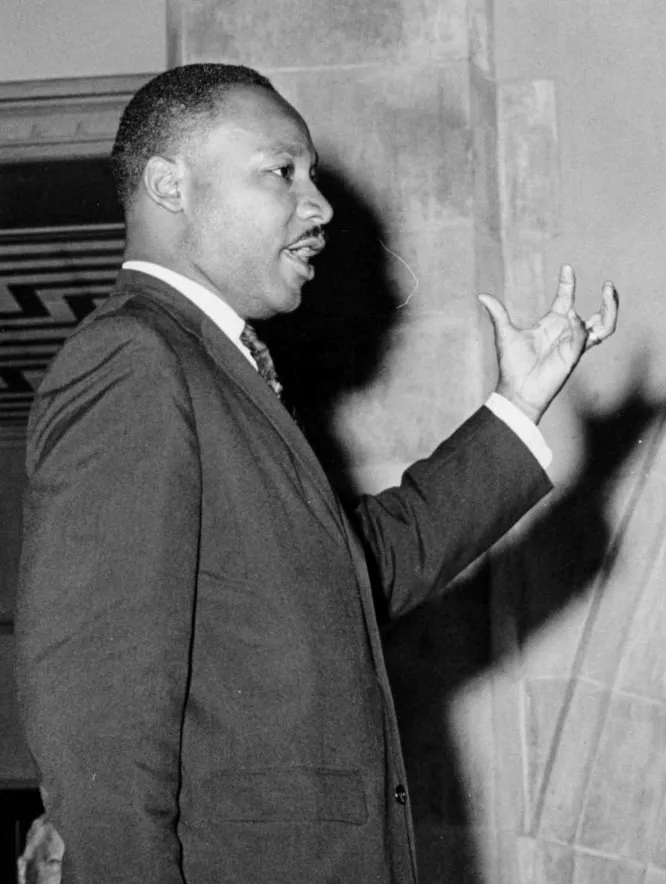
"Martin Luther King 1963" by Cleveland Plain Dealer / Wikimedia Commons (Public domain).
In April 1963, Dr. Martin Luther King Jr. was arrested during a peaceful protest in Birmingham, Alabama. From his jail cell, he wrote the Letter from Birmingham Jail, which became one of the most important documents of the Civil Rights Movement. Dr. King wrote the letter in response to local white clergymen who criticized his actions. They argued that protests were “untimely” and said that people should wait for the courts to bring about justice. However, King believed that waiting any longer was not an option for African Americans who faced daily discrimination.
Dr. King explained that the protests in Birmingham were not random. They were carefully planned acts of nonviolence designed to bring attention to unfair laws and practices. King believed that direct action, such as marches and sit-ins, was necessary because negotiation had failed. He argued that people had a moral responsibility to challenge unjust laws, even if it meant going to jail. For King, obeying the law was important, but not when the law itself was unjust.
The letter uses a strong moral argument to defend civil rights activists. King compared the struggle for civil rights to other historical battles for freedom, such as the American Revolution. He pointed out that African Americans had waited for more than 340 years for their rights. He asked, “How long must they wait?” His answer was clear: justice delayed is justice denied. King’s words made it clear that the time for change was now, not in some distant future.
Throughout the letter, King addresses the tension between following the law and following conscience. He challenged the idea that people should remain patient when facing injustice. Instead, he called for civil disobedience, the peaceful refusal to obey certain laws as a form of protest. King believed that nonviolent protest was not only effective but also rooted in love and respect for all people.
King’s letter had a major impact on the Civil Rights Movement and American society. It inspired many people to join the struggle for equality and changed the way Americans thought about justice and protest. The letter showed that ordinary people could make a difference by standing up for what is right, even when it was hard or unpopular.
Interesting Fact: Dr. King wrote most of his famous letter on scraps of paper and in the margins of newspapers because he was not allowed proper writing materials in jail.
When was the Letter from Birmingham Jail written?
April 1963May 1954August 1969June 1968
Who wrote the Letter from Birmingham Jail?
Martin Luther King Jr.Rosa ParksMalcolm XJohn Lewis
Where was King when he wrote the letter?
In jailAt homeIn a churchIn Washington, D.C.
Why did King believe nonviolent protest was necessary?
Negotiation failedHe wanted fameIt was easierHe disliked laws
What is civil disobedience?
Peacefully refusing certain lawsVoting for leadersWriting new lawsMaking speeches
How did King's letter affect the Civil Rights Movement?
Inspired more peopleEnded the movementCaused violenceHad no impact
King wrote on scraps of paper. True or false?
TrueFalse
What does 'moral' mean in this context?
Right and wrongLawsCourt casesProtests
Perfect For:
👩🏫 Teachers
• Reading comprehension practice
• Auto-graded assessments
• Literacy skill development
👨👩👧👦 Parents
• Reading practice at home
• Comprehension improvement
• Educational reading time
🏠 Homeschoolers
• Reading curriculum support
• Independent reading practice
• Progress monitoring
Reading Features:
📖
Reading Passage
Engaging fiction or nonfiction text
❓
Comprehension Quiz
Auto-graded questions
📊
Instant Feedback
Immediate results and scoring
📄
Printable Version
Download for offline reading
🔊
Read Aloud
Voice-over with word highlighting
Reviews & Ratings
No reviews yet. Be the first to share your experience!
Related Content
Native American Tribes Across America
This engaging history reading passage introduces students to Native American tribes across America, focusing on their da...
D2.HIS.1.3-5D2.HIS.2.3-5RI.4.1RI.4.2
Teepees: Homes on the Great Plains
This engaging history reading passage introduces students to teepees, the unique homes of Native American tribes on the ...
D2.HIS.2.3-5D2.HIS.14.3-5RI.4.1RI.4.2RI.4.4
Traditional Native American Clothing
This engaging history passage explores traditional Native American clothing and how it reflected the environment, values...
D2.HIS.2.3-5D2.HIS.3.3-5RI.4.3RI.4.4
The Iroquois Confederacy: A System of Peace
This engaging U.S. History reading passage introduces students to the Iroquois Confederacy, a powerful alliance of Nativ...
D2.HIS.2.3-5D2.HIS.3.3-5RI.4.3RI.4.4
The Cherokee Nation: History and Culture
This reading passage explores the rich history and culture of the Cherokee Nation, one of the largest Native American tr...
D2.HIS.2.3-5D2.HIS.14.3-5RI.4.3RI.4.4RI.4.10
The Sioux: Warriors and Tribal Leaders
This history reading passage explores the Sioux Nation, focusing on their roles as warriors and tribal leaders. Students...
D2.HIS.1.3-5D2.HIS.2.3-5RI.4.1RI.4.3
Native American Respect for Nature
This engaging history reading passage explores Native American respect for nature, emphasizing the close relationship be...
D2.HIS.2.3-5D2.HIS.3.3-5RI.4.3RI.4.4
Jamestown: The First Permanent English Colony
This engaging history passage explores the founding of Jamestown, the first permanent English colony in America. Aligned...
D2.HIS.1.3-5D2.HIS.2.3-5RI.4.3RI.4.4
Pocahontas and the Powhatan People
This engaging reading passage explores the life of Pocahontas and the Powhatan people and their important role in early ...
D2.HIS.1.3-5D2.HIS.2.3-5RI.4.1RI.4.3
Colonial Children: School and Chores
This reading passage explores the daily lives of colonial children, focusing on their experiences at school and their ma...
D2.HIS.2.3-5D2.HIS.3.3-5RI.4.1RI.4.2RI.4.4
Colonial Clothing and Homemade Goods
This engaging U.S. history passage explores the daily life of early American colonists with a focus on colonial clothing...
D2.HIS.2.3-5RI.4.3RI.4.4
Colonial Jobs: Blacksmiths, Bakers, and Craftsmen
This engaging history reading passage explores the vital roles of blacksmiths, bakers, and craftsmen in colonial America...
D2.HIS.2.3-5D2.HIS.3.3-5RI.4.3RI.4.4
Colonial Towns and Village Life
This engaging history reading passage explores the daily life, work, and unity found in colonial towns and villages. Ali...
D2.HIS.1.3-5D2.HIS.2.3-5RI.4.3RI.4.4
Colonial Trade with England and Africa
This history reading passage explores colonial trade between the American colonies, England, and Africa, focusing on the...
D2.HIS.2.3-5D2.HIS.14.3-5RI.4.3RI.4.4
Benjamin Franklin: Printer, Inventor, and Leader
This history reading passage explores the life and achievements of Benjamin Franklin, one of America's most important ea...
D2.HIS.2.3-5D2.HIS.3.3-5RI.4.1RI.4.3
George Washington Leads the Army
This engaging history reading passage explores how George Washington bravely led the Continental Army during the America...
D2.HIS.1.3-5D2.HIS.2.3-5RI.4.3RI.4.4
Women and Children During the Revolutionary War
This reading passage explores the important roles women and children played during the Revolutionary War. Students will ...
D2.HIS.2.3-5RI.4.3RI.5.3
African Americans Fight for Freedom
This educational passage explores the brave and inspiring story of how African Americans fought for freedom in the Unite...
D2.HIS.2.3-5D2.HIS.3.3-5RI.4.3RI.4.4
The Battle of Yorktown Ends War
This engaging U.S. history reading passage explores the Battle of Yorktown, a key event that ended the American Revoluti...
D2.HIS.1.3-5D2.HIS.2.3-5RI.4.1RI.4.3
Loyalists vs. Patriots: Divided Families
This engaging U.S. history reading passage explores the division between Loyalists and Patriots during the American Revo...