Chicano Movement: Mexican American Civil Rights
Interactive passage with audio narration, comprehension questions, and printable PDF.
By completing this purchase you agree to our Terms of Use and Privacy Policy. Your subscription renews automatically until you cancel. You can cancel anytime from your account settings. All sales are final and non-refundable. Digital content is available for download in your account immediately upon purchase.
What's included
Chicano Movement: Mexican American Civil Rights preview and details
About this printable Chicano Movement: Mexican American Civil Rights reading passage (Grades 6-8)
Sample passage and quiz from Chicano Movement: Mexican American Civil Rights
Reading passage and comprehension quiz preview
Chicano Movement
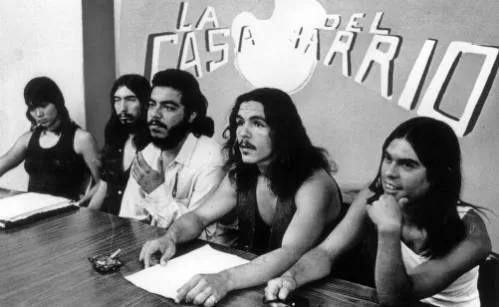
Chicano spokesmen give complaints of police action surrounding arrests / Wikimedia Commons
The Chicano Movement was a major civil rights effort led by Mexican Americans during the 1960s and 1970s. The movement emerged as a response to decades of discrimination, economic hardship, and lack of political power. Mexican American students, farmworkers, and community leaders organized to challenge unfair treatment and to demand equal rights. They sought to change educational systems, improve labor conditions, and promote cultural pride in their communities.
One of the main problems faced by Mexican Americans was educational inequality. Many schools in the Southwest were segregated or underfunded, and Mexican American students often experienced low expectations from teachers. In response, activists organized walkouts and protests. In 1968, thousands of students in East Los Angeles left their classrooms in a massive walkout. They demanded better facilities, bilingual education, and more Mexican American teachers and administrators. These actions brought attention to the need for educational reform.
Another central issue was the fight for labor rights. Many Mexican Americans worked as farmworkers under harsh conditions for very low pay. Leaders like Cesar Chavez and Dolores Huerta founded the United Farm Workers union to organize strikes and boycotts. Through nonviolent activism, they pressured employers and the government to improve wages, working conditions, and benefits for agricultural laborers. Their struggle inspired other Chicano activists to push for change in different areas.
The movement also focused on increasing political representation. Mexican Americans were often excluded from voting or holding public office because of discriminatory laws and practices. Chicano activists encouraged people to register to vote and run for office. They formed organizations like La Raza Unida Party to support candidates who represented their interests. Over time, more Mexican Americans gained positions in local and state government, helping to give their communities a stronger voice.
Cultural pride and identity were equally important to the movement. Many activists believed that celebrating Mexican American history, language, and traditions would build self-confidence and unity. Art, music, and literature became tools for expressing Chicano identity and for challenging negative stereotypes. Murals appeared on city walls, telling the stories of the community’s struggles and hopes. This cultural expression was a powerful way to claim space and respect in American society.
Although the Chicano Movement faced opposition and setbacks, it achieved lasting results. Schools began to offer bilingual programs, farmworkers won some important protections, and more Mexican Americans entered politics. The movement also helped spark pride and activism in later generations of Hispanic Americans. Yet, the fight for equality and justice continues today, as many of the same issues remain important.
Interesting Fact: The term "Chicano" was once used as an insult, but activists reclaimed it as a symbol of pride and resistance during the movement.
Comprehension quiz (8 questions)
1. Who led the Chicano Movement?
2. What city saw the 1968 student walkouts?
3. Who founded United Farm Workers?
4. Why did activists organize school walkouts?
5. What was one result for farmworkers?
6. How did Chicano art help the movement?
7. The movement began in the 1960s. True or false?
8. What does 'boycott' mean?
Common Core standards for Chicano Movement: Mexican American Civil Rights
Explain events, procedures, ideas, or concepts in a historical, scientific, or technical text, including what happened and why, based on specific information in the text.
Determine the meaning of general academic and domain-specific words or phrases in a text relevant to a grade 4 topic or subject area.
Write informative/explanatory texts to examine a topic and convey ideas and information clearly.
Perfect for the way you teach
- Build comprehension skills
- Auto-graded quiz
- Differentiated reading
- Read together at home
- Improve fluency
- Quiet reading time
- Reading curriculum support
- Independent practice
- Track Lexile growth