Voting Rights Act 1965
Interactive passage with audio narration, comprehension questions, and printable PDF.
By completing this purchase you agree to our Terms of Use and Privacy Policy. Your subscription renews automatically until you cancel. You can cancel anytime from your account settings. All sales are final and non-refundable. Digital content is available for download in your account immediately upon purchase.
What's included
Voting Rights Act 1965 preview and details
About this printable Voting Rights Act 1965 reading passage (Grades 6-8)
Sample passage and quiz from Voting Rights Act 1965
Reading passage and comprehension quiz preview
Voting Rights Act 1965
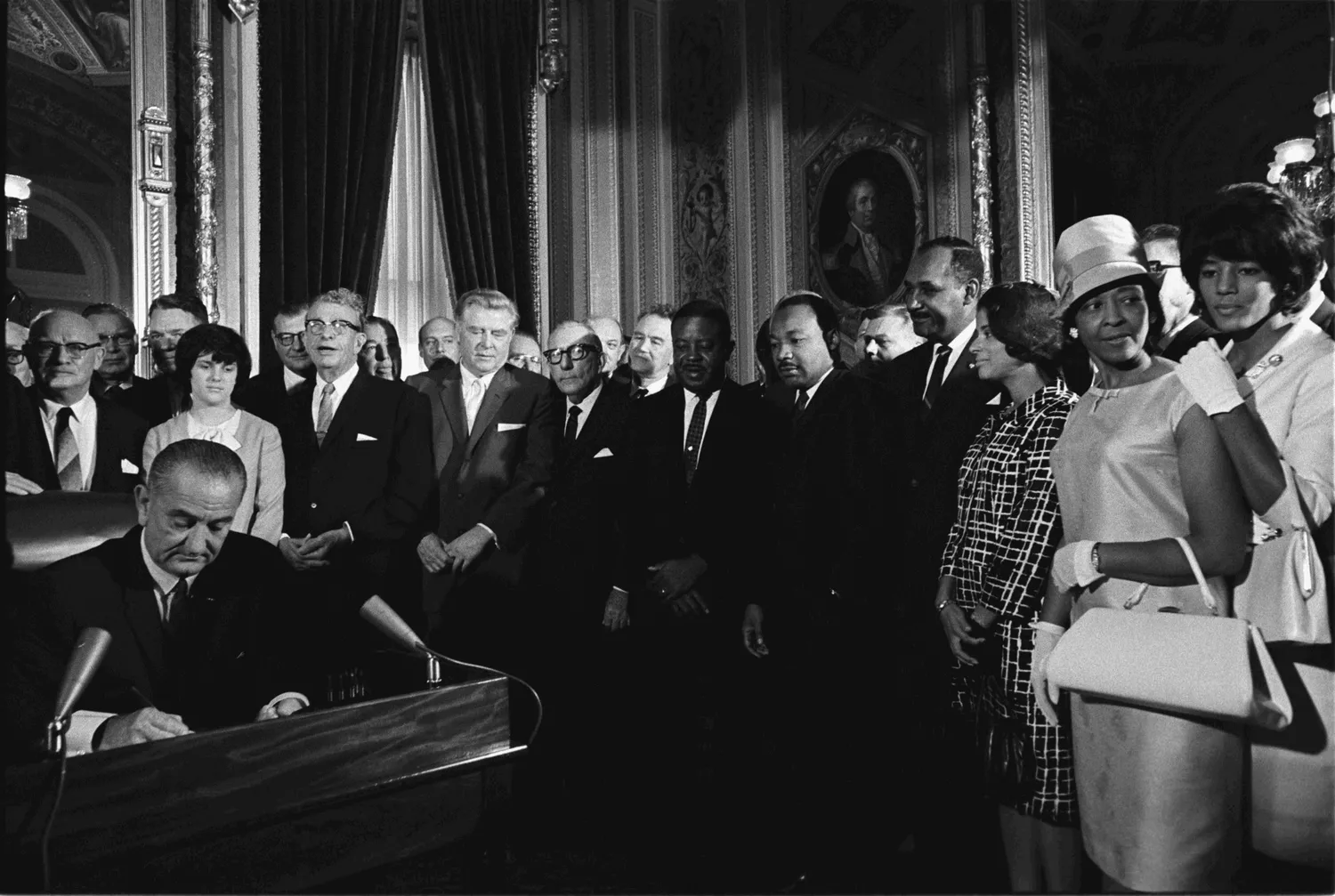
"Lyndon Johnson signs Voting Rights Act of 1965" by Yoichi Okamoto.
Source: Wikimedia Commons (Public domain).
The Voting Rights Act of 1965 is one of the most important laws in American history. This federal legislation was designed to solve a serious problem: many African Americans in the South were being denied their right to vote. For decades, state and local governments used unfair barriers such as literacy tests, poll taxes, and intimidation to keep African Americans from participating in elections. These practices were a form of discrimination that violated the basic principles of democracy and equality.
During the 1950s and 1960s, the Civil Rights Movement fought to end segregation and secure equal rights for all Americans. Activists organized protests, marches, and legal challenges to demand change. One turning point was the 1965 march from Selma to Montgomery, Alabama, where peaceful demonstrators were attacked by police as they demanded voting rights. News coverage of the violence shocked the nation and persuaded President Lyndon B. Johnson to propose new laws to protect voting rights.
Congress debated the issue and, in August 1965, passed the Voting Rights Act. This law banned the use of literacy tests and other methods that had been used to prevent African Americans from voting. It also gave the federal government the power to oversee elections in states with a history of discrimination. Federal officials could be sent to these states to make sure elections were fair and that all eligible citizens could register and vote. The Act also required states to get approval from the federal government before changing any voting rules, a process called preclearance.
The immediate impact of the Voting Rights Act was powerful. Hundreds of thousands of African Americans were able to register as voters for the first time. The percentage of African Americans registered to vote in the South increased dramatically within a few years. This new political power led to the election of more African American officials at the local, state, and national levels.
However, the struggle for voting rights did not end in 1965. Over time, some states tried new ways to restrict voting, and parts of the Voting Rights Act have been challenged in court. Despite these challenges, the Act remains a symbol of the ongoing fight for equal rights and the importance of enforcement of laws that protect democratic participation.
The Voting Rights Act of 1965 changed American history by expanding democracy and giving a voice to millions who had been excluded. It remains a reminder that the promise of democracy requires constant vigilance and participation from all citizens.
Interesting Fact: The Voting Rights Act was renewed and amended several times by Congress to strengthen its protections and adapt to new challenges.
Comprehension quiz (8 questions)
1. When was the Voting Rights Act passed?
2. What did literacy tests do?
3. Who signed the Voting Rights Act?
4. Why was federal oversight needed?
5. What was the result of the Act?
6. What is preclearance?
7. The Voting Rights Act ended all discrimination. True or false?
8. What does 'enforcement' mean in this passage?
Perfect for the way you teach
- Build comprehension skills
- Auto-graded quiz
- Differentiated reading
- Read together at home
- Improve fluency
- Quiet reading time
- Reading curriculum support
- Independent practice
- Track Lexile growth