Cesar Chavez and United Farm Workers
Interactive passage with audio narration, comprehension questions, and printable PDF.
By completing this purchase you agree to our Terms of Use and Privacy Policy. Your subscription renews automatically until you cancel. You can cancel anytime from your account settings. All sales are final and non-refundable. Digital content is available for download in your account immediately upon purchase.
What's included
Cesar Chavez and United Farm Workers preview and details
About this printable Cesar Chavez and United Farm Workers reading passage (Grades 6-8)
Sample passage and quiz from Cesar Chavez and United Farm Workers
Reading passage and comprehension quiz preview
Cesar Chavez and United Farm Workers
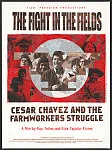
"The fight in the fields. -- Cesar Chavez and the farmworkers struggle. -- A film by Ray Telles and Rick Tejada-Flores" by Sances, Jos. / Library of Congress.
Cesar Chavez played a major role in the history of the United States by leading efforts to improve the lives of agricultural laborers. During the 1960s and 1970s, farm workers in California and other states faced extremely poor working conditions, low wages, and lack of basic rights. Many of these workers were immigrants or from marginalized communities. They worked long hours in harsh environments, often exposed to pesticides and without access to clean water or bathrooms. Their difficulties were part of a larger struggle for labor rights and social justice in America.
Recognizing these injustices, Cesar Chavez, along with Dolores Huerta and others, co-founded the United Farm Workers (UFW) in 1962. Their goal was to organize farm workers into a union, a group that could collectively bargain with employers for better pay and safer conditions. Organizing workers was not easy. Many growers were hostile to unions and sometimes used threats or violence to stop them. Nevertheless, Chavez and his colleagues believed that peaceful methods could be more powerful than force.
One of the most significant strategies used by Chavez and the UFW was the strike. In 1965, Filipino and Mexican farm workers began the Delano grape strike, refusing to pick grapes until their demands for fair contracts were met. This action united workers across racial and ethnic lines, showing the strength of solidarity. The strike lasted for over five years, highlighting both the persistence of the workers and the resistance of the growers.
Another essential method was the national boycott. Chavez encouraged Americans across the country to stop buying grapes from companies that refused to negotiate with the union. The boycott gained widespread support, drawing attention from the media and gaining allies among students, religious groups, and other activists. It became a powerful economic tool, pressuring companies to come to the negotiating table.
Throughout the struggle, Chavez also practiced nonviolent protest. He believed that true change could be achieved without violence. Chavez famously went on several fasts, refusing to eat for days at a time, to demonstrate his commitment to the cause and inspire others to remain peaceful. His fasts brought moral attention to the workers’ movement and showed the power of personal sacrifice.
The organizing efforts of the UFW led to some significant victories. By 1970, several grape growers signed contracts with the union, agreeing to improve pay and working conditions. However, the fight for justice was not simple. There were setbacks, such as disagreements within the movement and ongoing opposition from powerful agricultural businesses. Even with these challenges, Chavez’s leadership showed that organized, peaceful action could achieve real change for workers.
Today, the legacy of Cesar Chavez and the UFW continues to influence labor movements and the fight for civil rights in the United States. Their story demonstrates the difficulties of organizing for change, the importance of solidarity, and the impact of peaceful protest. The movement also encourages us to consider the ongoing struggles faced by workers in many industries today.
Interesting Fact: In 1994, Cesar Chavez was awarded the Presidential Medal of Freedom, the nation’s highest civilian honor, for his dedication to nonviolent social change and justice for workers.
Comprehension quiz (8 questions)
1. When was the United Farm Workers founded?
2. What was the Delano grape strike?
3. Who co-founded the UFW with Chavez?
4. Why did Chavez encourage boycotts?
5. What was an effect of the strikes?
6. How did Chavez protest?
7. Cesar Chavez supported violent protest. True or false?
8. What is a union?
Common Core standards for Cesar Chavez and United Farm Workers
Explain events, procedures, ideas, or concepts in a historical, scientific, or technical text, including what happened and why, based on specific information in the text.
Determine the meaning of general academic and domain-specific words or phrases in a text relevant to a grade 4 topic or subject area.
Write informative/explanatory texts to examine a topic and convey ideas and information clearly.
Perfect for the way you teach
- Build comprehension skills
- Auto-graded quiz
- Differentiated reading
- Read together at home
- Improve fluency
- Quiet reading time
- Reading curriculum support
- Independent practice
- Track Lexile growth