Mycenaean Civilization
Interactive passage with audio narration, comprehension questions, and printable PDF.
By completing this purchase you agree to our Terms of Use and Privacy Policy. Your subscription renews automatically until you cancel. You can cancel anytime from your account settings. All sales are final and non-refundable. Digital content is available for download in your account immediately upon purchase.
What's included
Part of this bundle

Mycenaean Civilization preview and details
About this printable Mycenaean Civilization reading passage (Grades 5-8)
Sample passage and quiz from Mycenaean Civilization
Reading passage and comprehension quiz preview
Mycenaean Civilization
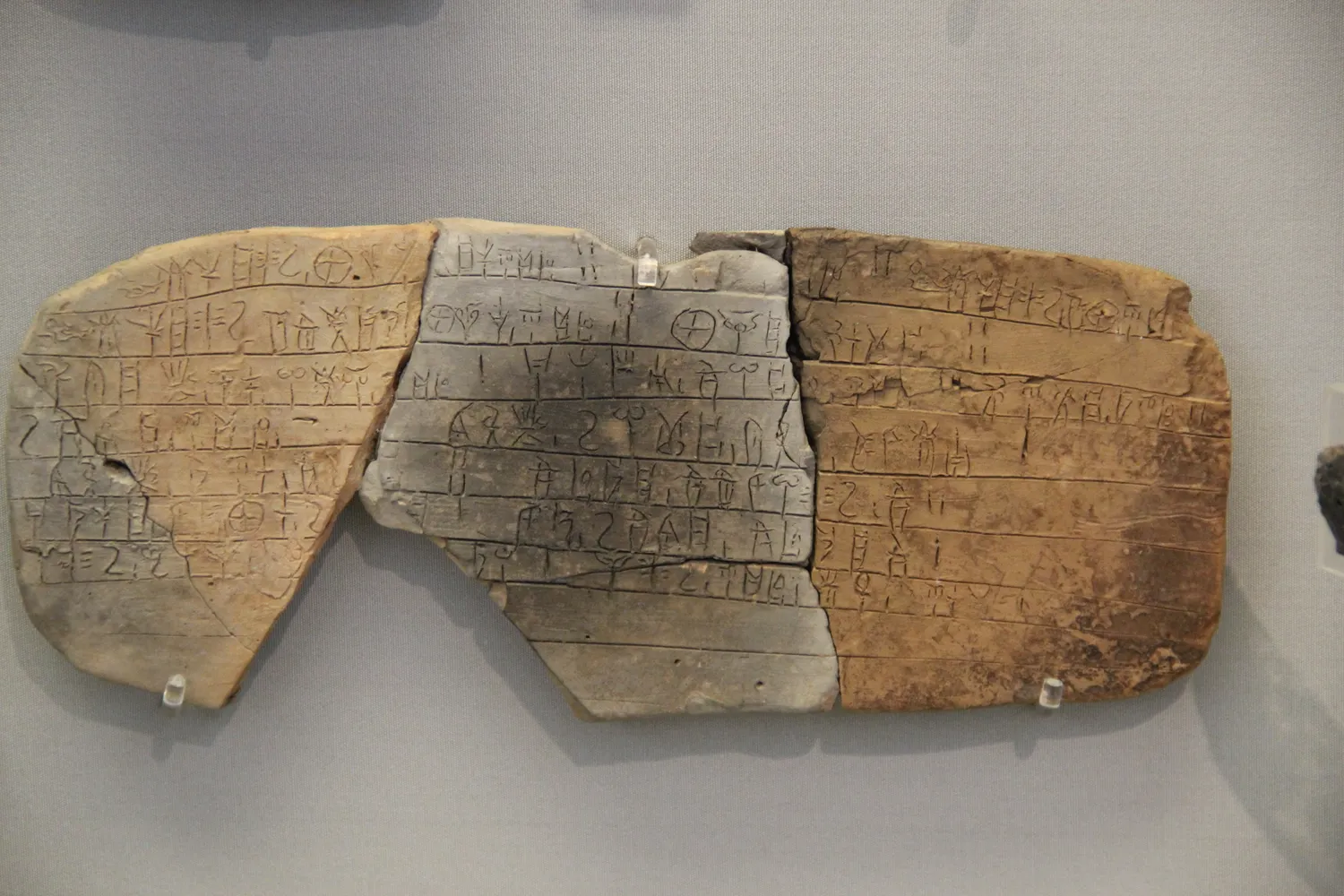
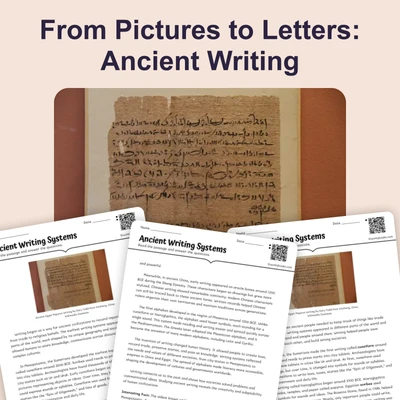
Linear B Tablet from Palace at Pylos, 13th Cent. BC (28461333165) by Gary Todd from Xinzheng, China / Wikimedia Commons
The Mycenaeans were one of the earliest advanced civilizations in mainland Greece, flourishing between about 1600 and 1100 BCE. Named after their largest city, Mycenae, they are known for their impressive palaces, warrior culture, and mysterious collapse. Archaeological evidence, such as the massive stone walls of Mycenae and the famous Lion Gate, help historians understand this ancient society.
Mycenaean civilization developed in a landscape of rocky hills and fertile valleys in southern Greece. The Mycenaeans built fortified citadels in places like Mycenae, Tiryns, and Pylos, using giant limestone blocks known as Cyclopean masonry. According to ancient Greek legend, their walls were so large that only giants called Cyclopes could have constructed them. Excavations by Heinrich Schliemann in the 1870s revealed royal tombs filled with gold masks, weapons, and pottery, showing that Mycenaean rulers were both wealthy and powerful. The most famous artifact is the so-called Mask of Agamemnon, although scholars debate whether it truly belonged to the legendary king.
The Mycenaeans were skilled traders and sailors. They established contacts with other civilizations across the Mediterranean, including the Minoans of Crete and the Hittites of Anatolia. Written records, such as clay tablets in the Linear B script, show that Mycenaean society was organized around palace centers that controlled agriculture, craft production, and trade. The king, or wanax, was at the top of the social hierarchy, supported by warriors, scribes, and artisans. Most people were farmers or laborers, living in small villages around the palaces.
War and conflict played a major role in Mycenaean life. Their cities were heavily fortified, and their art often shows scenes of chariots, weapons, and battles. The Mycenaeans are linked to the legendary Trojan War, described in Homer's epic poems. While the true events remain debated, archaeological evidence at Troy suggests there were conflicts in the region around 1200 BCE. Around the same time, Mycenaean palaces and cities were destroyed or abandoned, likely due to a combination of invasions, earthquakes, and internal unrest. This collapse marked the end of the Bronze Age in Greece and led to a period sometimes called the Greek Dark Ages.
The Mycenaeans left a lasting legacy. Their myths, art, and architectural ideas influenced later Greek culture, including the stories of heroes like Agamemnon and Achilles. By studying the Mycenaeans, historians learn how geography, trade, and warfare shaped early civilizations and contributed to the rise of classical Greece.
This study of the Mycenaeans connects to broader themes in ancient history, such as the rise and fall of civilizations and the impact of geography on human societies.
Interesting Fact: The Mycenaeans were the first Greeks to use written Greek, known as Linear B, which was only decoded in the 1950s.
Comprehension quiz (8 questions)
1. When did the Mycenaeans flourish?
2. What is the Lion Gate?
3. Who was the Mycenaean king?
4. Why were Mycenaean walls called Cyclopean?
5. What did Linear B tablets record?
6. What is one reason for Mycenae's fall?
7. The Mycenaeans were skilled traders. True or false?
8. What does 'hierarchy' mean?
Perfect for the way you teach
- Build comprehension skills
- Auto-graded quiz
- Differentiated reading
- Read together at home
- Improve fluency
- Quiet reading time
- Reading curriculum support
- Independent practice
- Track Lexile growth