Nuclear Energy as a Resource
Interactive passage with audio narration, comprehension questions, and printable PDF.
By completing this purchase you agree to our Terms of Use and Privacy Policy. Your subscription renews automatically until you cancel. You can cancel anytime from your account settings. All sales are final and non-refundable. Digital content is available for download in your account immediately upon purchase.
What's included
Nuclear Energy as a Resource preview and details
About this printable Nuclear Energy as a Resource science reading passage, NGSS-aligned (Grades 5-8)
Sample passage and quiz from Nuclear Energy as a Resource
Reading passage and comprehension quiz preview
Nuclear Energy as a Resource
Nuclear energy is one of the most debated forms of electricity generation in the world today. As countries search for ways to reduce greenhouse gas emissions and meet rising energy demands, nuclear power offers both opportunities and challenges. The main question is how nuclear energy fits among other resources in providing reliable, clean, and safe power.
How Nuclear Power Works
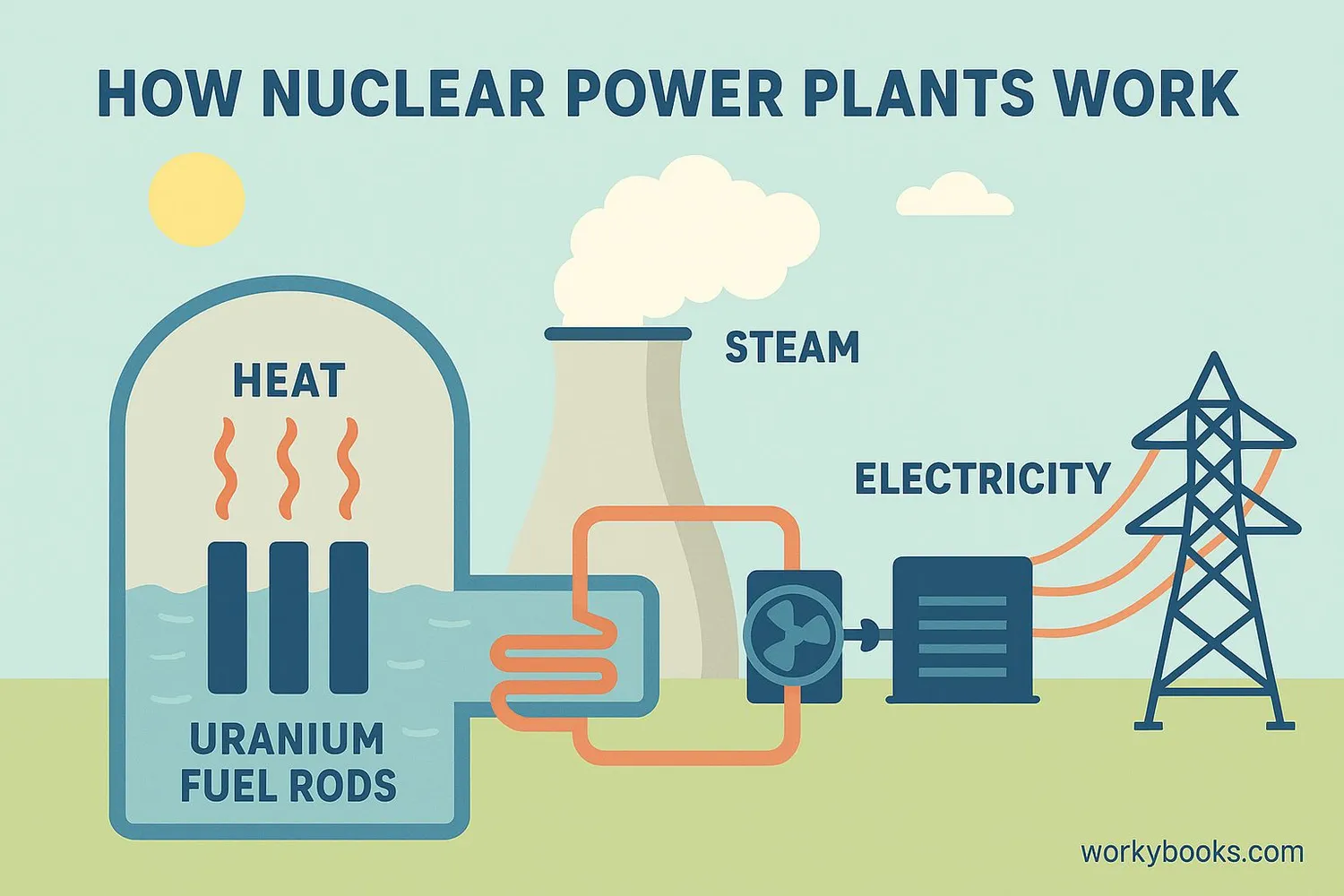
Nuclear power plants produce electricity through a process called nuclear fission. In fission, atoms of uranium-235 or plutonium-239 are split apart in a controlled reaction, releasing a large amount of energy as heat. This heat turns water into steam, which spins a turbine to generate electricity. Nuclear fission is extremely efficient: just one kilogram of uranium can produce as much energy as burning about 2.7 million kilograms of coal. Unlike fossil fuel plants, nuclear reactors do not release carbon dioxide during operation, making them an important technology for limiting climate change. However, the process creates radioactive waste, which must be stored safely for thousands of years.
Advantages and Challenges
Nuclear energy has several significant advantages. It has a very high energy density, meaning it produces a lot of energy from a small amount of fuel. Nuclear power plants can provide reliable baseload power, delivering electricity day and night, regardless of weather conditions. This is different from solar and wind, which depend on sunlight and wind speed. In 2022, nuclear energy supplied about 10% of the world’s electricity and nearly 20% in the United States. However, nuclear power is also associated with major challenges. Accidents such as those at Chernobyl and Fukushima have raised public concern about safety and health risks. The costs to build and maintain nuclear plants are high, and long-term management of radioactive waste remains unsolved in many countries.
Nuclear Energy in the Future
As the world seeks cleaner energy, nuclear power is being reconsidered as part of the solution to climate change. New designs, like small modular reactors (SMRs), offer safer and more flexible options, allowing for faster construction and easier placement in remote areas. Scientists are also researching nuclear fusion, a process that could provide even more energy without creating long-lived radioactive waste. While fusion is not yet practical, it shows promise for the future. The debate continues about the role of nuclear energy, balancing its advantages with its risks, and considering technological advances that may address current challenges.
Nuclear energy’s unique combination of high output, low emissions, and persistent challenges makes it a critical subject for science and society. Its future will depend on innovations that improve safety and waste management, as well as public understanding and acceptance. As with all energy choices, careful consideration of trade-offs is essential for a sustainable future.
Interesting Fact:
One uranium fuel pellet, about the size of a fingertip, can produce as much energy as one ton of coal or 149 gallons of oil.
Comprehension quiz (10 questions)
1. What main process do nuclear power plants use to generate electricity?
2. Which gas is NOT released during the operation of nuclear power plants?
3. What is a major challenge with nuclear energy mentioned in the passage?
4. What percentage of the world's electricity came from nuclear energy in 2022?
5. What does the term 'energy density' mean as used in the passage?
6. What is 'baseload power' according to the text?
7. Why are small modular reactors (SMRs) considered important for the future of nuclear power?
8. What is the main benefit of nuclear fusion over fission, as described in the passage?
9. True or False: Nuclear power plants release a lot of carbon dioxide during operation.
10. True or False: One kilogram of uranium can produce the same energy as millions of kilograms of coal.
Perfect for the way you teach
- Build comprehension skills
- Auto-graded quiz
- Differentiated reading
- Read together at home
- Improve fluency
- Quiet reading time
- Reading curriculum support
- Independent practice
- Track Lexile growth