Philip II: King of Macedoni — Reading Comprehension
Rate this
Premium Resource
Present
Present in classroom. No work saved
Assign
Classroom with student accounts, Track progress
Quick Play
No student accounts, assign with a link
Grades
6
7
8
PRINT+DIGITAL RESOURCE
This learning resource is available in interactive and printable formats. The interactive worksheet can be played online and assigned to students. The Printable PDF version can be downloaded and printed for completion by hand.
This engaging reading passage introduces students to Philip II, King of Macedon, and explores his rise to power, military innovations, and the conquest of Greece. The text covers key events, including Philip’s reforms of the Macedonian army, his diplomatic strategies, and the larger significance of his rule in shaping the ancient world. Students will learn about the impact of Philip’s actions on Greek city-states, the geographic context of Macedonia, and how his legacy set the stage for his son, Alexander the Great. The passage includes a glossary of key academic terms, a multiple-choice quiz, writing activities, graphic organizers, and a timeline. It is aligned with California HSS 6.4 and Common Core CCSS RH.6-8.1 standards. The resource provides both a rigorous and simplified reading version, read aloud audio, and Spanish translations to support all learners.
Philip II became the king of Macedon in 359 BCE, transforming a small, often overlooked kingdom into the most powerful force in Greece. While Greek city-states like Athens and Sparta were famous for their wars and culture, Macedon was seen as less advanced. Yet, under Philip’s rule, this northern kingdom would conquer Greece and lay the foundation for an empire that changed history.
Philip II was both a skilled strategist and a master of diplomacy. He reformed the Macedonian army, introducing the phalanx formation with longer spears called sarissas. This new military tactic, described by ancient historian Diodorus Siculus, allowed Macedonian soldiers to fight more effectively than their Greek rivals. Philip also used alliances and political marriages to strengthen his position, such as marrying Olympias from Epirus, which brought him both military support and influence.
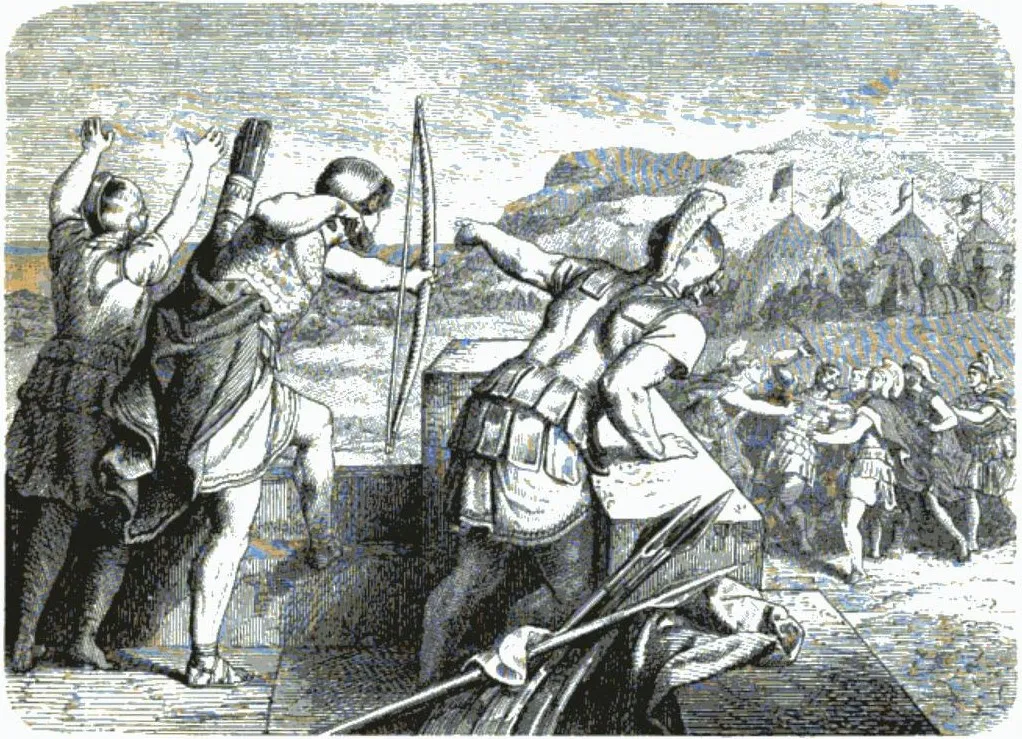
Philip’s rise was not easy. He faced threats from powerful neighbors like Illyria and internal rebellions. However, he used his army’s discipline and new tactics to defeat invaders and unite Macedonia. In 338 BCE, at the Battle of Chaeronea, Philip’s forces defeated the combined armies of Athens and Thebes. Archaeological evidence, including weapons and armor found near Chaeronea, shows how advanced Philip’s military was for the time. After this victory, he formed the League of Corinth, forcing city-states to accept Macedonian leadership while allowing them some independence.
Philip II’s rule changed the Greek world. He centralized power in Macedonia, improved roads, and encouraged the spread of Greek culture. His policies created a new era known as the Hellenistic period. Philip also trained his son, Alexander, who would later become Alexander the Great. Some ancient sources, like the speeches of Demosthenes, show that many Greeks feared Philip’s growing power. Others recognized the stability and unity he brought to a region often torn apart by war.
Philip II’s legacy continues to shape how historians understand ancient Greece. His military innovations, political skill, and ability to unify diverse peoples laid the groundwork for future empires. The story of Philip II connects to the broader theme of how strong leadership and new ideas can change societies.
Interesting Fact: Philip II lost his right eye in battle, but coins and statues often showed him with both eyes to display his power as king.
When did Philip II become king?
359 BCE338 BCE431 BCE146 BCE
Which army did Philip defeat at Chaeronea?
Athens and ThebesPersiaRomeSparta and Corinth
What weapon did Macedonian soldiers use?
SarissasShort swordsBowsShields only
How did Philip strengthen his position?
Alliances and marriagesBuilding shipsWriting booksTrading oil
What was a result of Philip’s victory?
Greek unity under MacedonGreek independenceEnd of Greek cultureSparta ruled Greece
Which source described Philip's tactics?
Diodorus SiculusHerodotusCaesarPlato
Philip II lost his right eye.
TrueFalse
What does 'phalanx' mean?
Soldiers in rowsA political allianceA type of roadGreek temple
Perfect For:
👩🏫 Teachers
• Reading comprehension practice
• Auto-graded assessments
• Literacy skill development
👨👩👧👦 Parents
• Reading practice at home
• Comprehension improvement
• Educational reading time
🏠 Homeschoolers
• Reading curriculum support
• Independent reading practice
• Progress monitoring
Reading Features:
📖
Reading Passage
Engaging fiction or nonfiction text
❓
Comprehension Quiz
Auto-graded questions
📊
Instant Feedback
Immediate results and scoring
📄
Printable Version
Download for offline reading
🔊
Read Aloud
Voice-over with word highlighting
Reviews & Ratings
No reviews yet. Be the first to share your experience!
Related Content
Geography of Ancient Greece
This rigorous history reading passage explores 'The Geography of Ancient Greece,' examining how the region’s mountains, ...
Homer: Epic Poet of Ancient Greece
This history reading passage explores the life and historical significance of Homer, the legendary epic poet of Ancient ...
Ancient Sparta
This reading passage explores the unique military society of Sparta, an influential city-state in Ancient Greece. Studen...
Greek Polis
This in-depth history reading passage explores the rise and development of the Greek polis, or city-state, a foundationa...
Ancient Greek City-States
This history reading passage explores the development and significance of city-states in ancient civilizations, focusing...
Greece's Lasting Legacy
This engaging history reading passage explores the enduring legacy of Ancient Greece and its profound influence on the m...
Evidence in Ancient History
This engaging history reading passage investigates how archaeologists and historians discover clues about how ancient pe...
Ancient Philosophy
This reading passage takes students on a journey through the philosophical traditions of ancient Greece, India, and Chin...
Euripides and Greek Drama
This engaging passage introduces students to Euripides, one of the greatest ancient Greek playwrights, known for his exp...
Women in Ancient Societies
This reading passage explores the complex roles of women in the ancient world, focusing on civilizations such as Mesopot...
Sophocles and Greek Tragedy
This passage explores the life and legacy of Sophocles, one of the most influential playwrights of ancient Greece, whose...
Ancient Literature
This passage explores the importance of ancient stories and poems from civilizations such as Greece, India, and Israel. ...
Ancient Science and Medicine
This comprehensive reading passage explores the development of science and medicine in ancient civilizations, including ...
Slavery in Ancient World
This passage explores the complex history of slavery in the ancient world, examining its presence in societies such as M...
Ancient Theocracy
This engaging history reading passage explores the concept of theocracy in ancient civilizations, where priests and reli...
Ancient Mathematics
This passage explores the essential role of mathematics in ancient civilizations, including Mesopotamia, Egypt, Greece, ...
Ancient Canaan
This educational passage explores the land of Canaan, the historical homeland of the ancient Israelites. Students will l...
Geography of Ancient Israel
This passage explores the rich geography of Ancient Israel, focusing on how landforms, climate, and natural resources sh...
Ancient Writing Systems
This engaging history reading passage explores the origins and evolution of ancient writing systems, including cuneiform...
Ancient Agriculture Farming
This passage explores the transformative impact of farming on ancient societies, examining how the Neolithic Revolution ...