Pizarro Conquest of inca
Interactive passage with audio narration, comprehension questions, and printable PDF.
By completing this purchase you agree to our Terms of Use and Privacy Policy. Your subscription renews automatically until you cancel. You can cancel anytime from your account settings. All sales are final and non-refundable. Digital content is available for download in your account immediately upon purchase.
What's included
Pizarro Conquest of inca preview and details
About this printable Pizarro Conquest of inca reading passage (Grades 5-8)
Sample passage and quiz from Pizarro Conquest of inca
Reading passage and comprehension quiz preview
Pizarro Conquers the Inca Empire
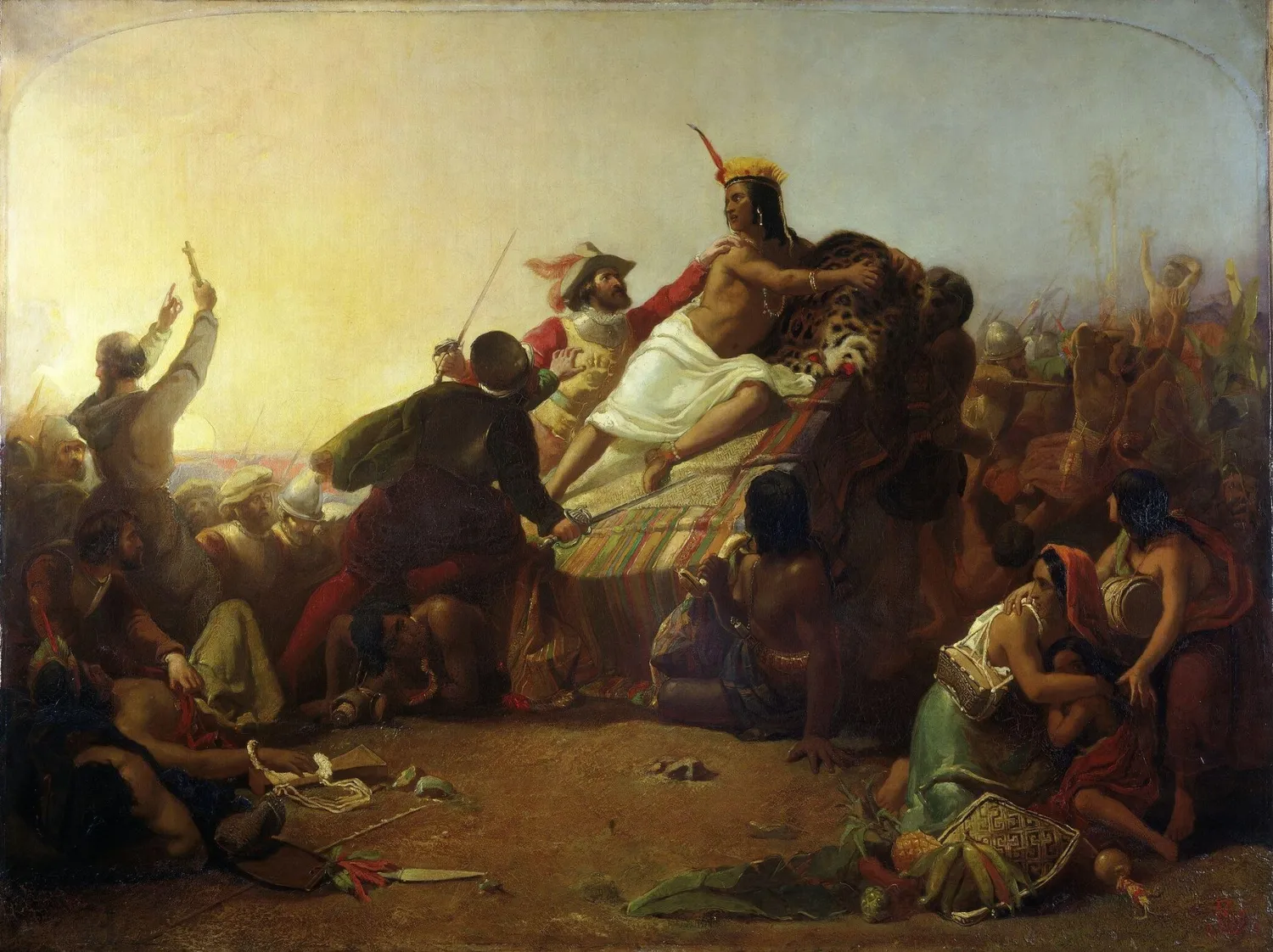
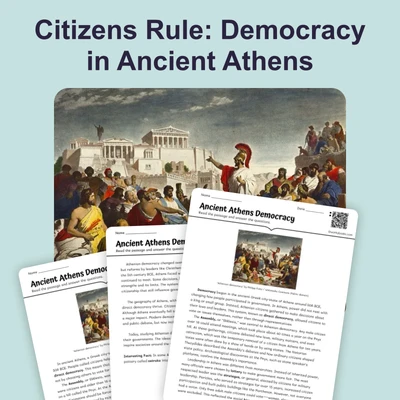
"John Everett Millais - Pizarro seizing the Inca of Peru" by John Everett Millais /
Source: Wikimedia Commons (Public domain).
In 1532, Spanish conquistador Francisco Pizarro led a small force into the heart of the Inca Empire in South America. The Inca civilization, centered in the Andes Mountains, was one of the largest and most advanced societies of the ancient Americas. Within less than a year, the Spanish defeated the Inca and claimed their vast territory for Spain. This dramatic conquest changed the history of the Americas forever.
The conquistadors arrived at a time of great turmoil for the Inca. A brutal civil war had just ended between two brothers, Atahualpa and Huáscar, over who should be emperor. Atahualpa emerged victorious, but his empire was weakened by internal conflict and disease. When Pizarro and his fewer than 200 men reached the city of Cajamarca in November 1532, they invited Atahualpa to a meeting. According to the Spanish chronicler Francisco de Xerez, Atahualpa arrived with thousands of unarmed followers, confident in his power. Pizarro’s men, however, ambushed the Inca, capturing Atahualpa and killing many of his attendants. This surprise attack used both advanced European weaponry—such as steel swords and firearms—and strategic deception.
The Spanish demanded a huge ransom for Atahualpa's release, filling a room with gold and silver. Despite paying the ransom, Atahualpa was executed in 1533. After his death, the Spanish marched to the Inca capital, Cuzco, encountering little organized resistance. Spanish accounts, like those by Pedro Pizarro, describe how the Inca lacked immunity to new diseases such as smallpox, which devastated their population. The Spanish also formed alliances with local groups who were unhappy with Inca rule, further weakening Inca defenses. The combination of advanced technology, political instability, disease, and local alliances allowed a small Spanish force to conquer a mighty empire.
The defeat of the Inca Empire had enormous consequences. Spanish rule brought new laws, religion, and social structures. The hierarchy of Inca society was replaced with colonial rule, and many Inca traditions were suppressed or changed. The Spanish extracted vast amounts of gold and silver, which changed the world economy. Some Inca resisted for decades, but the old order was gone. Today, historians debate whether the conquest was mainly due to Spanish technology, disease, or internal Inca problems. Archaeological evidence, such as the ruins at Cuzco and Spanish records, helps us understand these complex events.
The Spanish conquest of the Inca connects to broader themes of power, cultural exchange, and the impact of geography on history. It also raises questions about how societies respond to external threats and change over time.
Interesting Fact: Atahualpa’s ransom room in Cajamarca was reportedly filled with gold and silver worth millions of dollars today, but it did not save his life.
Comprehension quiz (8 questions)
1. Who led the Spanish conquest of the Inca?
2. What city did Pizarro capture Atahualpa in?
3. What did the Spanish demand for Atahualpa's release?
4. Why was the Inca Empire weak before the Spanish arrived?
5. What role did disease play in the conquest?
6. How did the Spanish use alliances?
7. The Spanish had more advanced weaponry. True or false?
8. What is a 'ransom'?
Perfect for the way you teach
- Build comprehension skills
- Auto-graded quiz
- Differentiated reading
- Read together at home
- Improve fluency
- Quiet reading time
- Reading curriculum support
- Independent practice
- Track Lexile growth