City-States of the Ancient World
Interactive passage with audio narration, comprehension questions, and printable PDF.
What's included
City-States of the Ancient World preview and details
About this printable City-States of the Ancient World reading passage (Grades 6-8)
Sample passage and quiz from City-States of the Ancient World
Reading passage and comprehension quiz preview
City-States Across Ancient Civilizations

"Greece, The Acropolis" / Europeana (Public domain).
City-states were independent cities that governed themselves and controlled surrounding territories. In ancient history, city-states played a crucial role in the development of civilizations, especially in regions like Mesopotamia and Greece. Unlike modern countries, these city-states had their own governments, laws, and armies. They often competed, traded, and sometimes fought with one another.
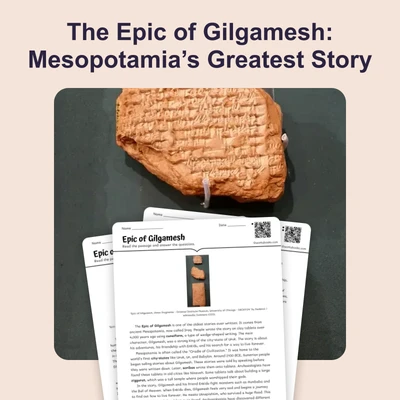
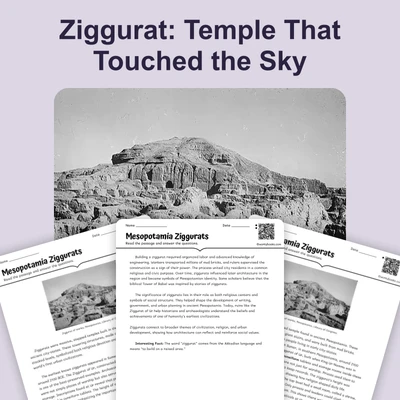
The earliest known city-states emerged in Mesopotamia around 3500 BCE. Sumerian cities such as Ur, Uruk, and Lagash are some of the oldest examples. Each Sumerian city-state was centered around a temple called a ziggurat, which was believed to be the home of the city's chief god. Archaeological evidence, such as cuneiform tablets, shows that priests and rulers managed irrigation, collected taxes, and enforced laws. The famous Code of Ur-Nammu, dating to about 2100 BCE, is one of the oldest sets of laws discovered, giving us insight into how these city-states functioned.
In ancient Greece, city-states were known as poleis (singular: polis). By 800 BCE, the Greek world was divided into dozens of poleis, including Athens, Sparta, and Corinth. Each polis had its own form of government. Athens, for example, developed democracy, where free male citizens could vote on laws. In contrast, Sparta was ruled by a small group of elders and focused on military strength. The geography of Greece, with its mountains and islands, made it difficult to unify under one government, which helped city-states stay independent.
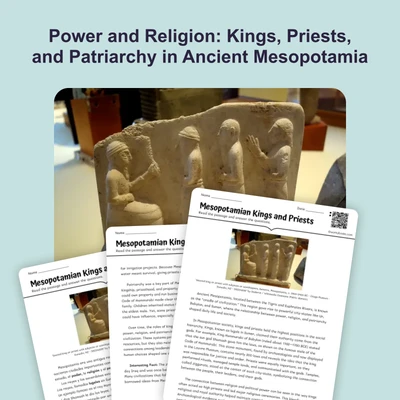
Daily life in a city-state depended on social hierarchy. Most people were farmers, craftsmen, or traders, while a smaller group made up the ruling class. In Sumerian city-states, kings claimed they were chosen by the gods, and priests held great power. In Greek city-states like Athens, citizens participated in government, but women, slaves, and foreigners had limited rights. Archaeological finds, such as pottery and inscriptions, show the differences in art, religion, and government among city-states.
City-states were important because they encouraged the development of new ideas about government, citizenship, and law. Some, like Athens, became centers of art, philosophy, and science. Over time, city-states often joined together for protection or formed alliances, but they usually kept their independence. The concept of the city-state influenced later civilizations, and many of their ideas about law and government still shape the world today.
City-states connect to the broader theme of how human societies organize themselves, respond to geography, and build systems of government that influence later history.
Interesting Fact: The Olympic Games began in Olympia, a Greek city-state, in 776 BCE as a festival to honor Zeus.
Comprehension quiz (8 questions)
1. What is a city-state?
2. Which city-state had democracy?
3. What was a ziggurat?
4. Why did Greek city-states stay independent?
5. What is the Code of Ur-Nammu?
6. Who had limited rights in Athens?
7. City-states often traded and fought with each other. True or False?
8. What does 'hierarchy' mean?
Perfect for the way you teach
- Build comprehension skills
- Auto-graded quiz
- Differentiated reading
- Read together at home
- Improve fluency
- Quiet reading time
- Reading curriculum support
- Independent practice
- Track Lexile growth