This learning resource is available in interactive and printable formats. The interactive worksheet can be played online and assigned to students. The Printable PDF version can be downloaded and printed for completion by hand.
This comprehensive history reading passage explores the causes, events, and impact of the Korean War, the first major conflict of the Cold War era. Students will learn about the division of Korea, the involvement of major world powers like the United States, China, and the Soviet Union, and the human consequences of the conflict. The passage uses primary sources, analyzes cause-and-effect relationships, and connects the war to broader Cold War themes. Activities include comprehension quizzes, writing prompts, graphic organizers, timelines, and a glossary to build academic vocabulary. Audio read-aloud and Spanish translation are provided for accessibility. This resource aligns with CA HSS 10.9 and Common Core standards RH.6-8.1, RH.6-8.2, and RH.6-8.4.
CONTENT PREVIEW
Expand content preview
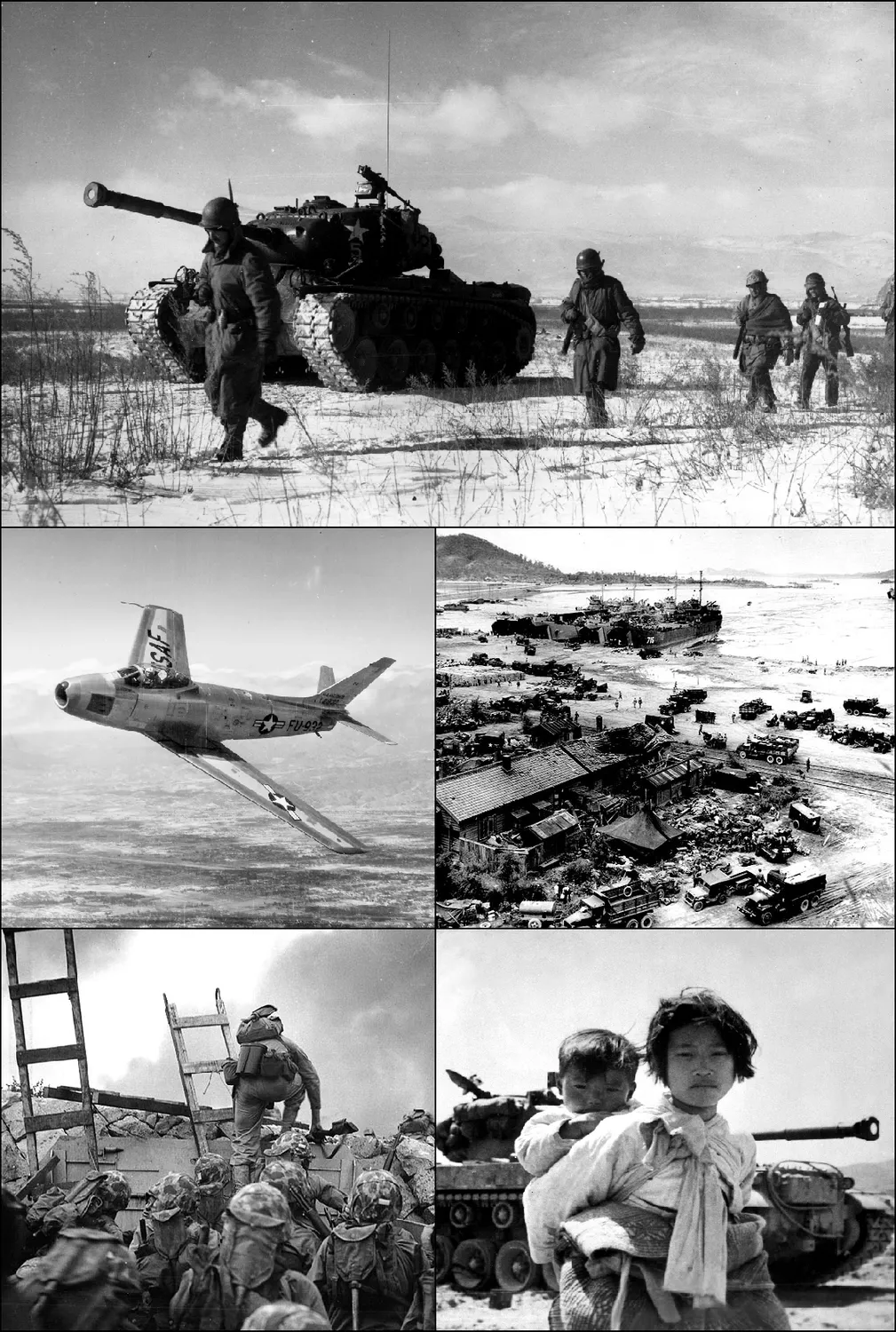
"The Korean War"/ Wikimedia Commons (Public domain).
The Korean War began on June 25, 1950, when North Korean troops crossed the 38th parallel and invaded South Korea. This event marked the start of the first major armed conflict of the Cold War, the period of political and military tension between the United States and the Soviet Union after World War II. The Korean War quickly became a global conflict involving many nations and millions of people.
Korea had been divided into two separate countries after World War II. The North was supported by the Soviet Union and adopted a communist government, while the South was backed by the United States and favored a democratic system. The 38th parallel became the border between these two very different governments. Tensions remained high, and both sides claimed to be the true government of all Korea. In June 1950, North Korean leader Kim Il-sung ordered an invasion of the South to unite the peninsula under his rule.
In response, the United Nations, led by the United States, formed a military coalition to defend South Korea. Soldiers from countries like the United Kingdom, Canada, Turkey, and Australia joined American and South Korean forces. One major turning point was the Battle of Inchon in September 1950. General Douglas MacArthur led a successful amphibious landing behind enemy lines, forcing North Korean troops to retreat. However, when UN troops approached the Chinese border, China entered the war on the side of North Korea, pushing the UN forces back. The conflict became a bloody stalemate with heavy casualties on both sides. Fighting eventually stopped with an armistice agreement in July 1953, but no official peace treaty was signed.
The human cost of the Korean War was enormous. Over two million civilians were killed or wounded, and many families were separated by the new border. Life for ordinary people was disrupted by bombings, food shortages, and fear. Primary sources, such as letters from American soldiers and South Korean diaries, describe the daily hardships and uncertainty faced by those living near the front lines. Archaeological evidence shows the destruction of cities like Seoul, which changed hands several times during the fighting.
The Korean War's impact is still felt today. It set the stage for continued tension between North and South Korea and showed how superpowers could shape conflicts in other countries. The war also marked a change in how international organizations like the United Nations would respond to aggression. Understanding the Korean War helps us see how Cold War rivalries shaped the modern world and the importance of diplomacy in preventing future conflicts.
Interesting Fact: During the Korean War, the United Nations sent troops from 16 different countries to help South Korea, making it one of the largest international military efforts in history.
When did the Korean War begin?
June 25, 1950May 8, 1945July 4, 1953September 1950
Which country supported North Korea?
United StatesSoviet UnionAustraliaTurkey
What was the 38th parallel?
A battle nameA peace treatyKorea's border lineA UN leader
Why did China join the war?
To help South KoreaTo protect its borderFor oil resourcesTo join the UN
What was a major effect of the war?
Korea was unitedMillions died or were hurtOnly North Korea changedNo countries were involved
Why is the Battle of Inchon important?
It ended the warIt was the first battleIt turned the war for UNIt united Korea
An armistice is a peace treaty.
TrueFalse
What does coalition mean?
A group working togetherA battle locationA type of governmentA peace agreement
Perfect For:
👩🏫 Teachers
• Reading comprehension practice
• Auto-graded assessments
• Literacy skill development
👨👩👧👦 Parents
• Reading practice at home
• Comprehension improvement
• Educational reading time
🏠 Homeschoolers
• Reading curriculum support
• Independent reading practice
• Progress monitoring
Reading Features:
📖
Reading Passage
Engaging fiction or nonfiction text
❓
Comprehension Quiz
Auto-graded questions
📊
Instant Feedback
Immediate results and scoring
📄
Printable Version
Download for offline reading
🔊
Read Aloud
Voice-over with word highlighting
Reviews & Ratings
No reviews yet. Be the first to share your experience!
Related Content
Life During the Cold War
This world history reading passage explores life during the Cold War, focusing on the daily experiences, fear, and use o...
How the Cold War Began
This passage explores how the alliance between the United States and the Soviet Union during World War II broke down, le...
Easing Cold War Tensions
This engaging history reading passage examines the transformation of the Cold War from a period of confrontation and ext...
America Fights in the Vietnam War
This engaging world history reading passage explores the Vietnam War and the Domino Theory, a key idea that shaped U.S. ...
Cold War Origins
This engaging passage examines the origins of the Cold War, focusing on the rivalry between the United States and the So...
D2.HIS.2.3-5D2.HIS.3.3-5RI.4.3RI.4.4
The Soviet Union Collapses
This comprehensive reading passage explores the end of the Cold War and the collapse of the Soviet Union, aligning with ...
War Bonds: Financing World War II
This passage examines the critical role of war bonds in financing World War II, focusing on how the U.S. government enco...
D2.HIS.2.3-5D2.HIS.3.3-5RI.4.3RI.4.4
Causes of World War I
This comprehensive history reading passage explores the complex causes of World War I, focusing on alliances, nationalis...
Events Leading to World War II
This passage explores the complex causes of World War II, focusing on the interwar period, the Treaty of Versailles, the...
World War I Impact on America
This engaging history reading passage explores World War I's impact on society and culture, highlighting key changes in ...
Trench Warfare in World War I
This comprehensive history reading passage explores the realities of life in the trenches during World War I, aligned to...
Europe Divided by the Iron Curtain
This rigorous history reading passage explores the division of Europe by the Iron Curtain during the Cold War, a key tur...
The Space Race
This engaging reading passage explores the Space Race, a critical chapter of the Cold War when the United States and the...
Russia Exits World War I
This comprehensive world history reading passage explores the Russian Revolution and how Russia exited World War I. Stud...
Nuclear Arms Race
This history reading passage examines the Cold War arms race and the global nuclear threat between the United States and...
Leaders and Decisions in World War II
This passage explores the major leaders of World War II and the critical decisions they made that shaped the course of g...
America Enters the War: 1917
This comprehensive history reading passage explores America’s entry into World War I in 1917, examining the causes, even...
American Life During World War II
This history reading passage explores life on the home front during World War II, focusing on the experiences of ordinar...
The Western Front in World War I
This engaging history reading passage explores the major battles of the Western Front during World War I, focusing on th...