America Enters World War II — Reading Comprehension
Rate this|
1
Premium Resource
Present
Present in classroom. No work saved
Assign
Classroom with student accounts, Track progress
Quick Play
No student accounts, assign with a link
Grades
6
7
8
Standards
D2.HIS.2.3-5
D2.HIS.3.3-5
RI.4.3
RI.4.4
W.4.2
PRINT+DIGITAL RESOURCE
This learning resource is available in interactive and printable formats. The interactive worksheet can be played online and assigned to students. The Printable PDF version can be downloaded and printed for completion by hand.
This history reading passage analyzes America’s entry into World War II, focusing on the causes, perspectives, and consequences of the U.S. declaration of war after the attack on Pearl Harbor. Students will explore the motivations of leaders, the complex debates within American society, and the global context of the conflict. The passage is structured to help develop analytical and explanatory skills, modeling historical reasoning with integrated primary source material. Activities include a multiple-choice quiz, writing prompts, and a timeline of key events. The lesson supports C3 Framework and Common Core standards, and is accompanied by a glossary of academic vocabulary, a Spanish translation, and read-aloud audio. This resource helps students analyze historical causation and interpret events from multiple viewpoints, building deeper understanding of U.S. involvement in WWII.
CONTENT PREVIEW
Expand content preview
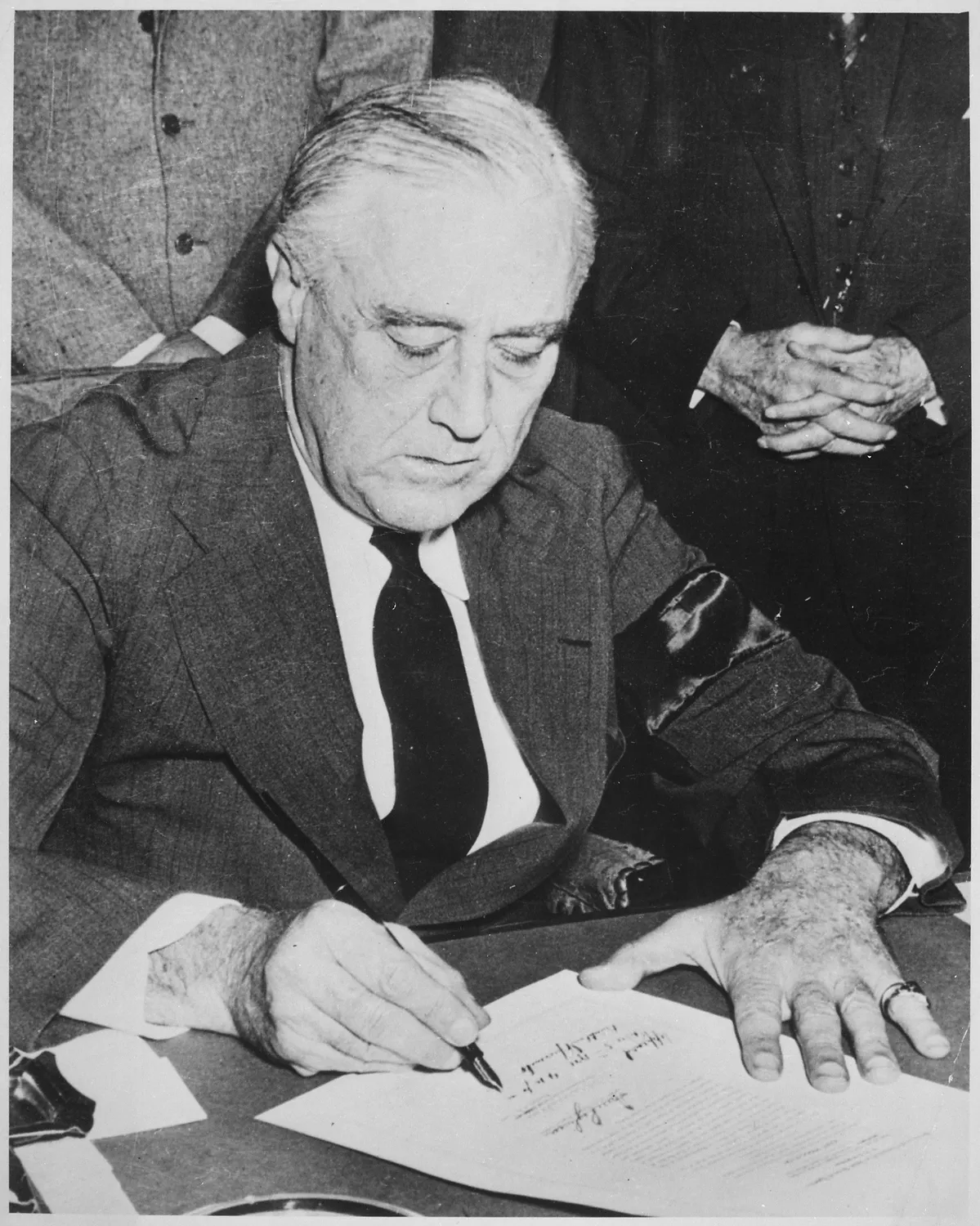
"President Franklin D. Roosevelt Signing the Declaration of War Against Japan, December 8, 1941" / Wikimedia Commons (Public domain).
The United States entered World War II after the surprise attack on Pearl Harbor by Japanese forces on December 7, 1941. This event shocked the nation and led President Franklin D. Roosevelt to request a declaration of war from Congress. Within days, the United States officially joined the conflict, first against Japan and soon after against Germany and Italy, who were allied with Japan as part of the Axis powers.
Before Pearl Harbor, many Americans supported neutrality, hoping to avoid involvement in another global conflict. However, rising tensions and acts of aggression by Axis countries in Europe and Asia made it increasingly difficult for the United States to remain isolated. The attack on Pearl Harbor eliminated any doubts, uniting the country in a common purpose. The mobilization of American resources began immediately as factories shifted to producing military equipment, and millions of men and women joined the armed forces or took on essential jobs at home.
The U.S. joined the Allies, which included Great Britain, the Soviet Union, and China. This alliance aimed to defeat the Axis and stop their expansion. American soldiers, known as GIs, fought across Europe, North Africa, and the Pacific, while workers at home contributed to the war effort by building ships, airplanes, and weapons. The government used propaganda—messages designed to influence public opinion—to encourage unity and sacrifice. Rationing of food and materials became commonplace, and citizens purchased war bonds to help finance the military campaign.
Despite this unity, the period was not without conflict and complexity. Japanese Americans on the West Coast faced internment, as many were forcibly relocated to camps due to fears of espionage. African Americans, women, and other minority groups encountered new opportunities in the workforce but also continued to face discrimination. These challenges highlighted the contradictions between American ideals and reality, even as the country fought to defend democracy abroad.
By entering the war, the United States became a global leader, shifting the balance of power in favor of the Allies. American innovation in technology and strategy contributed significantly to the eventual defeat of the Axis. The war effort reshaped American society, economy, and international relations for decades to come, marking a turning point in world history.
Interesting Fact: The phrase "a date which will live in infamy" was used by President Roosevelt in his speech to Congress after the Pearl Harbor attack, and it became one of the most famous lines in American history.
What event led the U.S. into WWII?
Attack on Pearl HarborD-Day invasionEnd of the Great DepressionFirst atomic bomb test
Who was the U.S. president in 1941?
Franklin D. RooseveltHarry S. TrumanWoodrow WilsonDwight D. Eisenhower
Which countries were part of the Axis?
Germany, Italy, JapanU.S., Britain, FranceChina, U.S., Soviet UnionCanada, Australia, India
Why did the U.S. mobilize industries?
To produce war suppliesTo build highwaysTo make luxury goodsTo start businesses
What was a result of U.S. entry?
Allies gained strengthGreat Depression returnedAxis won the warU.S. stayed neutral
What happened to Japanese Americans?
Sent to internment campsFought in EuropeBecame U.S. presidentsMoved to Canada
The U.S. joined WWII in 1941. True or false?
TrueFalse
Which is a 'declaration of war'?
An official war announcementA peace treatyA military paradeA newspaper headline
Perfect For:
👩🏫 Teachers
• Reading comprehension practice
• Auto-graded assessments
• Literacy skill development
👨👩👧👦 Parents
• Reading practice at home
• Comprehension improvement
• Educational reading time
🏠 Homeschoolers
• Reading curriculum support
• Independent reading practice
• Progress monitoring
Reading Features:
📖
Reading Passage
Engaging fiction or nonfiction text
❓
Comprehension Quiz
Auto-graded questions
📊
Instant Feedback
Immediate results and scoring
📄
Printable Version
Download for offline reading
🔊
Read Aloud
Voice-over with word highlighting
Reviews & Ratings
No reviews yet. Be the first to share your experience!
Related Content
Native American Tribes Across America
This engaging history reading passage introduces students to Native American tribes across America, focusing on their da...
D2.HIS.1.3-5D2.HIS.2.3-5RI.4.1RI.4.2
Teepees: Homes on the Great Plains
This engaging history reading passage introduces students to teepees, the unique homes of Native American tribes on the ...
D2.HIS.2.3-5D2.HIS.14.3-5RI.4.1RI.4.2RI.4.4
Traditional Native American Clothing
This engaging history passage explores traditional Native American clothing and how it reflected the environment, values...
D2.HIS.2.3-5D2.HIS.3.3-5RI.4.3RI.4.4
The Iroquois Confederacy: A System of Peace
This engaging U.S. History reading passage introduces students to the Iroquois Confederacy, a powerful alliance of Nativ...
D2.HIS.2.3-5D2.HIS.3.3-5RI.4.3RI.4.4
The Cherokee Nation: History and Culture
This reading passage explores the rich history and culture of the Cherokee Nation, one of the largest Native American tr...
D2.HIS.2.3-5D2.HIS.14.3-5RI.4.3RI.4.4RI.4.10
The Sioux: Warriors and Tribal Leaders
This history reading passage explores the Sioux Nation, focusing on their roles as warriors and tribal leaders. Students...
D2.HIS.1.3-5D2.HIS.2.3-5RI.4.1RI.4.3
Native American Respect for Nature
This engaging history reading passage explores Native American respect for nature, emphasizing the close relationship be...
D2.HIS.2.3-5D2.HIS.3.3-5RI.4.3RI.4.4
Jamestown: The First Permanent English Colony
This engaging history passage explores the founding of Jamestown, the first permanent English colony in America. Aligned...
D2.HIS.1.3-5D2.HIS.2.3-5RI.4.3RI.4.4
Pocahontas and the Powhatan People
This engaging reading passage explores the life of Pocahontas and the Powhatan people and their important role in early ...
D2.HIS.1.3-5D2.HIS.2.3-5RI.4.1RI.4.3
Colonial Children: School and Chores
This reading passage explores the daily lives of colonial children, focusing on their experiences at school and their ma...
D2.HIS.2.3-5D2.HIS.3.3-5RI.4.1RI.4.2RI.4.4
Colonial Clothing and Homemade Goods
This engaging U.S. history passage explores the daily life of early American colonists with a focus on colonial clothing...
D2.HIS.2.3-5RI.4.3RI.4.4
Colonial Jobs: Blacksmiths, Bakers, and Craftsmen
This engaging history reading passage explores the vital roles of blacksmiths, bakers, and craftsmen in colonial America...
D2.HIS.2.3-5D2.HIS.3.3-5RI.4.3RI.4.4
Colonial Towns and Village Life
This engaging history reading passage explores the daily life, work, and unity found in colonial towns and villages. Ali...
D2.HIS.1.3-5D2.HIS.2.3-5RI.4.3RI.4.4
Colonial Trade with England and Africa
This history reading passage explores colonial trade between the American colonies, England, and Africa, focusing on the...
D2.HIS.2.3-5D2.HIS.14.3-5RI.4.3RI.4.4
Benjamin Franklin: Printer, Inventor, and Leader
This history reading passage explores the life and achievements of Benjamin Franklin, one of America's most important ea...
D2.HIS.2.3-5D2.HIS.3.3-5RI.4.1RI.4.3
George Washington Leads the Army
This engaging history reading passage explores how George Washington bravely led the Continental Army during the America...
D2.HIS.1.3-5D2.HIS.2.3-5RI.4.3RI.4.4
Women and Children During the Revolutionary War
This reading passage explores the important roles women and children played during the Revolutionary War. Students will ...
D2.HIS.2.3-5RI.4.3RI.5.3
African Americans Fight for Freedom
This educational passage explores the brave and inspiring story of how African Americans fought for freedom in the Unite...
D2.HIS.2.3-5D2.HIS.3.3-5RI.4.3RI.4.4
The Battle of Yorktown Ends War
This engaging U.S. history reading passage explores the Battle of Yorktown, a key event that ended the American Revoluti...
D2.HIS.1.3-5D2.HIS.2.3-5RI.4.1RI.4.3
Loyalists vs. Patriots: Divided Families
This engaging U.S. history reading passage explores the division between Loyalists and Patriots during the American Revo...