American Life During World War II
Interactive passage with audio narration, comprehension questions, and printable PDF.
By completing this purchase you agree to our Terms of Use and Privacy Policy. Your subscription renews automatically until you cancel. You can cancel anytime from your account settings. All sales are final and non-refundable. Digital content is available for download in your account immediately upon purchase.
What's included
American Life During World War II preview and details
About this printable American Life During World War II reading passage (Grades 5-8)
Sample passage and quiz from American Life During World War II
Reading passage and comprehension quiz preview
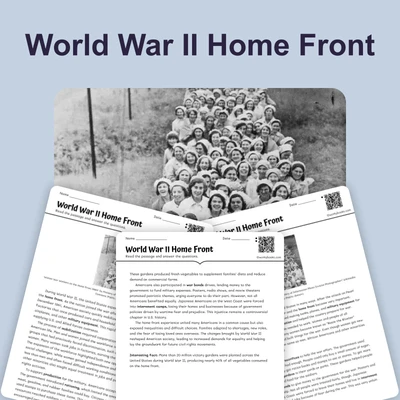
Life on the Home Front During World War II
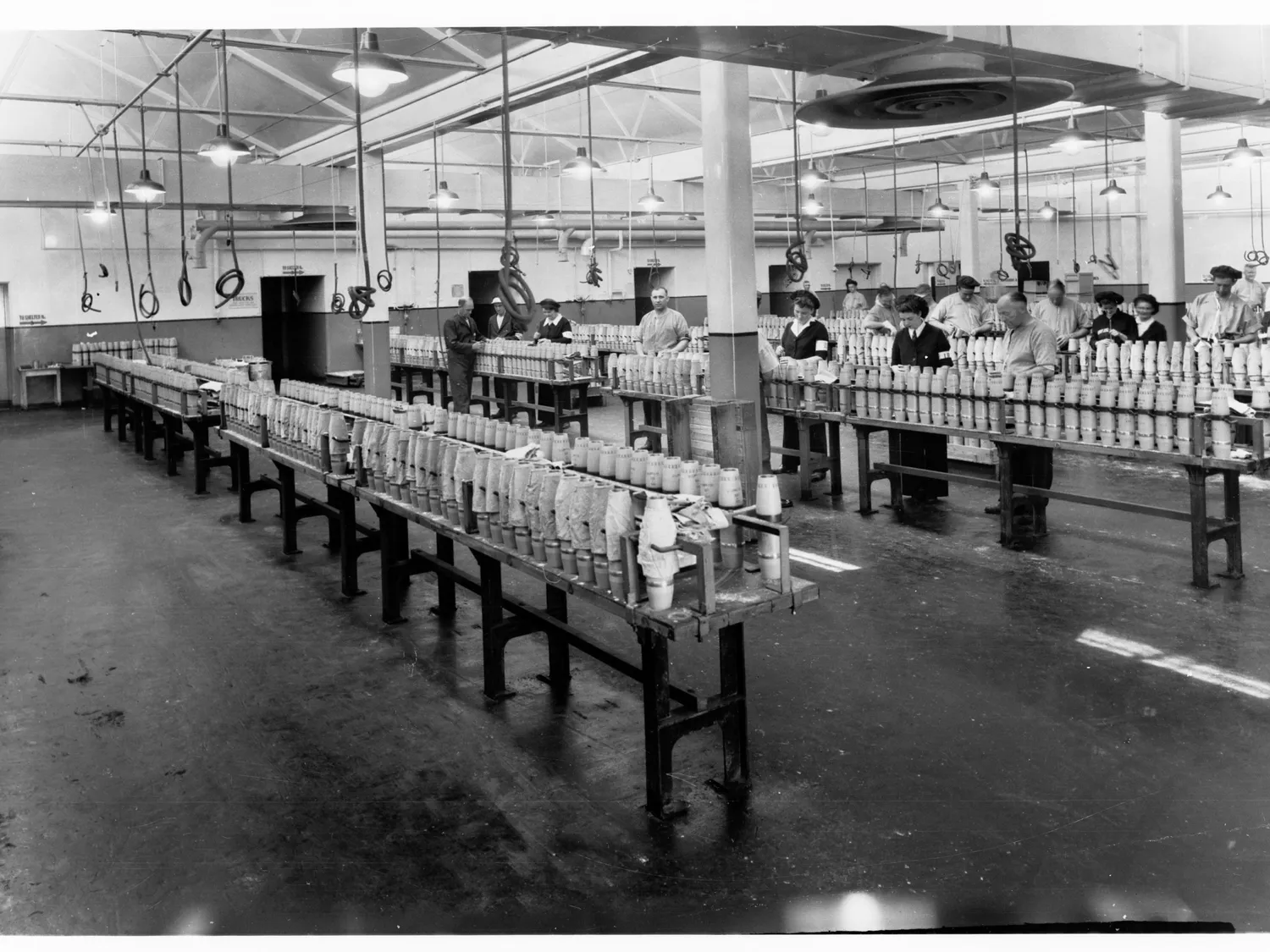
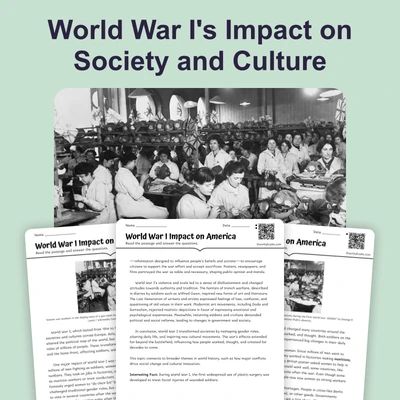
"Men and women working at Salisbury Munitions Factory(GN13533A)" by Commonwealth Government photographer/ Wikimedia Commons (Public domain).
World War II, which lasted from 1939 to 1945, not only changed the course of global politics but also transformed the daily lives of millions of ordinary people. While soldiers fought on distant battlefields, families and communities back home played a crucial role in supporting the war effort. The term home front refers to the civilian population and activities of a nation whose armed forces are engaged in war abroad.
One of the most significant changes was the introduction of rationing. To ensure that enough food, fuel, and materials reached the military, governments in countries like the United States and Great Britain limited how much people could buy. For example, citizens received ration books filled with coupons for items such as sugar, meat, and gasoline. In Britain, rationing began as early as 1940, and American families started using ration stamps in 1942. This system required families to plan meals carefully and make difficult choices each week. Diaries and letters from the era reveal how people adapted, swapping recipes and sharing tips to stretch their supplies.
Another dramatic shift occurred in the workforce. With millions of men serving as soldiers, women stepped into new roles in factories, shipyards, and offices. In the United States, the government encouraged women to work through posters and films featuring the character "Rosie the Riveter," who became a symbol of female strength and independence. By 1943, over 310,000 women worked in U.S. aircraft factories alone. Similar trends appeared in Britain and the Soviet Union. These changes challenged traditional gender roles and altered family dynamics, as women balanced paid work with home responsibilities.
The home front was also a center of propaganda and patriotic campaigns. Governments used posters, movies, and radio broadcasts to encourage people to buy war bonds, conserve resources, and support soldiers overseas. For example, the British government created the slogan "Keep Calm and Carry On" to boost morale during bombing raids. In the United States, schoolchildren collected scrap metal and planted "victory gardens" to supplement food supplies. Some propaganda, however, included negative stereotypes or targeted minority groups, reflecting the complex social tensions of the time.
Despite hardships, many communities found ways to unite. Local organizations held fundraisers, wrote letters to soldiers, and looked after neighbors in need. Blackout drills, air raid shelters, and civil defense training became part of daily life, especially in cities at risk of bombing. Primary sources, such as photographs and government documents, show both the sacrifices and resilience of people on the home front.
Life on the home front during World War II demonstrates how ordinary citizens can shape the outcome of major events. Their sacrifices, creativity, and cooperation made a critical difference in supporting the war effort and set the stage for social changes in the years that followed.
This topic connects to broader themes of social change, civic responsibility, and the effects of war on daily life throughout world history.
Interesting Fact: During World War II, over 20 million "victory gardens" were planted in the United States, producing nearly 40% of all vegetables consumed at home.
Comprehension quiz (8 questions)
1. When did World War II begin?
2. What is the 'home front'?
3. When did rationing begin in the U.S.?
4. Why did women enter factories during WWII?
5. What was the purpose of 'victory gardens'?
6. What did propaganda encourage people to do?
7. Rationing limited what people could buy. True or false?
8. What is a primary source?
Perfect for the way you teach
- Build comprehension skills
- Auto-graded quiz
- Differentiated reading
- Read together at home
- Improve fluency
- Quiet reading time
- Reading curriculum support
- Independent practice
- Track Lexile growth