Anne Frank's Message to the World
Interactive passage with audio narration, comprehension questions, and printable PDF.
By completing this purchase you agree to our Terms of Use and Privacy Policy. Your subscription renews automatically until you cancel. You can cancel anytime from your account settings. All sales are final and non-refundable. Digital content is available for download in your account immediately upon purchase.
What's included
Anne Frank's Message to the World preview and details
About this printable Anne Frank's Message to the World reading passage (Grades 5-8)
Sample passage and quiz from Anne Frank's Message to the World
Reading passage and comprehension quiz preview
Anne Frank's Message to the World
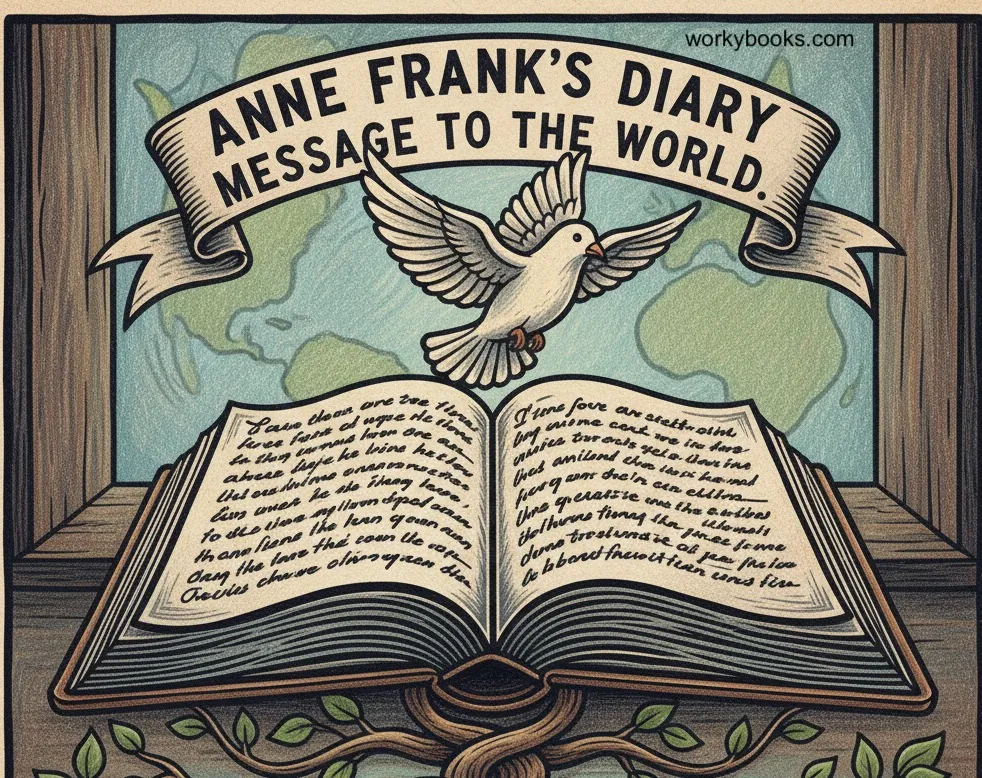
Anne Frank was a Jewish girl who became one of the most famous victims of the Holocaust during World War II. Born in 1929 in Frankfurt, Germany, Anne and her family fled to Amsterdam in the Netherlands to escape growing Nazi persecution. When Nazi Germany invaded the Netherlands in 1940, life for Jews became increasingly dangerous. By July 1942, Anne’s family went into hiding in a secret annex above her father's business to avoid being deported to concentration camps.
During the two years in hiding, Anne kept a diary where she wrote detailed accounts of daily life, her fears, and her hopes. Her diary, "The Diary of a Young Girl," is considered a crucial primary source of the Holocaust era. In it, Anne describes the constant threat of discovery, the strict rules the families had to follow to remain undetected, and her thoughts about human nature. She also recorded events like D-Day, when Allied forces landed in Normandy, which gave the hidden families hope for liberation. Anne’s words reveal not only the oppression Jews endured but also her enduring sense of hope and belief in humanity.
Unfortunately, on August 4, 1944, the Frank family was discovered and arrested by German police. They were deported to concentration camps. Anne and her sister Margot died of illness in the Bergen-Belsen camp in early 1945, only weeks before the camp was liberated. Anne’s father, Otto Frank, was the only member of the family to survive. After the war, he found Anne’s diary and decided to publish it. The diary has since been translated into more than 70 languages and has touched millions worldwide. It stands as a testament to the human cost of war and prejudice.
Anne Frank’s story is significant because it personalizes the tragedy of the Holocaust. Through her eyes, readers understand the experiences of millions of Jews who suffered under the Nazi regime. Her diary has inspired generations to stand against discrimination, value tolerance, and protect human rights. Anne’s ability to remain hopeful, even in the darkest times, continues to send a powerful message about courage and the importance of fighting for justice.
The story of Anne Frank connects to broader themes in world history, such as the dangers of intolerance and the importance of remembering the past to build a more just future.
Interesting Fact: Anne Frank often rewrote passages in her diary because she hoped to become a famous writer after the war.
Comprehension quiz (8 questions)
1. Where was Anne Frank born?
2. What year did the Franks go into hiding?
3. Who survived from Anne’s family?
4. Why is Anne’s diary important?
5. How did Anne show hope?
6. What did Anne’s story teach the world?
7. Anne Frank survived the war. True or false?
8. What is the meaning of oppression?
Perfect for the way you teach
- Build comprehension skills
- Auto-graded quiz
- Differentiated reading
- Read together at home
- Improve fluency
- Quiet reading time
- Reading curriculum support
- Independent practice
- Track Lexile growth