This learning resource is available in interactive and printable formats. The interactive worksheet can be played online and assigned to students. The Printable PDF version can be downloaded and printed for completion by hand.
This engaging reading passage explores the teachings of Confucius, a highly influential philosopher from ancient China, who lived during the Zhou Dynasty. The text examines how Confucius' ideas about social order, respect, and harmony shaped Chinese society for centuries and continue to impact the world today. Students will learn about the historical context of his era, key concepts like filial piety and the importance of education, and the ways Confucian thought influenced government and daily life. The passage integrates primary sources, cause-and-effect relationships, and connections to geography and social hierarchy. Included are a glossary of key terms, a Spanish translation, a differentiated version for accessibility, as well as multiple-choice and writing activities. The resource aligns with CA HSS 6.6 and CCSS standards, and features read aloud audio and a timeline for deeper understanding.
CONTENT PREVIEW
Expand content preview
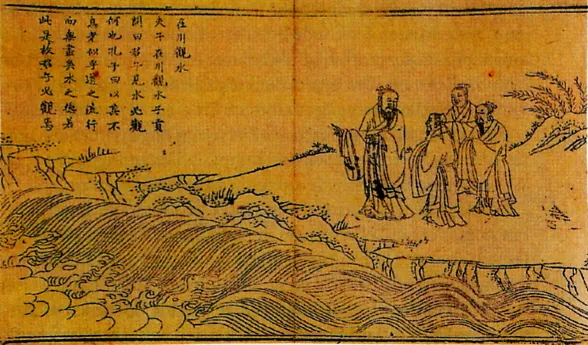
"Confucius and his students" / Source: Wikimedia Commons (Public domain).
Confucius was a Chinese philosopher whose ideas shaped society and government in ancient China. He lived from 551 BCE to 479 BCE during the late Zhou Dynasty, a period known for political instability and frequent wars between rival states. His teachings focused on creating a harmonious and orderly society by promoting respect, moral behavior, and education.
Confucius believed that every person had a role to play in society. He taught that rulers should govern by setting a good example and showing virtue, which means moral excellence. In return, people were expected to obey their leaders and follow the rules. A key concept in his philosophy is filial piety, or respect for one's parents and ancestors. Confucius argued that strong families with proper respect would lead to a stable society. He also emphasized the importance of education, saying, “Education breeds confidence. Confidence breeds hope. Hope breeds peace.”
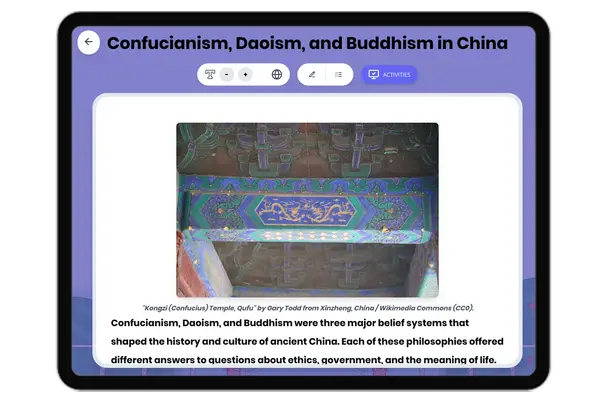
Primary sources from the Analects—a collection of Confucius’s sayings recorded by his students—show how his ideas were passed down. For example, one passage states, “The Master said: ‘If a ruler is upright, all will go well without orders. If he himself is not upright, even though he gives orders they will not be obeyed.’” Archaeological evidence of Confucian temples and inscriptions, such as those found in Qufu (his birthplace), show how his influence spread throughout China. Over time, Confucianism became the official philosophy during the Han Dynasty (206 BCE–220 CE). Government officials were selected through exams based on Confucian texts, changing how leaders were chosen.
Confucius’s teachings affected daily life and social hierarchy. Respect for elders, loyalty, and correct behavior were seen as essential virtues. His ideas also shaped relationships between rulers and subjects, parents and children, and friends. The focus on order and harmony helped unite a vast and diverse land. While other philosophies like Daoism and Legalism competed for influence, Confucianism remained central to Chinese culture for centuries, with many traditions continuing even today.
The teachings of Confucius show how ideas can shape an entire civilization. By stressing the importance of order, harmony, and respect, Confucius created a legacy that influenced not only China, but also neighboring countries like Korea, Japan, and Vietnam. His philosophy helps us understand the values and beliefs that created stability in ancient societies and connects to themes of leadership, ethics, and social organization throughout history.
Interesting Fact: Confucius was the first teacher in China to open a school for students from all social classes, not just the wealthy.
When did Confucius live?
551–479 BCE1200–1100 BCE300–200 CE800–700 CE
What dynasty was Confucius born in?
Zhou DynastyHan DynastyQin DynastySong Dynasty
What is filial piety?
Respect for parentsRespect for friendsRespect for rulersRespect for teachers
Why did Confucius value education?
It brought hope and peaceIt made people richIt ended all warsIt built temples
How did Confucianism affect government?
Officials took exams on teachingsRulers had absolute powerMonks ruled the countryLaws were not needed
What helped unite ancient China?
Order and harmonyFrequent warsNew inventionsMountains and rivers
Confucius opened schools for all classes. True or false?
TrueFalse
What does 'hierarchy' mean?
A ranking systemA type of bookA Chinese cityA kind of food
Perfect For:
👩🏫 Teachers
• Reading comprehension practice
• Auto-graded assessments
• Literacy skill development
👨👩👧👦 Parents
• Reading practice at home
• Comprehension improvement
• Educational reading time
🏠 Homeschoolers
• Reading curriculum support
• Independent reading practice
• Progress monitoring
Reading Features:
📖
Reading Passage
Engaging fiction or nonfiction text
❓
Comprehension Quiz
Auto-graded questions
📊
Instant Feedback
Immediate results and scoring
📄
Printable Version
Download for offline reading
🔊
Read Aloud
Voice-over with word highlighting
Reviews & Ratings
No reviews yet. Be the first to share your experience!
Related Content
Life in Ancient China
This comprehensive history reading passage explores daily life and social structure in Ancient China, focusing on the ro...
Geography of Ancient China
This passage examines the geographic advantages and challenges faced by Ancient China, exploring how natural features li...
Bronze in Ancient China
This passage explores the significance of bronze in Ancient China, focusing on its use in rituals, weapons, and expressi...
Confucianism, Daoism, and Buddhism in China
This rigorous ancient history reading passage explores the development and impact of Confucianism, Daoism, and Buddhism ...
Evidence in Ancient History
This engaging history reading passage investigates how archaeologists and historians discover clues about how ancient pe...
Ancient Theocracy
This engaging history reading passage explores the concept of theocracy in ancient civilizations, where priests and reli...
Ancient Canaan
This educational passage explores the land of Canaan, the historical homeland of the ancient Israelites. Students will l...
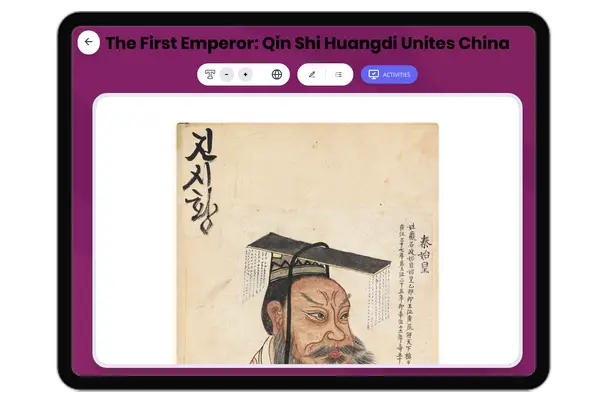
The First Emperor: Qin Shi Huangdi Unites China
This comprehensive reading passage explores the rise of Qin Shi Huangdi, the first emperor who united ancient China. Stu...
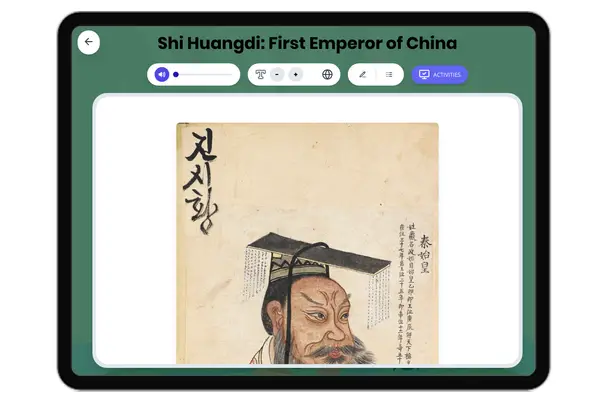
Shi Huangdi: First Emperor of China
This rigorous history reading passage explores the remarkable reign of Shi Huangdi, the first emperor of China, and his ...
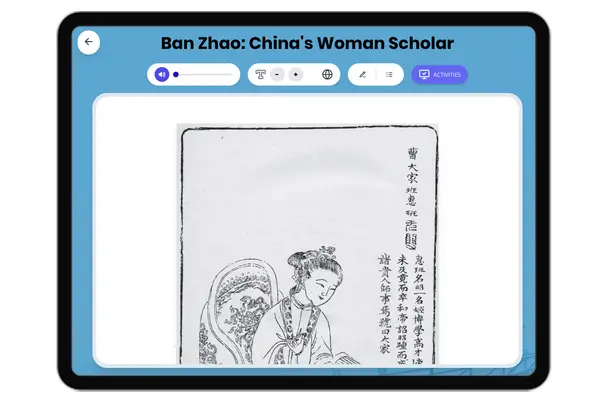
Ban Zhao: China's Woman Scholar
This passage explores the life and legacy of Ban Zhao, one of ancient China's most respected scholars and the author of ...
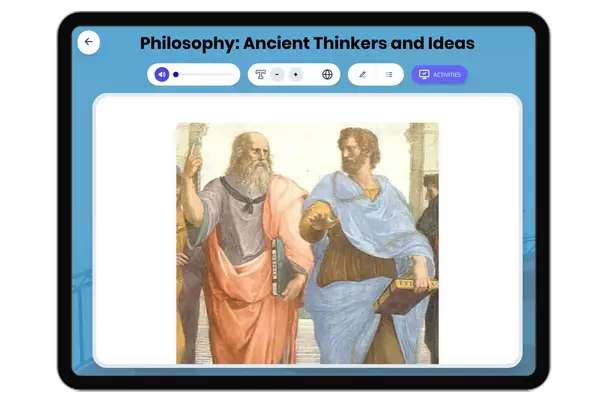
Ancient Philosophy
This reading passage takes students on a journey through the philosophical traditions of ancient Greece, India, and Chin...
Ancient Literature
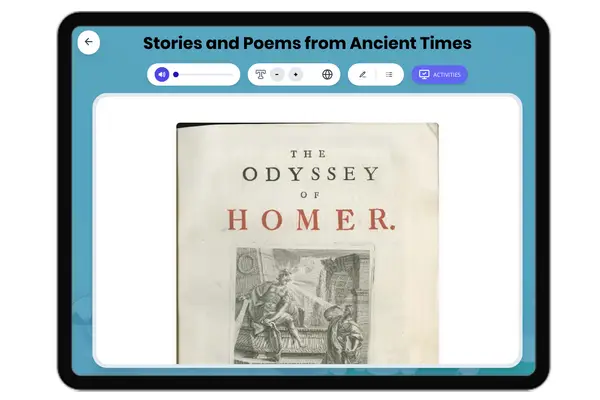
This passage explores the importance of ancient stories and poems from civilizations such as Greece, India, and Israel. ...
Geography of Ancient Israel
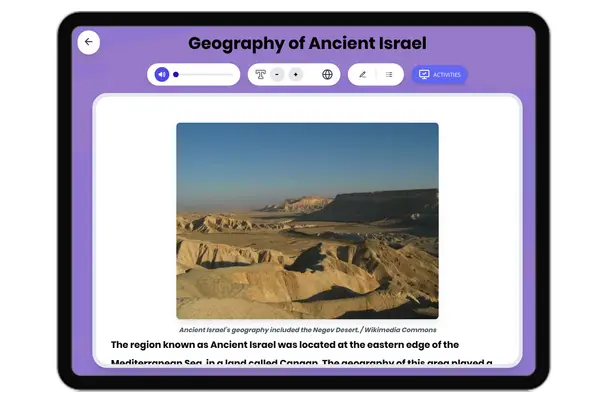
This passage explores the rich geography of Ancient Israel, focusing on how landforms, climate, and natural resources sh...
Ancient Money Barter
This passage explores the fascinating evolution from barter to the earliest coins in ancient civilizations, focusing on ...
Ancient Writing Systems
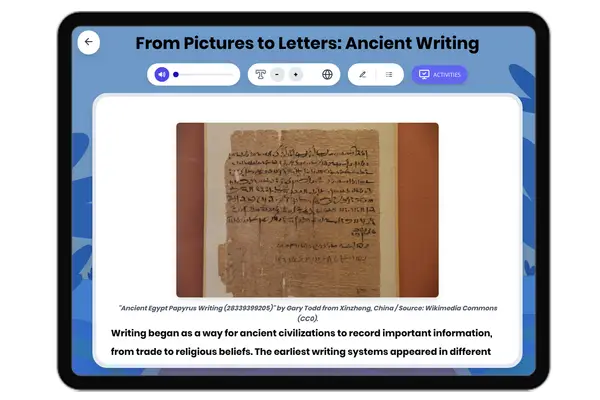
This engaging history reading passage explores the origins and evolution of ancient writing systems, including cuneiform...
Ancient Science and Medicine
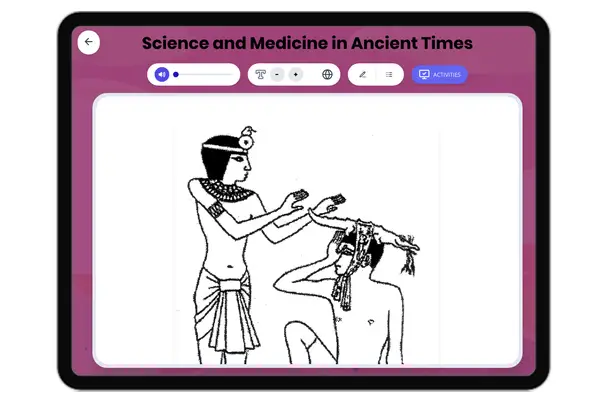
This comprehensive reading passage explores the development of science and medicine in ancient civilizations, including ...
Ancient Agriculture Farming
This passage explores the transformative impact of farming on ancient societies, examining how the Neolithic Revolution ...
Social structures in Ancient World
This passage explores the organization and significance of family life in ancient societies, focusing on how extended fa...
Ancient Mathematics
This passage explores the essential role of mathematics in ancient civilizations, including Mesopotamia, Egypt, Greece, ...
Trade Across Ancient India
This history reading passage explores Ancient India's trade networks and their impact on global connections. Students wi...