Temperate Rainforest Biome
Interactive passage with audio narration, comprehension questions, and printable PDF.
By completing this purchase you agree to our Terms of Use and Privacy Policy. Your subscription renews automatically until you cancel. You can cancel anytime from your account settings. All sales are final and non-refundable. Digital content is available for download in your account immediately upon purchase.
What's included
Temperate Rainforest Biome preview and details
About this printable Temperate Rainforest Biome science reading passage, NGSS-aligned (Grades 5-8)
Sample passage and quiz from Temperate Rainforest Biome
Reading passage and comprehension quiz preview
Temperate Rainforest Biome Features
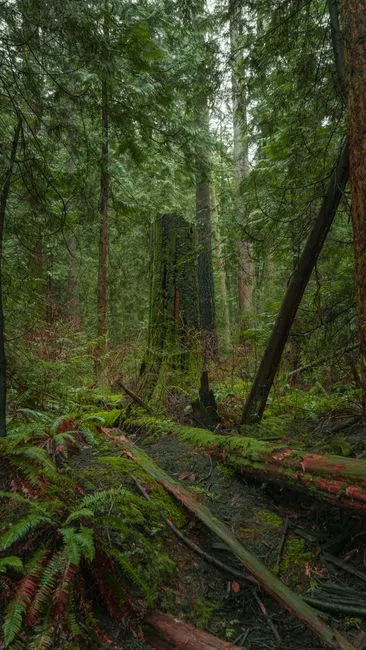
"Lush green forest in Vancouver's Pacific Spirit Regional Park with moss and ferns." by Malcolm Gillanders / Pexels.
The temperate rainforest is a type of biome found in areas with mild temperatures and high rainfall. Unlike tropical rainforests, temperate rainforests are cooler and are usually found near the coasts of continents. The Pacific Northwest in North America, parts of Chile, New Zealand, and Australia are examples of places with temperate rainforests.
One of the most important features of temperate rainforests is the large amount of precipitation. These forests receive between 140 and 167 centimeters of rain every year. The combination of lots of rain and cool temperatures creates a damp environment where many plants and animals thrive.
Trees in temperate rainforests can grow very tall. Common trees include conifers like Douglas fir, Sitka spruce, and western red cedar. These trees form a thick upper layer called the canopy. The canopy blocks sunlight from reaching the forest floor, so plants growing below must adapt to low light.
Mosses, ferns, and lichens cover the ground, tree trunks, and even branches. These plants are well-adapted to the moist conditions. Some animals, like the banana slug and the Roosevelt elk, are specially adapted to live in these forests. The cool, wet environment also allows for a lot of biodiversity, which means many different kinds of living things.
Plants and animals in temperate rainforests show many adaptations. For example, tree bark is often thick to protect against cold and animals have waterproof fur or feathers to stay dry. Some plants have leaves that can capture and hold onto water.
Temperate rainforests are important for people and the planet. They help store carbon dioxide, which slows down climate change. These forests also provide wood, medicines, and clean water. Many people visit temperate rainforests for hiking and to enjoy their beauty.
Interesting Fact: Some trees in the Pacific Northwest temperate rainforests can live for over 1,000 years!
Comprehension quiz (8 questions)
1. Where are temperate rainforests usually found?
2. What do temperate rainforests have a lot of?
3. Which tree is common in temperate rainforests?
4. Why do plants under the canopy adapt?
5. How do temperate rainforests slow climate change?
6. What adaptation helps animals stay dry?
7. Temperate rainforests have hot, dry climates.
8. What does biodiversity mean?
Perfect for the way you teach
- Build comprehension skills
- Auto-graded quiz
- Differentiated reading
- Read together at home
- Improve fluency
- Quiet reading time
- Reading curriculum support
- Independent practice
- Track Lexile growth