Temples and Tombs in Ancient Egypt — Reading Comprehension
Rate this
Premium Resource
Present
Present in classroom. No work saved
Assign
Classroom with student accounts, Track progress
Quick Play
No student accounts, assign with a link
Grades
5
6
7
8
PRINT+DIGITAL RESOURCE
This learning resource is available in interactive and printable formats. The interactive worksheet can be played online and assigned to students. The Printable PDF version can be downloaded and printed for completion by hand.
This passage explores the significance of temples and tombs in Ancient Egypt, focusing on their religious, social, and cultural roles. Students will learn how Egyptians built massive structures such as the Karnak Temple and the Pyramids of Giza to honor their gods and ensure the safe passage of pharaohs into the afterlife. The text examines the impact of geography on these architectural achievements, the connection to social hierarchy, and how archaeological discoveries like King Tutankhamun’s tomb inform our understanding today. Activities include a glossary, timelines, graphic organizers, and assessments aligned with CA HSS 6.2.3 and CCSS RI.6-8.1. This is a rigorous history reading passage with read aloud audio and Spanish translation for deeper engagement and accessibility.
CONTENT PREVIEW
Expand content preview
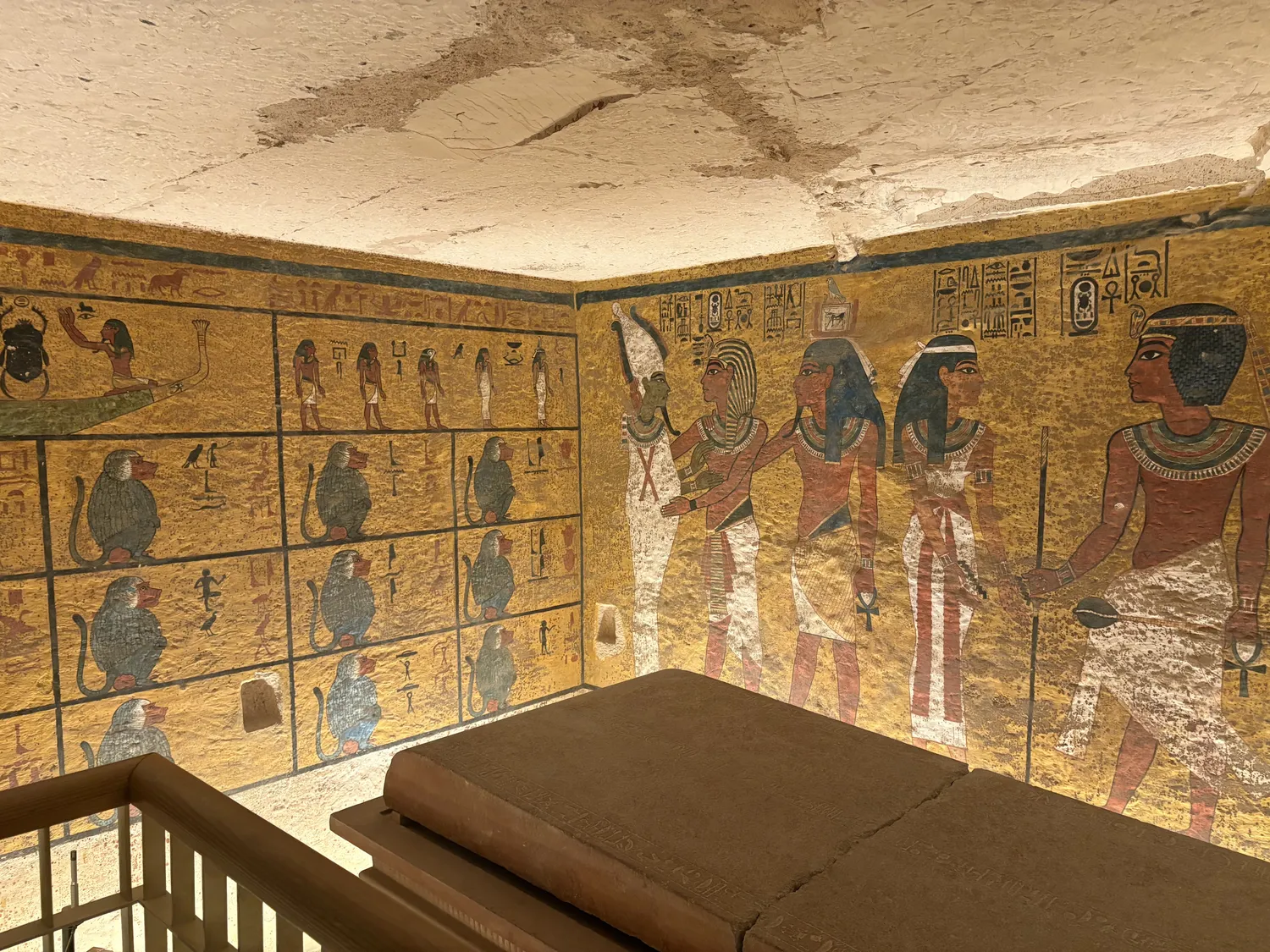
"KV62, Egypt 02" by Walaa/ Source: Wikimedia Commons (Public domain).
Ancient Egypt is famous for its enormous temples and tombs, which reveal much about its religion and society. Egyptians believed that gods controlled every part of their lives, from the flooding of the Nile to the success of their crops. Pharaohs, who were considered both kings and living gods, built massive structures to honor deities and to prepare for the afterlife. These buildings were not only places of worship or burial, but also symbols of Egypt’s wealth, power, and technological skill.
The most impressive religious structures were the temples. Temples, such as the Karnak Temple complex in Thebes (modern Luxor), were built to house the gods and serve as centers for rituals. Construction of Karnak began around 2000 BCE and continued for over 1,300 years, involving many different pharaohs. Inside, priests performed daily ceremonies, offered food, and burned incense to please the gods. Temples also acted as economic centers, controlling land, food storage, and even schools for scribes. Hieroglyphic carvings and wall paintings, many still visible today, detail these rituals and record the achievements of rulers like Ramses II. Archaeological discoveries, such as temple reliefs and statues, have provided direct evidence of these practices.
Egyptian tombs were equally significant. The most famous are the pyramids of Giza, built during the Old Kingdom (about 2600–2500 BCE). These enormous stone structures were designed as royal tombs to help pharaohs enter the afterlife. Egyptians believed that if the body and name of the dead were preserved, the spirit could live forever. Tombs were filled with treasures, food, and magical objects to aid the deceased. The discovery of King Tutankhamun’s tomb in 1922 by Howard Carter, filled with gold and artifacts, revealed the wealth and artistry of ancient Egypt. Even non-royal Egyptians built decorated tombs, showing family life, farming, and religious beliefs.
Both temples and tombs reflected Egypt’s social hierarchy. Only pharaohs and high officials could build massive stone monuments. Skilled artisans, laborers, and scribes worked together to create these wonders, showing the importance of teamwork and state organization. The location of these buildings was also significant. Most temples were built along the Nile, the lifeline of Egypt, while tombs were often placed on the desert’s edge to protect them from floods. Over time, temple and tomb design changed. Early tombs, called mastabas, were simple, but later pyramids and rock-cut tombs became more elaborate. This change reflected shifts in religious beliefs and advances in engineering.
Temples and tombs remain lasting symbols of Ancient Egypt’s beliefs, creativity, and social order. By studying these structures, historians and archaeologists gain insights into Egyptian religion, daily life, and the role of powerful rulers. The construction and preservation of these monuments have influenced world architecture and inspired people for thousands of years.
Temples and tombs connect to larger historical themes, such as the relationship between religion and government, the use of art and architecture to express power, and the influence of geography on civilization.
Interesting Fact: The Great Pyramid of Giza was the tallest man-made structure in the world for over 3,800 years!
Which temple was built in Thebes?
Karnak TempleAbu SimbelLuxor MuseumTemple of Artemis
Who was buried in pyramids?
PharaohsPriestsFarmersScribes
When was King Tutankhamun’s tomb found?
19222000 BCE1550 BCE2600 BCE
Why did Egyptians build tombs at the desert’s edge?
To avoid floodingCloser to godsEasier to decorateFor better sunlight
How did temples help Egypt’s economy?
Controlled land and food storageMade jewelry for tradeTrained soldiersBuilt boats
What was a mastaba?
Early flat-roofed tombLarge templePharaoh’s palaceBoat for the Nile
Temples were built along the Nile. True or false?
TrueFalse
What does 'afterlife' mean?
Life after deathChildhoodRiches and treasureA type of temple
Perfect For:
👩🏫 Teachers
• Reading comprehension practice
• Auto-graded assessments
• Literacy skill development
👨👩👧👦 Parents
• Reading practice at home
• Comprehension improvement
• Educational reading time
🏠 Homeschoolers
• Reading curriculum support
• Independent reading practice
• Progress monitoring
Reading Features:
📖
Reading Passage
Engaging fiction or nonfiction text
❓
Comprehension Quiz
Auto-graded questions
📊
Instant Feedback
Immediate results and scoring
📄
Printable Version
Download for offline reading
🔊
Read Aloud
Voice-over with word highlighting
Reviews & Ratings
No reviews yet. Be the first to share your experience!
Related Content
Geography of Ancient Egypt
This passage explores the vital role of geography in the rise of Ancient Egypt, focusing on the importance of the Nile R...
The Decline of Ancient Egypt
This detailed passage examines the decline of Ancient Egypt, exploring the complex causes behind the fall of one of hist...
Daily Life in Ancient Egypt
Explore the fascinating world of daily life in Ancient Egypt with this comprehensive history reading passage. Students w...
Egypt Kush Trade
This engaging history reading passage explores the complex trade networks that connected Ancient Egypt, Kush, and region...
6.2.3RH.6-8.1RH.6-8.4RH.6-8.7
New Kingdom Egypt
This engaging history reading passage explores the rise of Ancient Egypt during the New Kingdom, when Egypt became a pow...
CA HSS 6.2RH.6-8.2WHST.6-8.2
Evidence in Ancient History
This engaging history reading passage investigates how archaeologists and historians discover clues about how ancient pe...
Why Egypt Wanted Nubian Gold
This engaging passage explores the relationship between Ancient Egypt and the Kingdom of Kush (Nubia), focusing on why t...
How Pharaohs Governed Egypt
This history reading passage explores how Ancient Egypt was governed, highlighting the roles of the pharaoh, vizier, off...
Art and Architecture in Ancient Egypt
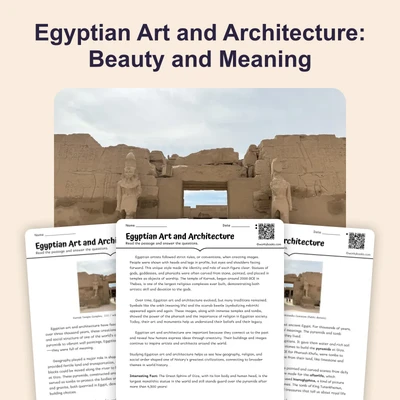
This passage explores the beauty and meaning behind Egyptian art and architecture, from the grand pyramids to detailed t...
King Narmer Unifies Egypt
This engaging history reading passage explores the unification of Ancient Egypt under King Narmer, focusing on the signi...
Ancient Egyptian Afterlife
This engaging history reading passage explores ancient Egyptian beliefs about the afterlife and the construction of the ...
CA HSS 6.2RH.6-8.1RH.6-8.4
Ancient Theocracy
This engaging history reading passage explores the concept of theocracy in ancient civilizations, where priests and reli...
Ancient Mathematics
This passage explores the essential role of mathematics in ancient civilizations, including Mesopotamia, Egypt, Greece, ...
Ancient Monarchy
This reading passage explores the concept of monarchy in ancient civilizations, focusing on the origins, structure, and ...
Women in Ancient Societies
This reading passage explores the complex roles of women in the ancient world, focusing on civilizations such as Mesopot...
Ancient Science and Medicine
This comprehensive reading passage explores the development of science and medicine in ancient civilizations, including ...
Kush Conquers Egypt
This reading passage explores the fascinating period when the Kingdom of Kush, located in Nubia south of Egypt, conquere...
Slavery in Ancient World
This passage explores the complex history of slavery in the ancient world, examining its presence in societies such as M...
Ancient Civilizations and the Environment
This engaging history reading passage explores how ancient civilizations such as Mesopotamia, Egypt, and the Maya adapte...