Kush Conquers Egypt
Interactive passage with audio narration, comprehension questions, and printable PDF.
By completing this purchase you agree to our Terms of Use and Privacy Policy. Your subscription renews automatically until you cancel. You can cancel anytime from your account settings. All sales are final and non-refundable. Digital content is available for download in your account immediately upon purchase.
What's included
Kush Conquers Egypt preview and details
About this printable Kush Conquers Egypt reading passage (Grades 5-8)
Sample passage and quiz from Kush Conquers Egypt
Reading passage and comprehension quiz preview
Kush Conquers Egypt
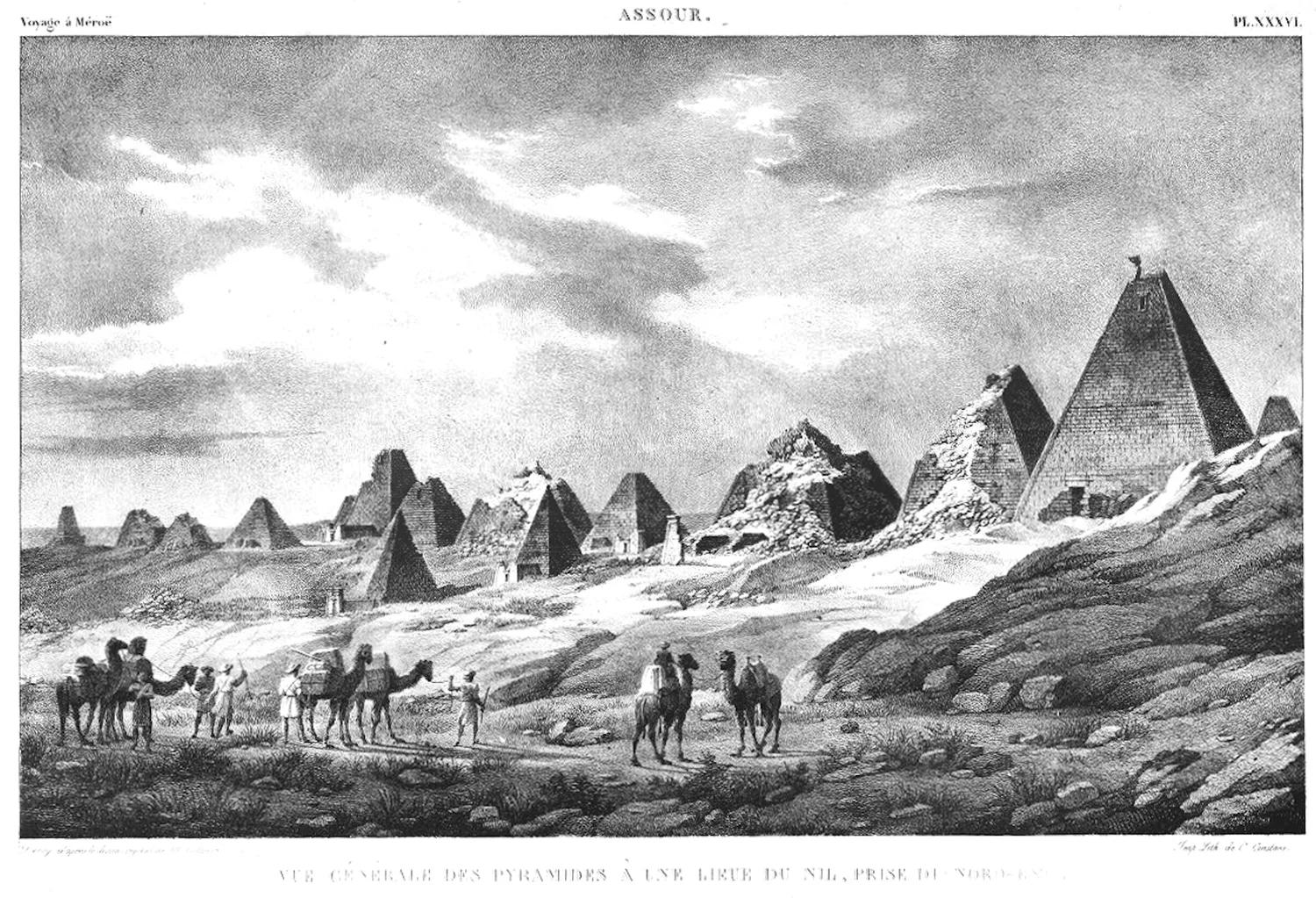
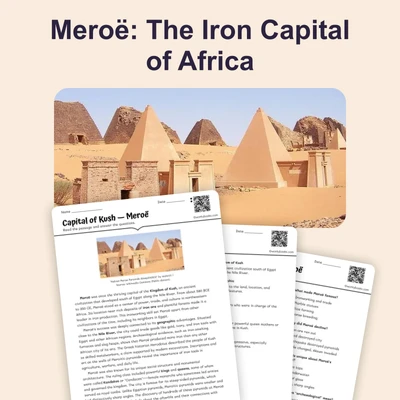
"Nubian pyramids of Meroe in 1821" by Cailliaud, Frédéric in 1826 / Wikimedia Commons
The Kingdom of Kush was a powerful ancient civilization located in Nubia, south of Egypt. In the 8th century BCE, Kush rose to great prominence by conquering Egypt and establishing the 25th Dynasty, also known as the “Kushite Dynasty.” This era marked a remarkable time when rulers from a different land controlled the legendary civilization of the pharaohs.
The story of Kush’s conquest begins with King Piye, who ruled from his capital at Napata. Around 750 BCE, Egypt was divided into several rival kingdoms. Piye saw an opportunity to unite the region under his authority. He led a successful military campaign into Egypt, as described in the famous “Stele of Piye,” a stone monument that records his victories and demands for loyalty. Archaeologists have found evidence of Kushite control in art, statues, and temples built during this period. Piye respected Egyptian traditions, presenting himself as a true pharaoh and restoring ancient religious practices in the temples of Thebes.
Under Kushite rule, Egypt experienced both change and continuity. The Kushite pharaohs, including Piye’s brother Shabaka and his successors, built pyramids in Nubia that resembled Egyptian styles but had unique features. They revived the worship of the god Amun and supported the powerful priesthood at Thebes. At the same time, they brought Nubian traditions and art into Egyptian society. This blend is seen in royal statues and inscriptions that combine Egyptian and Nubian features. The Kushite rulers tried to strengthen Egypt against external threats, especially from the growing Assyrian Empire to the northeast.
The 25th Dynasty eventually faced challenges from the Assyrians, who invaded Egypt around 671 BCE. The Kushite pharaohs retreated back to Nubia, but their impact on Egyptian history remained significant. They had restored unity to Egypt after centuries of division and left behind monuments and texts that celebrated their rule. Today, the pyramids of Nubia and the records of Piye’s victories help scholars understand this period of cross-cultural exchange.
The Kushite conquest of Egypt shows how geography, military strategy, and cultural exchange shape history. It connects to broader themes in ancient history, such as the rise and fall of empires and the blending of civilizations.
Interesting Fact: The pyramids of Nubia built by Kushite rulers are smaller and steeper than those in Egypt, and there are more of them in Sudan than in all of Egypt!
Comprehension quiz (8 questions)
1. Who was the first Kushite ruler of Egypt?
2. Where was the Kingdom of Kush located?
3. What is the Stele of Piye?
4. Why did Piye invade Egypt?
5. How did Kushite rulers show respect for Egyptian culture?
6. What did the Kushite pharaohs try to protect Egypt from?
7. The 25th Dynasty was the first time Nubians ruled Egypt. True or false?
8. What does 'continuity' mean in the passage?
Perfect for the way you teach
- Build comprehension skills
- Auto-graded quiz
- Differentiated reading
- Read together at home
- Improve fluency
- Quiet reading time
- Reading curriculum support
- Independent practice
- Track Lexile growth