How Pharaohs Governed Egypt — Reading Comprehension
Rate this
Premium Resource
Present
Present in classroom. No work saved
Assign
Classroom with student accounts, Track progress
Quick Play
No student accounts, assign with a link
Grades
5
6
7
8
PRINT+DIGITAL RESOURCE
This learning resource is available in interactive and printable formats. The interactive worksheet can be played online and assigned to students. The Printable PDF version can be downloaded and printed for completion by hand.
This history reading passage explores how Ancient Egypt was governed, highlighting the roles of the pharaoh, vizier, officials, and scribes. Students will learn about the social hierarchy, how government was organized, and the ways Egyptian society depended on record-keeping and law. The passage uses vocabulary and concepts appropriate for students studying world history, and includes references to archaeological evidence and primary sources. Engaging activities include a multiple-choice quiz, writing prompts, a glossary, graphic organizers, and a timeline of key events. The passage is available in both English and Spanish and features read aloud audio. This content aligns with CA HSS 6.2.3 and CCSS RI.6.3, making it ideal for classrooms focused on ancient civilizations and critical reading skills.
CONTENT PREVIEW
Expand content preview
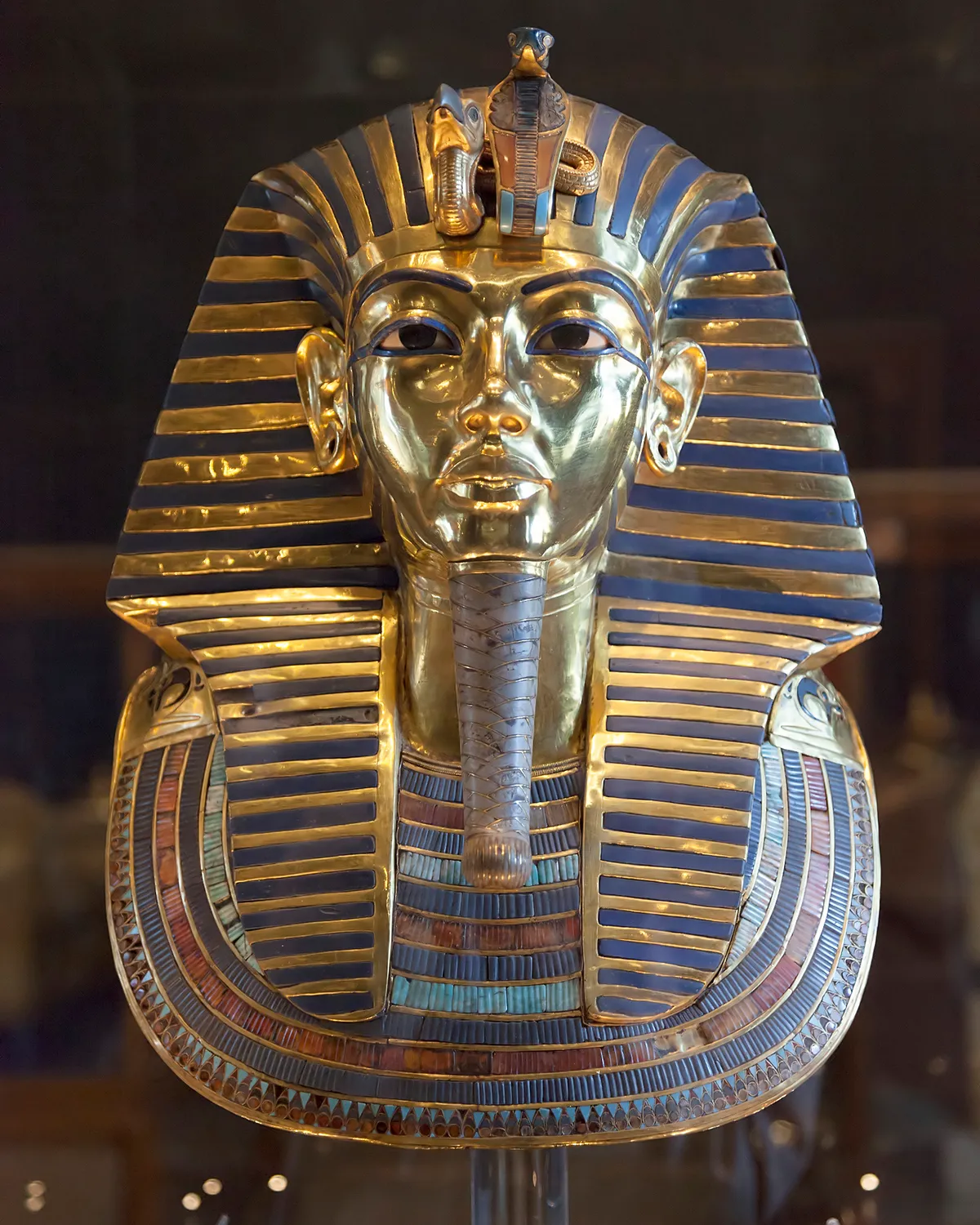
CairoEgMuseumTaaMaskMostlyPhotographed.jpg Source: Wikimedia Commons - Roland Unger
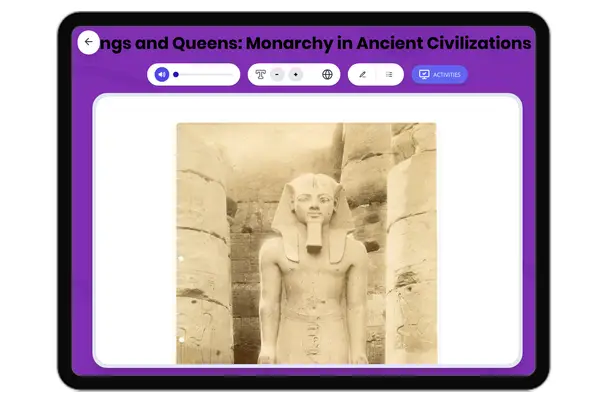
Ancient Egypt was organized under a highly structured system of government that lasted for over 3,000 years, from about 3100 BCE to 30 BCE. At the top of this system was the pharaoh, who was considered both a political leader and a living god. The pharaoh’s authority stretched across the land, from the capital city of Memphis to the smallest farming villages along the Nile River.
The pharaoh ruled with absolute power, but governing such a vast and complex society required a network of officials. The most important of these was the vizier, who acted as the pharaoh’s chief advisor and head of administration. The vizier supervised other officials, collected taxes, managed state projects, and oversaw justice. One ancient inscription from the tomb of the vizier Rekhmire (around 1450 BCE) describes his duties as “overseer of all the king’s works,” showing how central this role was to Egyptian government.
Beneath the vizier were governors, called nomarchs, who managed different regions known as nomes. Each nomarch was responsible for collecting grain, organizing labor for irrigation and building, and maintaining order. Archaeologists have found clay tablets and wall paintings in tombs at Saqqara and Thebes that show officials recording harvests and distributing food. These records reveal that Egypt’s government relied heavily on bureaucracy, a system where officials, rather than elected leaders, managed day-to-day affairs.
Scribes played a critical role in Egyptian government. They were trained to read and write hieroglyphs, the ancient Egyptian writing system. Scribes kept records of taxes, laws, trade, and even military orders. One famous example is the Rosetta Stone, which helped scholars decode Egyptian hieroglyphs. Scribes, who came from respected families, formed a class of educated people essential to the running of the state. Without their work, the pharaoh’s orders could not be communicated or enforced throughout the kingdom.
Egypt’s government was closely tied to its social structure. Most people were farmers or laborers, but the system allowed some, like scribes, to rise in status through education. Religion was also deeply connected to government, as the pharaoh was seen as the link between the gods and the people. This connection justified the pharaoh’s rule and helped maintain stability over centuries. Over time, the system adapted to new challenges, such as foreign invasions or droughts, but the core structure of centralized authority and detailed record-keeping remained strong.
The organization of Ancient Egypt’s government shaped daily life, economic growth, and the development of one of the world’s earliest civilizations. By understanding how this system worked, historians gain insight into the achievements and endurance of Egyptian society.
Interesting Fact: Ancient Egyptian scribes used reed brushes and ink made from soot and plants to record important information on papyrus scrolls. This study of government in Ancient Egypt connects to broader themes of social organization, leadership, and the ways geography shapes history.
Who was at the top of Egypt's government?
PharaohVizierScribeNomarch
What was the role of the vizier?
Chief advisorFarmerSoldierPriest
What did scribes use to write?
Papyrus and inkStone tabletsClay potsWooden sticks
Why were scribes important in Egypt?
They recorded taxes and lawsThey built pyramidsThey farmed landThey led armies
What effect did geography have on Egypt's government?
It needed organized managementIt caused warsIt made farming impossibleIt stopped trade
How did religion support the pharaoh's power?
Pharaoh was seen as a godPharaoh was a farmerPharaoh was a soldierPharaoh was a builder
The vizier was a military leader. True or false?
TrueFalse
What does 'hieroglyphs' mean?
Egyptian writing systemA kind of foodA riverA building
Perfect For:
👩🏫 Teachers
• Reading comprehension practice
• Auto-graded assessments
• Literacy skill development
👨👩👧👦 Parents
• Reading practice at home
• Comprehension improvement
• Educational reading time
🏠 Homeschoolers
• Reading curriculum support
• Independent reading practice
• Progress monitoring
Reading Features:
📖
Reading Passage
Engaging fiction or nonfiction text
❓
Comprehension Quiz
Auto-graded questions
📊
Instant Feedback
Immediate results and scoring
📄
Printable Version
Download for offline reading
🔊
Read Aloud
Voice-over with word highlighting
Reviews & Ratings
No reviews yet. Be the first to share your experience!
Related Content
Geography of Ancient Egypt
This passage explores the vital role of geography in the rise of Ancient Egypt, focusing on the importance of the Nile R...
The Decline of Ancient Egypt
This detailed passage examines the decline of Ancient Egypt, exploring the complex causes behind the fall of one of hist...
Daily Life in Ancient Egypt
Explore the fascinating world of daily life in Ancient Egypt with this comprehensive history reading passage. Students w...
Temples and Tombs in Ancient Egypt
This passage explores the significance of temples and tombs in Ancient Egypt, focusing on their religious, social, and c...
The Afterlife in Ancient Egypt
This engaging history reading passage explores ancient Egyptian beliefs about the afterlife and the construction of the ...
Trade Networks: Connecting Egypt, Kush, and Beyond
This engaging history reading passage explores the complex trade networks that connected Ancient Egypt, Kush, and region...
Evidence in Ancient History
This engaging history reading passage investigates how archaeologists and historians discover clues about how ancient pe...
Why Egypt Wanted Nubian Gold
This engaging passage explores the relationship between Ancient Egypt and the Kingdom of Kush (Nubia), focusing on why t...
Art and Architecture in Ancient Egypt
This passage explores the beauty and meaning behind Egyptian art and architecture, from the grand pyramids to detailed t...
King Narmer Unifies Egypt
This engaging history reading passage explores the unification of Ancient Egypt under King Narmer, focusing on the signi...
Ancient Theocracy
This engaging history reading passage explores the concept of theocracy in ancient civilizations, where priests and reli...
Ancient Mathematics
This passage explores the essential role of mathematics in ancient civilizations, including Mesopotamia, Egypt, Greece, ...
Ancient Monarchy
This reading passage explores the concept of monarchy in ancient civilizations, focusing on the origins, structure, and ...
Women in Ancient Societies
This reading passage explores the complex roles of women in the ancient world, focusing on civilizations such as Mesopot...
Kush Conquers Egypt
This reading passage explores the fascinating period when the Kingdom of Kush, located in Nubia south of Egypt, conquere...
Ancient Science and Medicine
This comprehensive reading passage explores the development of science and medicine in ancient civilizations, including ...
Slavery in Ancient World
This passage explores the complex history of slavery in the ancient world, examining its presence in societies such as M...
Ancient Agriculture Farming
This passage explores the transformative impact of farming on ancient societies, examining how the Neolithic Revolution ...
Ancient Civilizations and the Environment
This engaging history reading passage explores how ancient civilizations such as Mesopotamia, Egypt, and the Maya adapte...