Art and Architecture in Ancient Egypt
Interactive passage with audio narration, comprehension questions, and printable PDF.
By completing this purchase you agree to our Terms of Use and Privacy Policy. Your subscription renews automatically until you cancel. You can cancel anytime from your account settings. All sales are final and non-refundable. Digital content is available for download in your account immediately upon purchase.
What's included
Art and Architecture in Ancient Egypt preview and details
About this printable Art and Architecture in Ancient Egypt reading passage (Grades 5-8)
Sample passage and quiz from Art and Architecture in Ancient Egypt
Reading passage and comprehension quiz preview
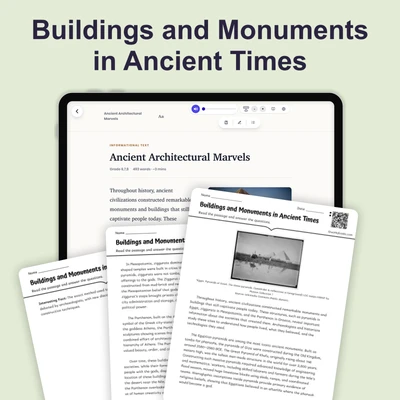
Egyptian Art and Architecture
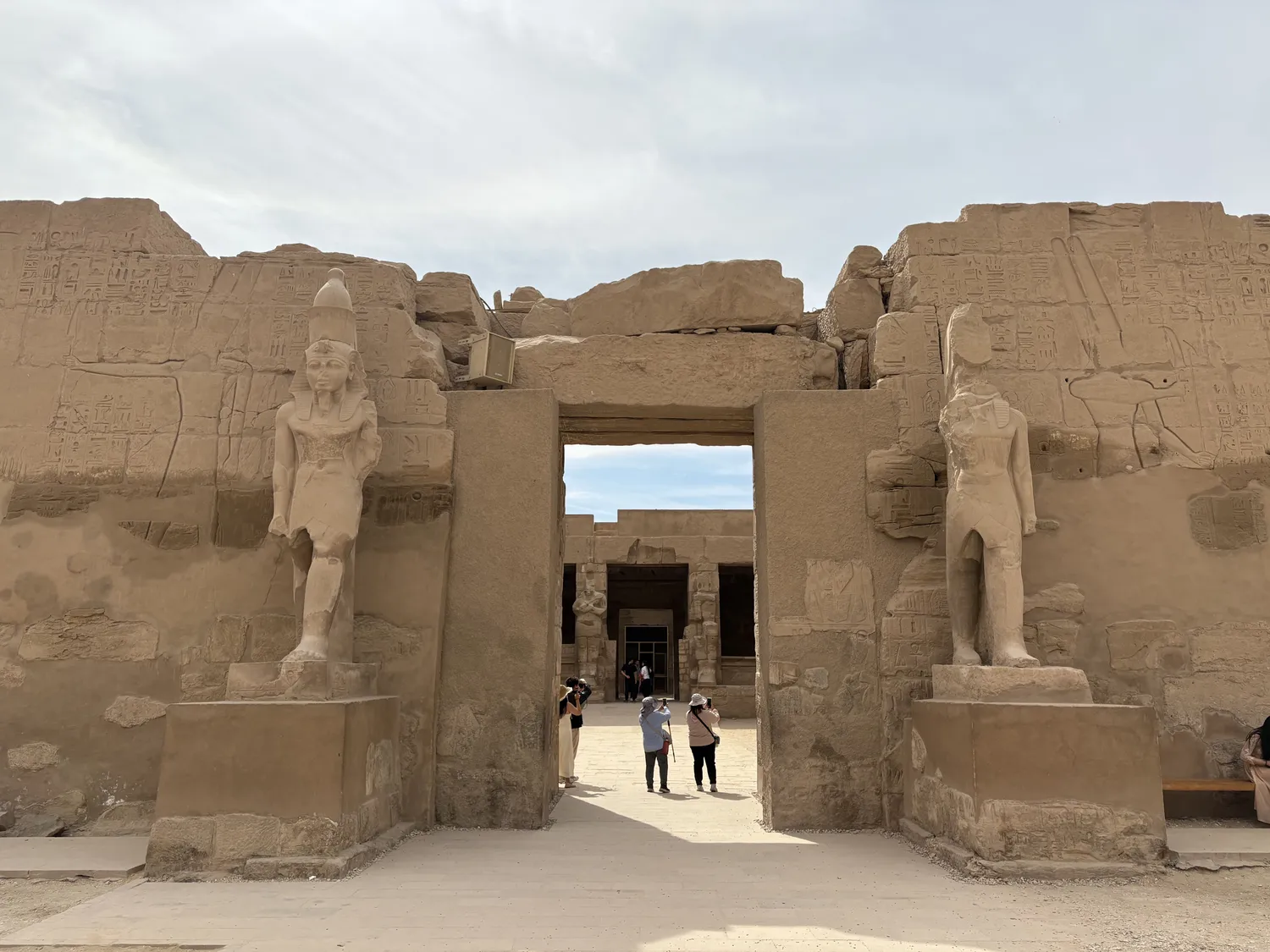
Karnak Temple Complex, ولاء / Wikimedia Commons (Public domain).
Egyptian art and architecture have fascinated historians for centuries. Spanning over three thousand years, these creations reveal much about the beliefs, daily life, and social structure of one of the world’s oldest civilizations. From the monumental pyramids to vibrant wall paintings, Egyptian art and buildings were not just beautiful—they were full of meaning.
Geography played a major role in shaping Egyptian architecture. The Nile River provided fertile land and transportation, which allowed cities to flourish. Large stone blocks could be moved along the river to build massive monuments, like the pyramids at Giza. These pyramids, constructed around 2580–2560 BCE for Pharaoh Khufu, served as tombs to protect the bodies and spirits of the rulers. The use of limestone and granite, both quarried in Egypt, demonstrates how natural resources influenced building choices.
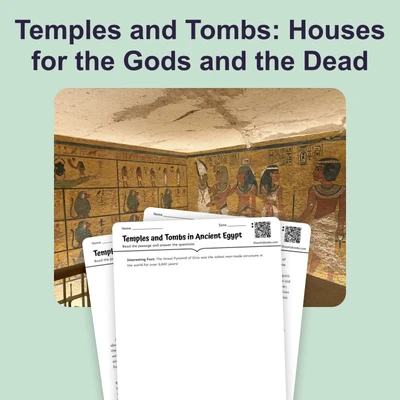
The art found inside tombs and temples tells us about daily life, religion, and the values of Egyptians. Wall paintings, often created for the afterlife, depict scenes of farming, hunting, and religious ceremonies. Hieroglyphic writing, a system of symbols and pictures, was used to record important events and names. For example, the tomb of Tutankhamun (discovered in 1922 in the Valley of the Kings) contains colorful paintings, golden treasures, and detailed carvings, offering insight into royal life and funerary practices.
Egyptian artists followed strict rules, or conventions, when creating images. People were shown with heads and legs in profile, but eyes and shoulders facing forward. This unique style made the identity and role of each figure clear. Statues of gods, goddesses, and pharaohs were often carved from stone, painted, and placed in temples as objects of worship. The temple of Karnak, begun around 2000 BCE in Thebes, is one of the largest religious complexes ever built, demonstrating both artistic skill and devotion to the gods.
Over time, Egyptian art and architecture evolved, but many traditions remained. Symbols like the ankh (meaning life) and the scarab beetle (symbolizing rebirth) appeared again and again. These images, along with immense temples and tombs, showed the power of the pharaoh and the importance of religion in Egyptian society. Today, their art and monuments help us understand their beliefs and their legacy.
Egyptian art and architecture are important because they connect us to the past and reveal how humans express ideas through creativity. Their buildings and images continue to inspire artists and architects around the world.
Studying Egyptian art and architecture helps us see how geography, religion, and social order shaped one of history’s greatest civilizations, connecting to broader themes in world history.
Interesting Fact: The Great Sphinx of Giza, with its lion body and human head, is the largest monolithic statue in the world and still stands guard over the pyramids after more than 4,500 years!
Comprehension quiz (8 questions)
1. Who built the Great Pyramid at Giza?
2. What river helped Egyptians build monuments?
3. What is hieroglyphics?
4. Why did Egyptians build pyramids?
5. What does the ankh symbol mean?
6. How did geography affect Egyptian building?
7. Egyptian art used strict rules. True or false?
8. What is a 'pharaoh'?
Perfect for the way you teach
- Build comprehension skills
- Auto-graded quiz
- Differentiated reading
- Read together at home
- Improve fluency
- Quiet reading time
- Reading curriculum support
- Independent practice
- Track Lexile growth