This learning resource is available in interactive and printable formats. The interactive worksheet can be played online and assigned to students. The Printable PDF version can be downloaded and printed for completion by hand.
This engaging passage explores the relationship between Ancient Egypt and the Kingdom of Kush (Nubia), focusing on why the Egyptians sought control over Nubia’s rich gold resources. Students will learn about the economic, cultural, and political connections between these two ancient civilizations. The text is aligned with CA HSS 6.2.3 and CCSS.ELA-LITERACY.RI.6.3, providing an in-depth look at how trade, geography, and human ambition shaped history. The passage draws on archaeological and primary sources, discusses the impact of Egyptian conquest on Kushite society, and examines the significance of gold in ancient economies. Included are a glossary, differentiated reading level, Spanish translation, a multiple-choice quiz, writing prompts, graphic organizers, and a relevant timeline. This resource is ideal for educators seeking standards-based content with read aloud audio and Spanish language support, promoting critical thinking and historical literacy.
CONTENT PREVIEW
Expand content preview
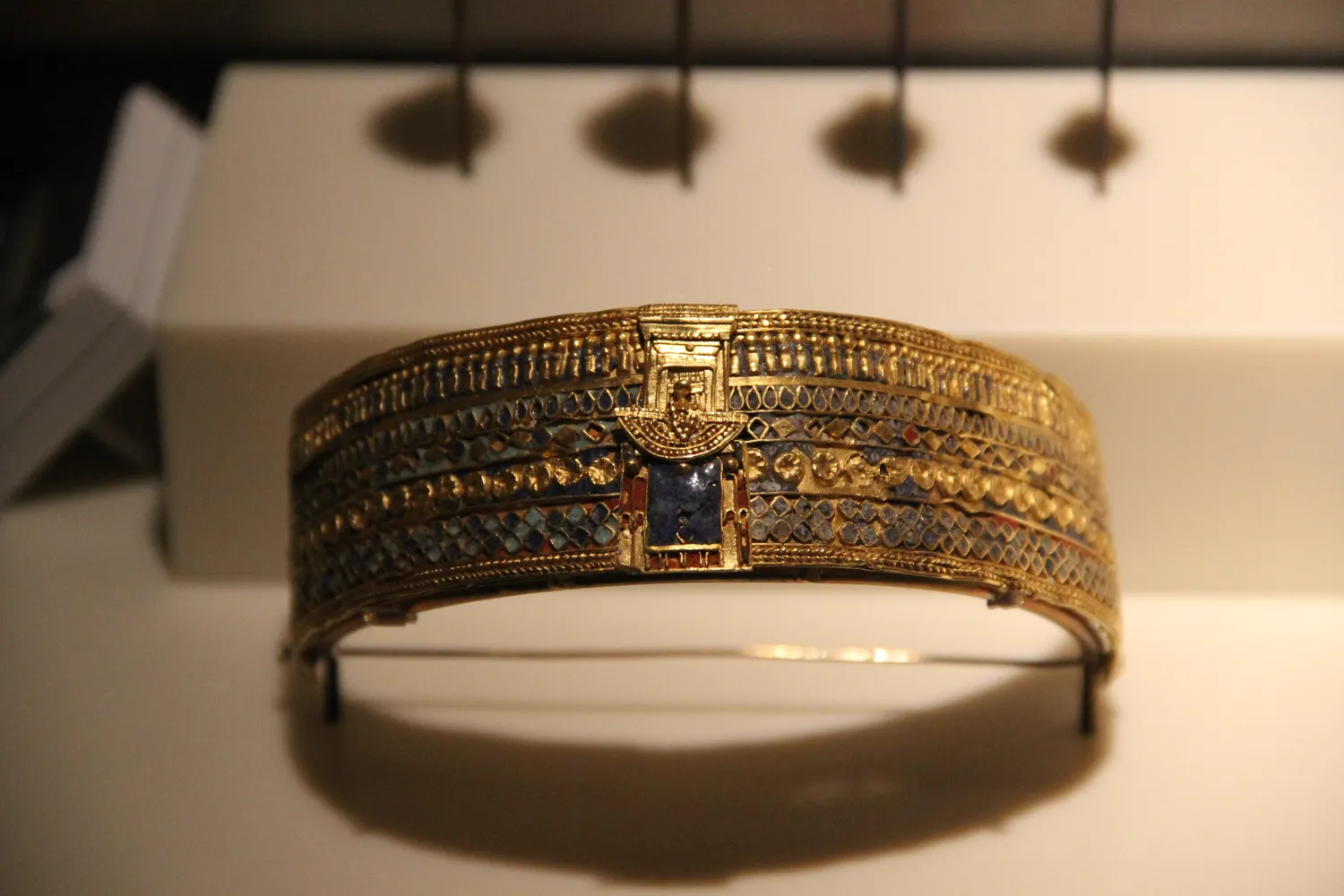
Ancient Egypt Gold Upper Arm Bracelet with the ram-headed god Amun in a shrine; from Meroë (Kingdom of Kush - Sudan), probably 1st Cent. BC by Gary Todd from Xinzheng, China / Wikimedia Commons (CC0).
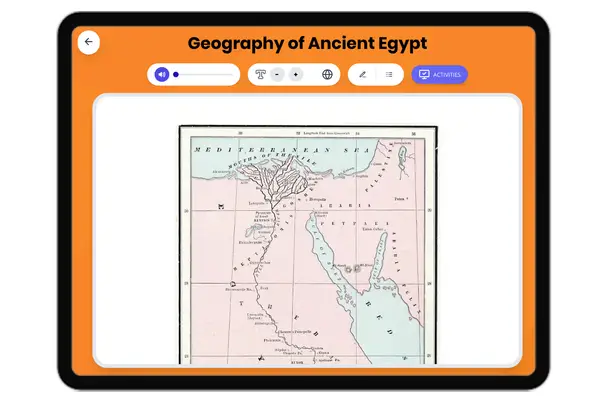
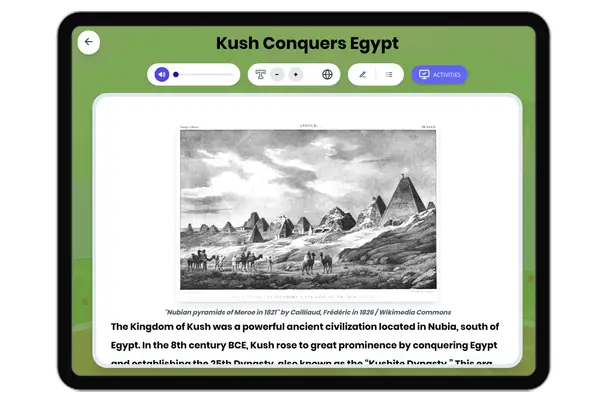
The Kingdom of Kush, also called Nubia, was a powerful civilization to the south of Ancient Egypt, located along the southern Nile River. The Egyptians first came into contact with Nubia around 2600 BCE. Over the centuries, Egypt became very interested in Kush because of its rich natural resources, especially gold. The desire for Nubia’s gold was a major reason why Egypt repeatedly tried to control the region.
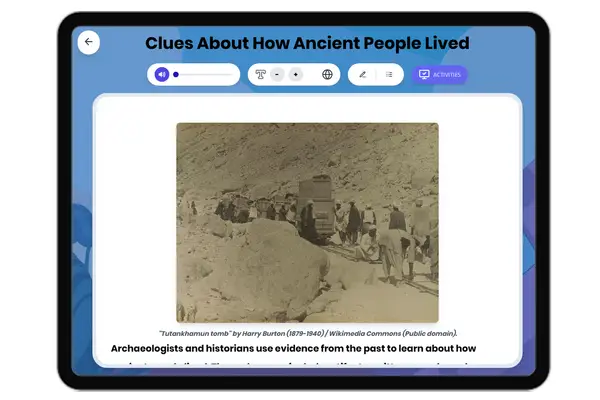
Kush was known for its abundant mineral resources. Gold was the most valuable, but Nubia also had copper, ebony, ivory, and precious stones. Ancient Egyptian texts, such as inscriptions from the reign of Pharaoh Thutmose III (ruled c. 1479–1425 BCE), describe military campaigns into Nubia to secure gold mines. Archaeological finds, like the gold artifacts from royal Nubian tombs at Kerma, provide evidence of the region’s wealth. Egyptians called Nubia “Ta-Sety,” meaning “Land of the Bow,” because Nubian archers were famous as warriors and sometimes served in Egyptian armies.
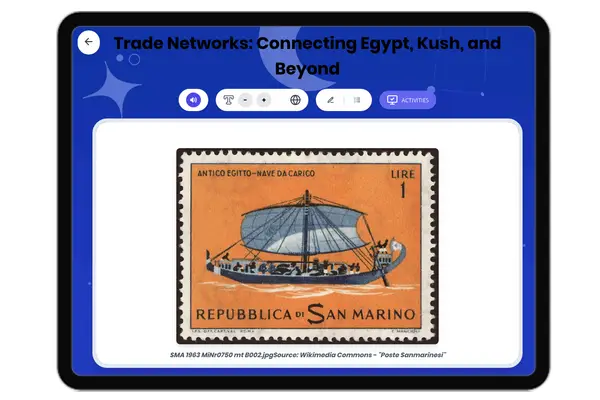
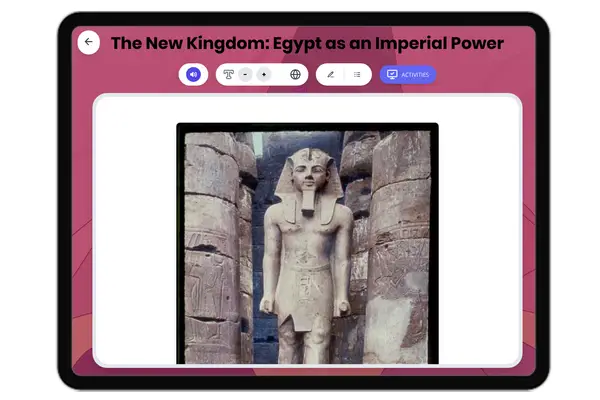
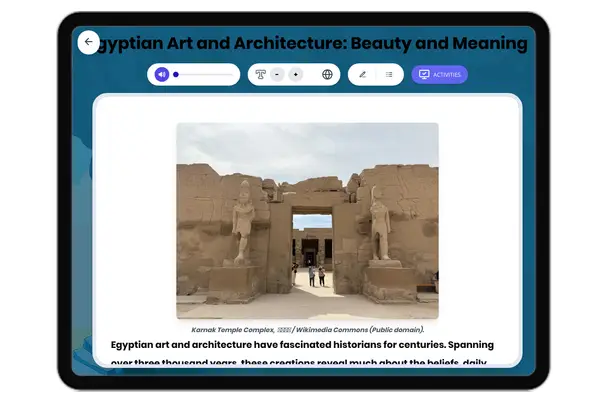
The geography of Nubia made it important for trade routes and military strategy. The Nile River linked Egypt and Nubia, allowing goods and ideas to travel between the two civilizations. Egyptian pharaohs built temples and fortresses at important sites like Buhen and Semna to control trade and protect against rebellion. Egypt’s conquest of Nubia began during the Middle Kingdom (c. 2050–1710 BCE) and intensified in the New Kingdom. By around 1500 BCE, Egypt ruled much of Nubia, sending officials and governors to manage resources and collect tribute. However, the Kushites kept their own traditions and sometimes resisted Egyptian rule.
Egyptian control over Kush brought both change and continuity. Nubian society adapted many Egyptian customs, such as religious beliefs, art styles, and writing (using hieroglyphs). At the same time, Kush kept its own leaders, language, and cultural practices. Later, when Egypt weakened, the Kingdom of Kush regained independence and even conquered Egypt for a time, founding the 25th Dynasty around 750 BCE.
The struggle for Nubian gold shaped the history of both civilizations. It influenced the social hierarchy in both Egypt and Nubia, as control over resources brought power and wealth. This story shows the importance of geography, trade, and human ambition in shaping ancient societies.
This topic connects to broader themes in world history, such as the impact of geography on civilizations and the causes and effects of cultural exchange and conquest.
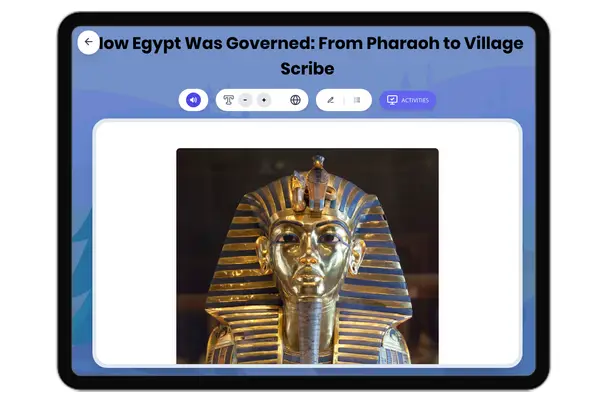
Interesting Fact: Ancient Nubian gold was so famous that some Egyptian pharaohs were buried wearing jewelry made from it, and Nubian gold was traded as far as Mesopotamia.