Tenochtitlán: City on a Lake — Reading Comprehension
Rate this
Premium Resource
Present
Present in classroom. No work saved
Assign
Classroom with student accounts, Track progress
Quick Play
No student accounts, assign with a link
Grades
5
6
7
8
PRINT+DIGITAL RESOURCE
This learning resource is available in interactive and printable formats. The interactive worksheet can be played online and assigned to students. The Printable PDF version can be downloaded and printed for completion by hand.
This comprehensive history reading passage explores the rise and significance of Tenochtitlán, the capital of the Aztec Empire built on Lake Texcoco. Students will learn about the city's geography, engineering, social hierarchy, and daily life, as well as how the Aztecs adapted to their environment. The passage aligns with CA HSS 6.7 and CCSS R.I.6-8, offering opportunities to analyze cause-and-effect relationships, evidence from primary and archaeological sources, and historical change over time. Activities include a glossary, timeline, multiple choice quiz, writing prompts, and graphic organizers. The resource also features a Spanish translation and read aloud audio, making it accessible and engaging for diverse learners. This passage helps students build historical thinking skills while connecting the story of Tenochtitlán to broader themes in world history.
CONTENT PREVIEW
Expand content preview
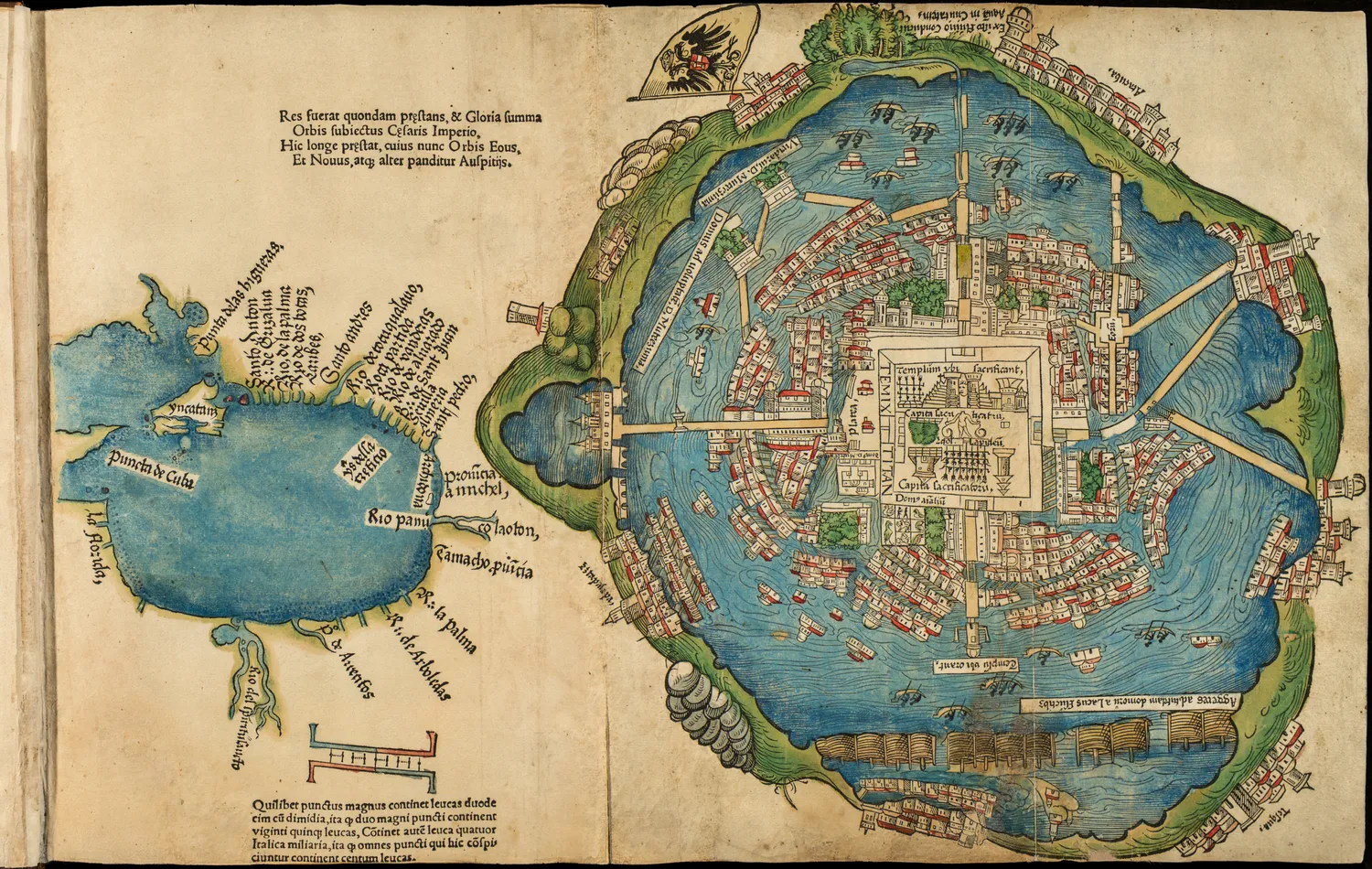
"Map of Tenochtitlan and Gulf of Mexico, 1524" by Hernán Cortés/ Wikimedia Commons
Tenochtitlán was the capital city of the Aztec Empire, founded around 1325 CE on an island in Lake Texcoco in what is now central Mexico. It became one of the largest and most advanced cities in the ancient Americas, with a population that may have reached 200,000 people. The city's geographic location on a lake shaped its development, as the Aztecs used innovative engineering to build and expand their city on water and marshland.
The Aztecs chose the site of Tenochtitlán based on a prophecy, which told them to settle where they saw an eagle sitting on a cactus with a snake in its beak. According to early Spanish accounts and archaeological evidence, the Aztecs built the city by driving wooden stakes into the lakebed and creating artificial islands called chinampas. These floating gardens allowed them to grow crops like maize, beans, and squash even in shallow waters. Dykes and causeways connected the city to the mainland, making transportation and trade possible.
Tenochtitlán's city planning was highly organized. The city's infrastructure included causeways, canals, aqueducts for fresh water, and grand temples such as the Templo Mayor. The city was divided into neighborhoods called calpulli, each with its own leaders and responsibilities. The social structure was a hierarchy, with the emperor (Huey Tlatoani) at the top, followed by nobles, priests, warriors, artisans, merchants, and farmers. Archaeological findings, such as the Map of Tenochtitlán and records from the Codex Mendoza, show the city's complex layout and provide details about daily life, taxes, and local markets.
Religion played a central role in Aztec society. The people of Tenochtitlán believed in many gods and performed rituals and ceremonies to honor them. The Templo Mayor, the main temple, was the site of important religious festivals and offerings. Spanish conqueror Hernán Cortés described in his letters the impressive architecture and bustling markets, noting that Tenochtitlán rivaled cities in Europe in size and complexity.
Tenochtitlán's success was closely tied to its ability to adapt to its environment through innovation and cooperation. However, the arrival of the Spanish in 1519 led to the city's downfall. By 1521, after a long siege, Tenochtitlán was destroyed, and the Spanish built Mexico City on its ruins. Despite this, the legacy of Tenochtitlán remains important for understanding the achievements of the Aztec civilization and the history of the Americas.
The story of Tenochtitlán connects to broader themes in world history, such as how people shape and are shaped by their environments, and how complex societies rise and fall.
Interesting Fact: The symbol of an eagle on a cactus, which guided the Aztecs to their city, is now featured on the national flag of Mexico.
When was Tenochtitlán founded?
1325 CE1200 CE1519 CE1521 CE
What was Tenochtitlán built on?
A mountainLake TexcocoA desertA forest
Who was at the top of Aztec society?
FarmersEmperorMerchantsPriests
Why did Aztecs build chinampas?
For defenseFor farmingFor ceremoniesFor trade
How did the Aztecs connect Tenochtitlán to land?
With bridges and causewaysWith tunnelsWith boats onlyWith mountains
What led to the fall of Tenochtitlán?
EarthquakeSpanish siegeFloodFamine
Tenochtitlán still exists today. True or false?
TrueFalse
What does 'hierarchy' mean?
System of roadsSocial rankingType of buildingReligious ceremony
Perfect For:
👩🏫 Teachers
• Reading comprehension practice
• Auto-graded assessments
• Literacy skill development
👨👩👧👦 Parents
• Reading practice at home
• Comprehension improvement
• Educational reading time
🏠 Homeschoolers
• Reading curriculum support
• Independent reading practice
• Progress monitoring
Reading Features:
📖
Reading Passage
Engaging fiction or nonfiction text
❓
Comprehension Quiz
Auto-graded questions
📊
Instant Feedback
Immediate results and scoring
📄
Printable Version
Download for offline reading
🔊
Read Aloud
Voice-over with word highlighting
Reviews & Ratings
No reviews yet. Be the first to share your experience!
Related Content
Evidence in Ancient History
This engaging history reading passage investigates how archaeologists and historians discover clues about how ancient pe...
Ancient Theocracy
This engaging history reading passage explores the concept of theocracy in ancient civilizations, where priests and reli...
Ancient Canaan
This educational passage explores the land of Canaan, the historical homeland of the ancient Israelites. Students will l...
Slavery in Ancient Rome and in the Americas
This educational passage examines the history of slavery in two distinct regions and eras: Ancient Rome and Colonial Ame...
The Americas: Developing in Isolation
This rigorous history reading passage explores how ancient civilizations in the Americas developed in isolation due to t...
Ancient Literature
This passage explores the importance of ancient stories and poems from civilizations such as Greece, India, and Israel. ...
Geography of Ancient Israel
This passage explores the rich geography of Ancient Israel, focusing on how landforms, climate, and natural resources sh...
Ancient Writing Systems
This engaging history reading passage explores the origins and evolution of ancient writing systems, including cuneiform...
Ancient Agriculture Farming
This passage explores the transformative impact of farming on ancient societies, examining how the Neolithic Revolution ...
Ancient Mathematics
This passage explores the essential role of mathematics in ancient civilizations, including Mesopotamia, Egypt, Greece, ...
Ancient Philosophy
This reading passage takes students on a journey through the philosophical traditions of ancient Greece, India, and Chin...
Ancient Athens Democracy
This history reading passage explores the origins and practice of direct democracy in Ancient Athens, one of the world's...
How Maize Transformed Life in the Americas
This passage explores the dramatic impact of maize (corn) on ancient civilizations throughout the Americas. Students wil...
Ancient Science and Medicine
This comprehensive reading passage explores the development of science and medicine in ancient civilizations, including ...
Ancient Monarchy
This reading passage explores the concept of monarchy in ancient civilizations, focusing on the origins, structure, and ...
Women in Ancient Societies
This reading passage explores the complex roles of women in the ancient world, focusing on civilizations such as Mesopot...
Geography of Ancient Egypt
This passage explores the vital role of geography in the rise of Ancient Egypt, focusing on the importance of the Nile R...
Ancient Money Barter
This passage explores the fascinating evolution from barter to the earliest coins in ancient civilizations, focusing on ...
Geography of Ancient Greece
This rigorous history reading passage explores 'The Geography of Ancient Greece,' examining how the region’s mountains, ...
Slavery in Ancient World
This passage explores the complex history of slavery in the ancient world, examining its presence in societies such as M...