The Desert Rain Frog's Ecosystem and Habitat — Reading Comprehension
Rate this
Premium Resource
Present
Present in classroom. No work saved
Assign
Classroom with student accounts, Track progress
Quick Play
No student accounts, assign with a link
Grades
6
PRINT+DIGITAL RESOURCE
This learning resource is available in interactive and printable formats. The interactive worksheet can be played online and assigned to students. The Printable PDF version can be downloaded and printed for completion by hand.
This educational passage, audio-integrated, delves into the fascinating world of the desert rain frog, exploring its unique ecosystem and habitat. Students will learn about this tiny frog's adaptations to survive in a harsh, sandy environment, specifically along the coast of Namibia and South Africa. The content helps second-grade learners understand animal diversity and how different creatures thrive in their specific habitats, aligning with NGSS 2-LS4-1, which focuses on observing plants and animals to compare the diversity of life. Key terms like 'ecosystem,' 'habitat,' 'nocturnal,' and 'burrow' are introduced and explained, making complex scientific concepts accessible. Through engaging text and interactive activities, children will compare the diversity of life in different habitats.
CONTENT PREVIEW
Expand content preview
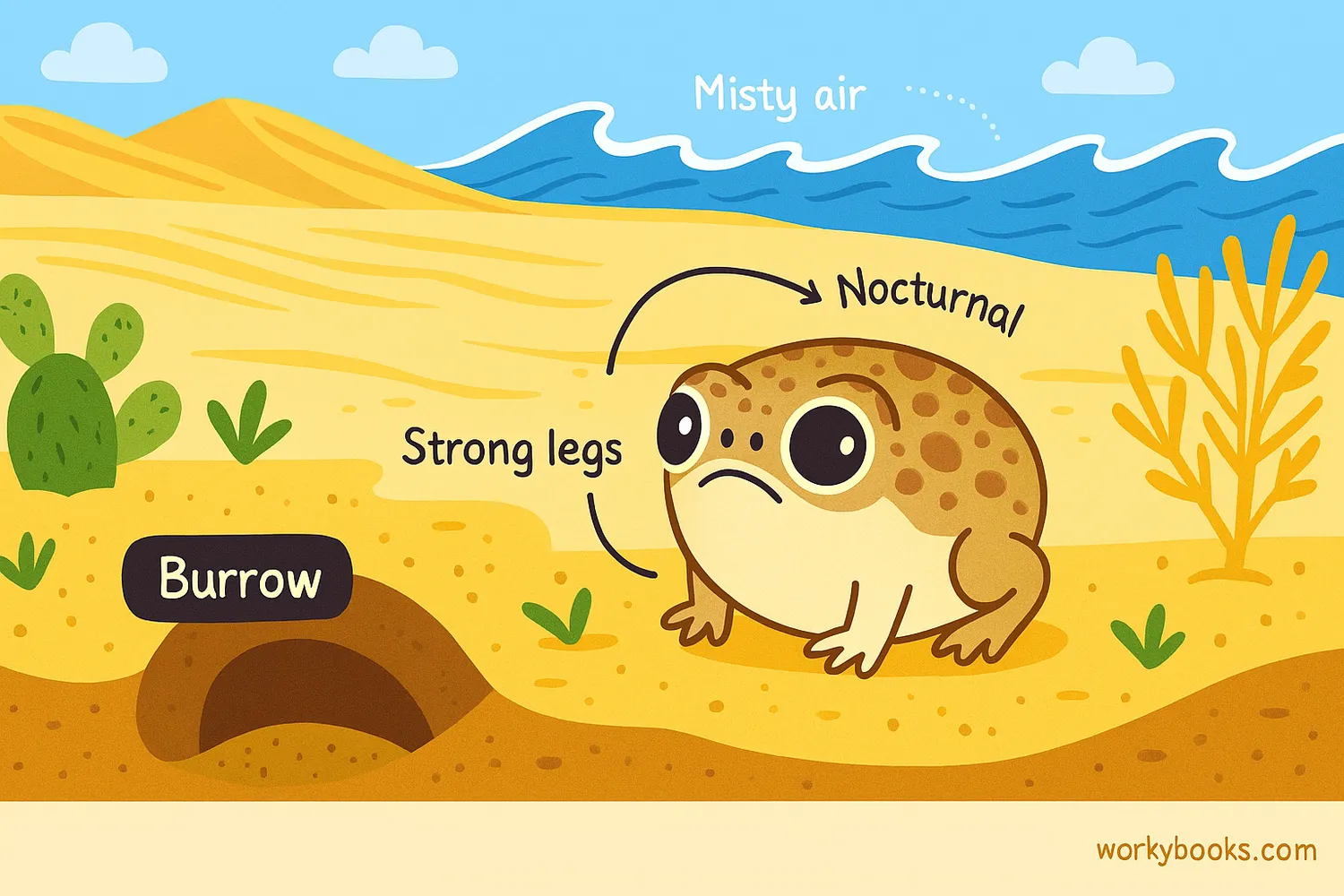
Desert rain frog digs burrow in coastal dunes, thriving in misty, sandy desert habitat.
Desert Rain Frog Habitat
The desert rain frog is a tiny, round frog found only in the sandy coastal dunes of Namibia and South Africa. This frog lives in a very unusual habitat: hot, dry land that is close to the ocean. Even though deserts usually have little water, this frog survives because of a special type of weather called fog.
Fog is made of tiny drops of water that roll in from the ocean onto the sand dunes. The desert rain frog does not need ponds or rivers to live. Instead, it gets water by absorbing moisture from the fog and from the humid sand. In this way, the frog uses fog like people use faucets for water!
To survive the heat, the desert rain frog is nocturnal. This means it comes out at night when it is cooler and the fog is thickest. During the hot day, the frog burrows deep into the sand. Burrowing keeps its body cool and moist. The round shape of the frog helps it store water, kind of like a camel’s hump stores fat and water.
The frog is only about 2 inches long, but it has a loud, squeaky 'war cry' that sounds just like a squeaky toy! It uses this noise to scare away predators like birds or snakes. Even though it is small, its voice can be surprising.
The desert rain frog eats insects and small bugs it finds in the sand. Its special adaptations help it find food and survive in a harsh environment.
But this tiny frog faces danger. Climate change and people building on the foggy coastline are destroying its habitat. Without fog and sand dunes, the desert rain frog cannot survive.
Interesting Fact: The desert rain frog’s squeaky call is so famous that videos of it have been watched by millions of people all over the world!
Where does the desert rain frog live?
Namibia and South AfricaNorth AmericaAsiaEurope
How does the frog get water?
Fog and wet sandDrinking from pondsEating plantsCatching rain
What does the frog eat?
Insects and small bugsFishGrassLeaves
Why is the frog nocturnal?
It is cooler at nightIt likes the sunTo find more foodTo sleep all day
What does the squeaky sound do?
Scares predatorsCalls for rainFinds foodBuilds burrows
What would happen if the fog disappeared?
Frog could not surviveFrog would grow biggerMore insects would appearFrog would turn green
The desert rain frog is only 2 inches long.
TrueFalse
What does 'nocturnal' mean?
Active at nightEats only plantsLives in waterHas no tail
Perfect For:
👩🏫 Teachers
• Reading comprehension practice
• Auto-graded assessments
• Literacy skill development
👨👩👧👦 Parents
• Reading practice at home
• Comprehension improvement
• Educational reading time
🏠 Homeschoolers
• Reading curriculum support
• Independent reading practice
• Progress monitoring
Reading Features:
📖
Reading Passage
Engaging fiction or nonfiction text
❓
Comprehension Quiz
Auto-graded questions
📊
Instant Feedback
Immediate results and scoring
📄
Printable Version
Download for offline reading
🔊
Read Aloud
Voice-over with word highlighting
Reviews & Ratings
No reviews yet. Be the first to share your experience!
Related Content
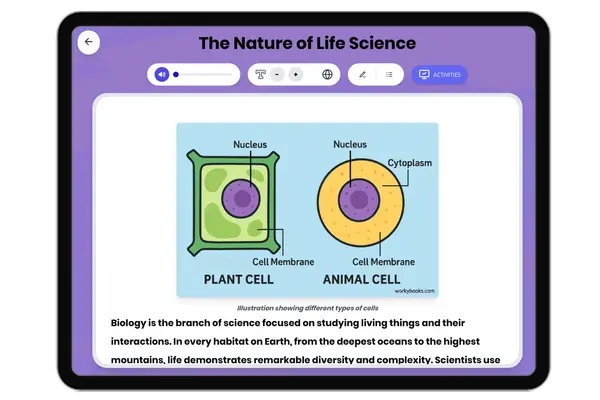
The Nature of Life Science
This passage, aligned with NGSS MS-LS1-1, introduces students in grades 6-8 to the foundational concepts of life science...
MS-LS1-1
Science Vocabulary
This worksheet on domain-specific words will help students learn some science vocabulary. Students will be asked to matc...
L.3.6L.3.4.A
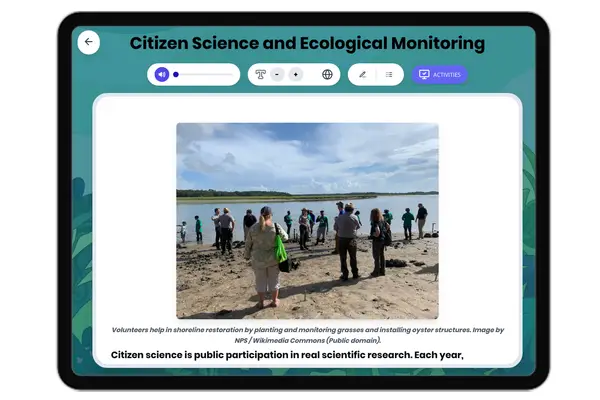
Citizen Science and Ecological Monitoring
This engaging passage for grades 6-8 introduces the concept of citizen science and its critical role in ecological monit...
MS-LS2-1
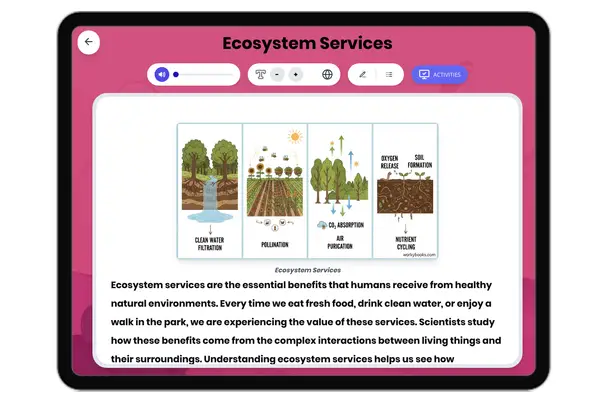
Ecosystem Services
This engaging middle school science passage introduces students to the concept of ecosystem services, the vital benefits...
MS-LS2-5MS-ESS3-3
Simple Machines Science Report
This science writing task requires students to clearly explain how three simple machines work using precise domain-speci...
W.5.4
Photosynthesis in Ecosystems
This comprehensive passage for grades 6-8 explores the fundamental role of photosynthesis in ecosystems, aligning with N...
MS-LS1-6MS-LS2-3
Desert Ecosystems
This informative writing worksheet on desert ecosystems supports CCSS.ELA-LITERACY.W.5.2.d on using precise language and...
W.5.2.D
Biodiversity and Ecosystem Health
This comprehensive middle school science passage explores the relationship between biodiversity and ecosystem health, al...
MS-LS2-5
Biomes: Aquatic Ecosystems
This middle school science passage, aligned with NGSS standard MS-LS2-1, introduces students to the key features and mec...
MS-LS2-1
Abiotic Factors in Ecosystems
This comprehensive informational reading passage is designed for middle school science students and aligns with NGSS sta...
MS-LS2-1
Biomes: Terrestrial Ecosystems
This NGSS-aligned science reading passage for grades 6-8 provides a comprehensive survey of Earth’s major terrestrial bi...
MS-LS2-1
Water in Ecosystems
This engaging passage for grades 6-8 explores the essential role of water in ecosystems, tracing its movement through va...
MS-LS2-3MS-ESS2-4
Producers: The Foundation of Ecosystems
This comprehensive science passage explains the critical role of producers, or autotrophs, in all ecosystems. Covering b...
MS-LS2-3MS-LS1-6
Arctic Fox Food Web and Ecosystem Role
This engaging audio-integrated passage, "Arctic Fox Food Web and Ecosystem Role," delves into the critical contributions...
What Is the Main Source of Carbon in an Ecosystem?
This NGSS-aligned science reading passage helps middle school students explore the main source of carbon in ecosystems: ...
MS-LS2-3
The Pumpkin Life Cycle
This informational worksheet explores the pumpkin lifecycle, guiding students through procedural steps in a scientific t...
RI.2.3RI.2.10
Ecosystem Interactions Word Sort
This word sort explores different types of relationships between organisms in ecosystems. Students categorize 12 differe...
Meadow Ecosystem
This reading passage, 'Life in the Meadow', is designed for elementary students to understand NGSS LS2.A: Interdependent...
2-LS2-1
What Is Earth Science?
This engaging middle school science passage introduces students to the field of Earth science, aligning with NGSS standa...